2026

Business

Pakistan Named Guest of Honor at China-Eurasia Expo in Urumqi

URUMQI — Pakistan has been designated as the Guest of Honor at the 9th China-Eurasia Expo, which began on June 26 in Urumqi. This event, themed “New Opportunities of the Silk Road; New Vitality for Eurasian Cooperation,” underscores the strengthening trade and economic ties between Pakistan and China. Pakistan’s Ambassador to China, Khalil Hashmi, was present at the opening ceremony, representing the nation at this important international gathering. Event Overview The 9th China-Eurasia Expo, located in Urumqi, Xinjiang, serves as a pivotal platform for enhancing economic cooperation and trade among Eurasian nations. Pakistan’s role as the Guest of Honor signals its strategic importance in the region and its growing economic partnership with China. The expo runs for several days and includes various exhibitions and forums aimed at bolstering regional connectivity and economic collaboration. Pakistan’s Strategic Participation Ambassador Khalil Hashmi, during his address at the opening ceremony, emphasized the deep-rooted ties between Pakistan and China. He stated, “Our participation as the Guest of Honor reflects the robust relationship and mutual trust between our two countries.” He also highlighted the potential for increased trade and investment opportunities, especially in sectors like technology, agriculture, and infrastructure development. The expo hosts representatives from numerous countries, showcasing diverse products and services. Pakistan’s pavilion at the expo presents a wide array of goods, including textiles, handicrafts, and agricultural products, aiming to attract potential investors and buyers from across the region. Background and Importance The China-Eurasia Expo is a biennial event that started in 2011. It is designed to promote economic and cultural exchanges along the Silk Road Economic Belt. It plays a key role in China’s Belt and Road Initiative (BRI), which seeks to enhance trade and infrastructure networks connecting Asia with Europe and Africa. Pakistan, a significant partner in the BRI, has been involved in numerous projects under the China-Pakistan Economic Corridor (CPEC), a flagship component of the initiative. Historical Ties Historically, Pakistan and China have maintained a strong bilateral relationship, marked by mutual cooperation in fields such as defense, technology, and trade. The designation of Pakistan as the Guest of Honor at this year’s expo testifies to the enduring partnership between the two nations. Benefits for Pakistan Pakistan’s participation as the Guest of Honor is significant for multiple reasons: Economic Impact: It provides a platform to showcase products and investment opportunities, boosting exports and attracting foreign investment. This is crucial for Pakistan’s economy, aiming to diversify its export base and reduce the trade deficit. Political Alliance: The event reinforces Pakistan’s strategic alliance with China, pivotal in regional geopolitics. As China expands its influence through the BRI, Pakistan’s role as a key partner in this initiative can enhance its regional standing and economic prospects. Social Exchange: The expo offers cultural exchange opportunities, fostering people-to-people connections that strengthen bilateral ties beyond economic and political dimensions. For Pakistani citizens, increased trade and investment can lead to job creation and economic development, improving living standards and contributing to national growth. Key Takeaways Pakistan was designated as the Guest of Honor at the 9th China-Eurasia Expo in Urumqi. The event highlights growing trade and economic linkages between Pakistan and China. Pakistan’s participation aims to boost exports and attract investment opportunities.

Business

Uzbekistan, Georgia Strengthen Partnership to Enhance Eurasian Connectivity

ISLAMABAD — Uzbekistan and Georgia have announced a strategic partnership to enhance transport connectivity between Central Asia and the South Caucasus. This initiative positions both nations as key players in developing new trade routes that link Asia and Europe. The collaboration aims to leverage the geographical strengths of both countries to facilitate alternative pathways for commerce. Formalizing the Strategic Partnership On June 26, Uzbekistan and Georgia solidified their strategic partnership with a primary focus on improving transport links. This effort seeks to boost economic ties and establish more efficient trade routes across Eurasia. Sh. Akhmedov from the Center for the Study of Transportation and Logistics Development highlighted the partnership’s role in promoting regional cooperation and economic growth. The agreement includes plans to enhance infrastructure, streamline customs procedures, and foster joint ventures in logistics and transportation. Uzbekistan aims to act as a gateway to Central Asia, while Georgia offers access to the Black Sea. The partnership is expected to reduce transit times and costs, enhancing the competitiveness of goods transported through these regions. Creating New Trade Routes This collaboration is part of a broader effort to create alternative trade routes that bypass traditional, often congested, or politically sensitive corridors. By developing new pathways, Uzbekistan and Georgia aim to attract more international trade and investment, thereby stimulating their economies. Background and Strategic Importance Historically, Trans-Siberian Railway and maritime routes via the Suez Canal dominated trade routes between Asia and Europe. However, geopolitical tensions and logistical challenges are prompting countries to explore alternatives. Central Asia and the South Caucasus have become viable options due to strategic locations and infrastructure developments. Uzbekistan is actively pursuing connectivity projects as part of its economic reform agenda, investing heavily in modernizing its road and rail networks. Georgia focuses on enhancing port facilities and transport infrastructure to improve trade across the Black Sea. International Collaborations Both countries are part of global initiatives like China’s Belt and Road Initiative, aiming to foster trade connectivity through infrastructure investments. These efforts complement their strategic partnership, offering a framework for continued cooperation. Implications for Global Trade This strategic partnership between Uzbekistan and Georgia significantly impacts regional and global trade dynamics. By creating efficient trade routes, both nations can reduce dependency on traditional corridors and enhance economic resilience. For Uzbekistan, the partnership provides a chance to diversify its economy and attract foreign investment, driving economic growth. Georgia benefits by enhancing its role as a gateway to Europe, strengthening its logistics and transportation sectors. The partnership offers broader implications for Eurasian connectivity, contributing to more integrated regional trade networks. It fosters economic cooperation and stability, advantageous not only to Uzbekistan and Georgia but to the entire region.

Pakistan

UNGA Declares 2027–2036 as International Decade of Strengthening Peace

ISLAMABAD — The United Nations General Assembly (UNGA) has declared the years 2027 to 2036 as the “International Decade of Strengthening Peace for Future Generations.” This resolution, driven by Tajikistan’s President Emomali Rahmon, aims to bolster global peace, dialogue, and cooperation. Resolution Details The UNGA adopted the resolution during its session, showcasing a shared commitment to fostering a peaceful international atmosphere. President Rahmon highlighted the need for continuous efforts in peacebuilding and preventing conflicts. The resolution urges member states to address conflict roots, boost nations’ dialogue, and support global peace initiatives. An official statement reveals the decade-long plan’s focus to “strengthen the foundations of peace and security, promote sustainable development, and ensure a safer world for future generations.” The strong support from numerous UN member states reflects the consensus on prioritizing peace efforts. Significance of Rahmon’s Address In his assembly speech, President Rahmon emphasized international cooperation to tackle global issues like poverty, inequality, and climate change, often fueling conflicts. He stated, “This decade will serve as a platform for nations to unite in their efforts to build a peaceful future, free from the scourge of war and violence.” Background and Previous Efforts Declaring a decade for peace is not a new concept at the United Nations. Past initiatives, such as the “International Decade for a Culture of Peace and Non-Violence for the Children of the World” (2001–2010), have laid the groundwork for such resolutions. These initiatives aim to mobilize international efforts and resources for comprehensive peacebuilding. Tajikistan, with its past conflicts and peacebuilding challenges, has been a staunch advocate for international cooperation in peace efforts. Previously, it led UN initiatives on water cooperation and sustainable development, key components of peace and security. Importance for Global and National Stability The declaration holds several key significances. It highlights the urgent need for a coordinated global response to growing conflicts worldwide. The initiative targets both conflict symptoms and causes, including economic disparities, social injustices, and environmental issues. Economically, enduring peace fosters stability, promoting investment and development. For countries like Pakistan, navigating complex geopolitical landscapes, such initiatives provide frameworks for regional cooperation and conflict resolution. Socially, the decade encourages a culture of peace and dialogue, urging nations to use negotiation over conflict. This can reduce human and economic costs tied to war and violence. Internationally, the resolution advocates for a multilateral peacebuilding approach, strengthening the UN as a central dialogue and cooperative platform. It aligns with the UN’s Sustainable Development Goals, especially Goal 16 focusing on peace, justice, and strong institutions. Key Takeaways The UNGA has declared 2027–2036 as the “International Decade of Strengthening Peace for Future Generations.” President Rahmon of Tajikistan initiated the resolution, emphasizing sustained peacebuilding efforts. The initiative addresses root conflict causes, promotes sustainable development, and supports global peace initiatives. The resolution aligns with UN Sustainable Development Goals, particularly peace and strong institutions.

Pakistan

DIG East Zone Assesses Security for Ashura Procession in Karachi

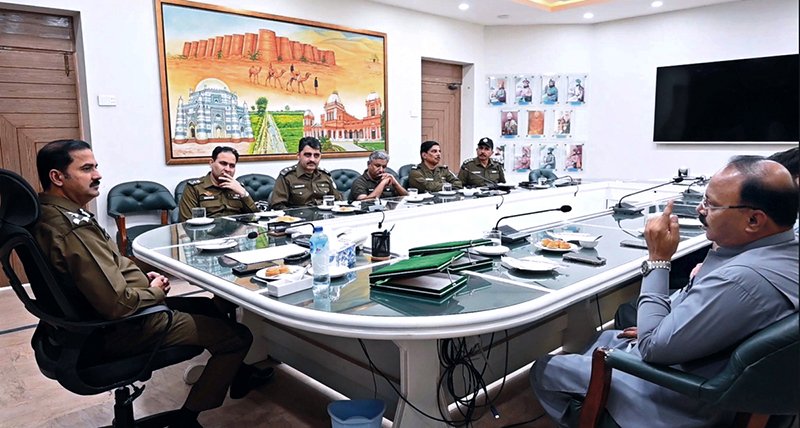
KARACHI — Deputy Inspector General (DIG) of District East, Dr. Farrukh Ali, conducted a detailed review of security measures for the main Ashura procession at Naumaish Chowrangi on the 10th of Muharram-ul-Haram. Security Measures The review by DIG Dr. Farrukh Ali highlighted comprehensive security protocols provided by East Zone Police for the Ashura procession. This event, central to Muharram observances, attracts large crowds and necessitates strict security. According to the Media Cell of DIG East Zone, watertight measures have been implemented to prevent any incidents. These include surveillance cameras, bomb disposal squads, and multiple checkpoints to monitor participant flow. Special arrangements are in place for rapid emergency responses. Coordination among various security agencies is emphasized, and sufficient personnel will be deployed to maintain order. Community involvement is encouraged, with citizens urged to cooperate and report suspicious activities. Local community leaders are engaged for smooth communication and cooperation. Background of Ashura Ashura, observed on the 10th of Muharram, commemorates the martyrdom of Imam Hussain, the Prophet Muhammad’s grandson, at the Battle of Karbala. In Pakistan, particularly in cities like Karachi, Lahore, and Islamabad, it is marked by large processions requiring extensive security due to sectarian tensions and crowd sizes. Past years have seen thousands of police and paramilitary personnel deployed, using technology such as drones and CCTV for monitoring. The government often bans motorcycles and mobile phone services in sensitive areas to prevent security breaches. Significance of Security Securing the Ashura procession is crucial due to its historical and religious importance. Ensuring safety preserves the event’s sanctity and helps maintain public order in Karachi. Successful measures showcase law enforcement’s capability to handle large-scale events. The arrangements test the government’s commitment to protecting religious freedoms and ensuring citizen safety regardless of sect. A peaceful procession can enhance communal harmony and demonstrate the state security apparatus’s effectiveness. Globally, Pakistan’s management of such events is viewed as a stability indicator, showcasing its ability to manage religious diversity. Successful Ashura security can bolster Pakistan’s image as a nation safeguarding citizen safety and respecting religious practices. Key Takeaways DIG East Zone Dr. Farrukh Ali reviewed security arrangements for the Ashura procession in Karachi. Security measures include surveillance, checkpoints, and bomb disposal squads. Community involvement and cooperation with law enforcement are critical for smooth proceedings.

World

China Announces Emergency Humanitarian Aid for Venezuela

BEIJING — China has announced plans to provide emergency humanitarian assistance to Venezuela, addressing the South American nation’s ongoing crises. The aid will be delivered by the Chinese government in collaboration with the Red Cross Society of China. This initiative was unveiled by Chinese Foreign Ministry spokesperson Guo Jiakun during a Friday press briefing. Details of China’s Aid The collaboration between the Chinese government and the Red Cross Society of China promises emergency assistance as Venezuela faces severe economic and social challenges. These issues are intensified by natural disasters and political instability. Guo Jiakun revealed China’s readiness to extend further support depending on the situation’s evolution. Guo emphasized China’s dedication to international humanitarian efforts, focusing on alleviating Venezuela’s immediate needs. While the specifics of the aid package were not disclosed, China is closely monitoring the situation to adapt its response effectively. China’s Role in Global Aid Efforts During the press briefing, Guo responded to inquiries about China’s role in addressing global humanitarian crises. He reiterated China’s commitment to supporting nations in distress and the crucial nature of international cooperation during challenging times. Venezuela’s Crisis Venezuela has been in the throes of a prolonged economic crisis, with hyperinflation, shortages of essentials, and a collapse of public services. The country’s plight has worsened due to disasters like recent floods and landslides, displacing thousands. In response, Venezuela has sought international assistance. Over the years, China and Venezuela have maintained robust diplomatic and economic relations. As one of Venezuela’s major trading partners, China has significantly invested in its oil and infrastructure sectors. This humanitarian aid aligns with China’s broader strategy of engaging with Latin American countries through aid and investment. Implications of the Aid The Chinese aid initiative highlights China’s expanding role in global humanitarian efforts. As a significant economic power, China’s involvement in international aid reflects its strategic interests in maintaining and bolstering bilateral relations with countries like Venezuela. Not only does this initiative address immediate needs, but it also enhances China’s regional influence. For Venezuela, the aid offers much-needed relief amid the humanitarian crisis. It underscores the importance of international support in tackling the complex challenges faced by the nation. China’s humanitarian efforts may also influence geopolitical dynamics in Latin America by altering alliances and economic dependencies, potentially impacting the influence of other global powers in the region. Key Takeaways China and the Red Cross Society of China to provide emergency humanitarian aid to Venezuela. The aid targets essential needs amidst economic and social crises in Venezuela. China’s engagement underscores its increasing role in global humanitarian initiatives. This effort reinforces China’s strategic interests and influence in the region.

Pakistan

Rescue 1122 Mobilizes Over 600 Personnel for Ashura in Multan

MULTAN — Punjab Emergency Service Rescue 1122 deployed over 600 rescuers across Multan district for Youm-e-Ashura, observed on the 10th of Muharram. This initiative ensures rapid response during religious processions and gatherings. Emergency Plan Implementation On Friday, Rescue 1122, led by District Emergency Officer Dr. Hussain Mian, launched an extensive emergency plan for Ashura. The service strategically deployed 30 ambulances and 93 motorbike ambulances throughout the district. This deployment aims to provide immediate medical assistance and manage any emergencies during the Ashura processions. Dr. Hussain Mian highlighted the importance of readiness, stating, “Our primary goal is to ensure safety and well-being for the Ashura procession participants. We’ve taken all necessary precautions to handle situations swiftly and effectively.” Additionally, medical camps are established at key locations to provide first aid and medical support. The deployment spans multiple areas in Multan, ensuring that major procession routes are monitored by trained rescuers. This proactive approach is part of a broader strategy to manage large crowds and potential emergencies common during religious events. Significance of Youm-e-Ashura Youm-e-Ashura, the 10th day of Muharram, is immensely significant in the Islamic calendar, especially for Shia Muslims. It commemorates the martyrdom of Imam Hussain, the grandson of the Prophet Muhammad, at the Battle of Karbala. The day features processions, gatherings, and religious observances. These events historically demand heightened security and emergency preparedness due to large participation and emotional nature. Rescue 1122, established in 2006, is a leading emergency service in Pakistan, providing medical, rescue, and firefighting services. Known for rapid response, it plays a crucial role in managing emergencies during public events across Punjab. Impacts and Reflections The deployment of over 600 rescuers for Ashura in Multan is significant. It demonstrates Rescue 1122’s commitment to public safety and emergency preparedness. A robust emergency response team reassures participants and organizers of the Ashura processions, allowing them to focus on religious observances with a safe mindset. Economically, efficient management of such events prevents disruptions affecting local businesses and daily life. Socially, it builds security and trust in public institutions, essential for peace during religious events with large crowds. Politically, the initiative showcases the government’s dedication to preserving religious community rights for safe tradition observation. It emphasizes inter-agency coordination’s importance, reflecting collaboration among government and non-government organizations for smooth Ashura conduct. Key Takeaways Rescue 1122 deployed over 600 rescuers in Multan for Ashura. The emergency plan involves 30 ambulances and 93 motorbike ambulances. Medical camps provide first aid during processions. Youm-e-Ashura commemorates Imam Hussain’s martyrdom, a significant religious event. The deployment reflects the government’s commitment to public safety and religious freedom.

Sports

Digital Transformation to Enhance Pakistan’s Passport Services, Says DG

ISLAMABAD — Pakistan’s Director General of Immigration and Passports, Muhammad Ali Randhawa, announced on Friday an ambitious digital transformation initiative to improve the nation’s passport services. This project includes a Passport mobile app, home delivery service, and QR code-based payments, all aimed at increasing efficiency and transparency. Details of the Digital Transformation Director General Muhammad Ali Randhawa outlined the government’s plan to overhaul passport services. The initiative aims to streamline processes, reduce wait times, and curb illegal practices that have affected the system for years. Randhawa stressed the need for modern technology to meet growing public demands. Digital Passport Mobile App A major feature of this initiative is the Passport mobile application, allowing citizens to apply for and renew passports online. This app will minimize the need for physical visits, reducing inconveniences and wait times, while providing real-time updates on application status for improved transparency. Home Delivery Service The initiative also introduces a home delivery service for passports, making the process more convenient by delivering passports directly to citizens’ homes. This reduces the burden on passport offices and lessens applicant travel. QR Code-Based Payments With QR code-based payments, the fee payment process becomes simpler, more secure, and efficient. This method reduces risks of corruption by offering a direct, traceable payment option. Background and Challenges Historically, Pakistan’s passport system has been criticized for inefficiency and corruption. Despite attempts to improve, challenges persisted. The switch to digital services marks a substantial departure from traditional methods, targeting these enduring issues. The passport application process has typically included lengthy procedures and bureaucratic hurdles, frustrating many applicants. This latest initiative is part of a broader strategy to modernize public services nationally, leveraging technology for accessibility and transparency improvements. Importance of the New Initiative The digital transformation of Pakistan’s passport services is key to enhancing public service delivery. By using modern technology, the government seeks to make the process more user-friendly and efficient for citizens. Economically, the initiative promises cost savings for both the government and citizens. The reduction of physical infrastructure and personnel requirements could enable more effective resource allocation, while citizens benefit from reduced travel costs and time savings through online applications and home deliveries. Socially, improved transparency could build trust in government services and reduce corruption, leading to increased public confidence in the government’s effectiveness. Internationally, this enhancement may improve Pakistan’s image as proactive in public service modernization, positively influencing tourism and international relations. Efficient processes might encourage more people to visit or do business in Pakistan. Key Takeaways Introduction of a Passport mobile app for online applications. Launch of home delivery services for passports. Implementation of QR code-based fee payments to enhance security. Efforts to streamline passport services and reduce corruption.

World

Senator Highlights Historical Significance Of Hazrat Imam Hussain’s Sacrifice

ISLAMABAD — Senator Azam Nazeer Tarar, Federal Minister for Law, Justice and Human Rights, highlighted the enduring significance of Hazrat Imam Hussain’s sacrifice at Karbala. He emphasized it as a monumental example of courage and truth prevailing over oppression. His remarks, made on Friday, underscored the historical and moral importance of the Karbala events. Historical Context Senator Azam Nazeer Tarar reflected on the sacrifice made by Hazrat Imam Hussain (AS) and his companions during the Battle of Karbala. He praised the courage and steadfastness of Imam Hussain and his followers facing Yazid’s oppressive forces. The senator noted that the 680 AD events of Karbala resonate as a powerful symbol of the fight for justice and truth. “The timeless sacrifice of Hazrat Imam Hussain (AS) and his devoted companions at Karbala remains one of history’s greatest examples of courage, steadfastness, and the triumph of truth over oppression,” stated Senator Tarar. He elaborated on how the sacrifice continues to inspire generations against tyranny and injustice. Global Relevance Senator Tarar’s comments come as the teachings of Imam Hussain gain renewed relevance. Communities worldwide reflect on justice and sacrifice principles during the Islamic month of Muharram. This period involves mourning and remembrance of Karbala, where Imam Hussain and his followers were martyred. Internationally, commemorating Imam Hussain’s sacrifice unites Muslims, fostering unity and offering opportunities for interfaith dialogue. The universal story of Karbala is appreciated by diverse audiences. Event Significance The Battle of Karbala, occurring on the 10th of Muharram in 680 AD, is pivotal in Islamic history. Hazrat Imam Hussain, Prophet Muhammad’s grandson, opposed the Umayyad caliph Yazid’s oppressive rule. Imam Hussain’s refusal to pledge allegiance to Yazid led to the Karbala confrontation in present-day Iraq. Despite being outnumbered, Imam Hussain and his followers chose to fight for their principles, leading to martyrdom. This event is commemorated annually during Muharram, especially on Ashura, serving as a reminder of standing up for justice and righteousness. Impact on Society The sacrifice of Hazrat Imam Hussain at Karbala holds deep significance for Muslims and all who value justice and moral integrity. The Karbala narrative transcends religious boundaries, offering a universal message about standing up against tyranny. For Pakistan, a nation built on justice and equality, Karbala’s lessons are particularly strong. Imam Hussain’s story inspires citizens and leaders to uphold these values amidst challenges. Senator Tarar’s remarks remind us of these historical events’ impact on contemporary society. Key Takeaways Senator Tarar emphasized the historical significance of Imam Hussain’s sacrifice at Karbala. The Battle of Karbala is annually commemorated during Muharram, focusing on justice and courage themes. Imam Hussain’s stand against tyranny continuously inspires global justice movements. The Karbala events transcend religious boundaries, offering universal lessons on moral integrity. Pakistan’s leaders and citizens are reminded of justice and equality’s importance.

Business

Overseas Complaint System Achieves 83% Resolution Rate, Says OPF Chairman

ISLAMABAD — The Overseas Pakistanis Foundation (OPF) has improved its complaint resolution system, achieving an 83% success rate. Chairman Syed Qamar Raza announced this development on Friday, highlighting the foundation’s commitment to overseas Pakistanis through enhanced digital channels. Advancements in Complaint Management During a discussion with a local media outlet, Chairman Syed Qamar Raza detailed the OPF’s advancements in complaint management. The foundation has strengthened its 24/7 resolution mechanisms, including WhatsApp, email support, and an online portal. These digital platforms have collectively contributed to the 83% resolution rate for complaints from overseas Pakistanis. The initiative aims to streamline grievance redressal for Pakistanis abroad. Raza stated, “Our goal is to ensure that overseas Pakistanis’ voices are heard and issues resolved promptly.” These efforts are part of broader reforms to enhance the support system for the diaspora. Raza emphasized technology’s role in improving service delivery. OPF’s digital platforms provide timely assistance, allowing for efficient issue reporting and feedback. The integration of these platforms facilitates a responsive and transparent complaint handling process. OPF’s Evolution and Objectives Established in 1979, the OPF aims to protect overseas Pakistanis’ interests. Over the years, it has addressed various challenges faced by the diaspora, including legal and educational support. The complaint resolution system is a key part of the OPF’s mandate to support overseas Pakistanis effectively. Historically, OPF faced challenges in complaint resolution due to bureaucratic hurdles and limited resources. However, recent reforms leverage technology to overcome these barriers. The shift to digital complaint platforms marks a move away from traditional methods, offering a user-friendly interface for overseas Pakistanis. Economic and Social Impact The enhanced complaint resolution system is crucial for the estimated nine million Pakistanis living overseas. These individuals significantly contribute to Pakistan’s economy through remittances, a vital source of foreign exchange. By addressing their concerns promptly, the OPF fosters trust and reliability within the diaspora. Effective complaint resolution could encourage more overseas Pakistanis to invest in Pakistan, knowing their issues will be handled efficiently. This may increase remittances and investments, bolstering economic stability. Socially, the initiative strengthens the link between overseas Pakistanis and their homeland. Efficient grievance addressal enhances expatriates’ sense of belonging and connection to Pakistan. Politically, the government’s support for such initiatives underscores its commitment to citizens’ welfare abroad, potentially improving its image and relations with the diaspora. Key Takeaways The OPF has achieved an 83% success rate in resolving overseas Pakistanis’ complaints. The foundation has enhanced digital complaint platforms, including WhatsApp, email, and an online portal. These reforms aim to improve service delivery and foster trust among the Pakistani diaspora.

Pakistan

Pakistan Observes Ashura Peacefully with Nationwide Tributes

ISLAMABAD — Pakistan observed Youm-e-Ashura with deep reverence and solemnity on June 26. Citizens, religious leaders, and political figures paid tribute to the martyrs of Karbala through peaceful processions and gatherings across the country, highlighting the event’s spiritual devotion and historical significance. Significance of Youm-e-Ashura Youm-e-Ashura, the 10th day of Muharram, holds profound significance in the Islamic calendar. It commemorates the martyrdom of Imam Hussain, the grandson of Prophet Muhammad, and his companions at the Battle of Karbala. In Pakistan, the day was marked by processions, majalis (religious gatherings), and prayers as people united to honor the sacrifices for truth and justice. Major Cities Observance In major cities such as Karachi, Lahore, Islamabad, and Quetta, large processions took place under stringent security measures to ensure participants’ safety. Law enforcement agencies were present in significant numbers, with local volunteers assisting in maintaining order. The processions featured elegies and sermons emphasizing Imam Hussain’s teachings and legacy. Role of Leaders and Scholars Religious scholars delivered speeches on the values of sacrifice, resilience, and justice, central to Ashura’s observance. Political leaders participated, underscoring unity and solidarity among Pakistan’s diverse communities during this occasion. Historical Background Pakistan has a long history of Ashura observance, with a public holiday allowing citizens to engage in religious activities. The 680 AD Battle of Karbala symbolizes the struggle against tyranny and injustice. Imam Hussain’s refusal to pledge allegiance to the Umayyad caliphate symbolizes a stand for Islamic principles and justice. Traditions in Pakistan include reenacting the battle through processions and narrating Karbala’s events. These activities remind participants of Imam Hussain’s sacrifices and their relevance to contemporary justice and human rights issues. Importance of Peaceful Observance The peaceful observance of Ashura in Pakistan highlights the nation’s ability to manage large-scale religious events effectively, showcasing coordination between government authorities and community leaders. Such conduct is crucial in a country that has faced sectarian tensions, reflecting progress in fostering interfaith harmony. Economically, Ashura boosts local communities, benefiting small businesses and vendors who support the events. Socially, it reinforces unity and resilience as diverse groups come together to commemorate a shared history. Internationally, Pakistan’s peaceful Ashura is a model for other Muslim-majority countries, demonstrating religious freedom and the right to peaceful assembly, enhancing Pakistan’s image as a nation respecting its diverse heritage. Key Takeaways Pakistan observed Ashura with peaceful processions and gatherings nationwide. Security measures ensured participant safety in major cities. The event highlights the historical and spiritual importance of Imam Hussain’s sacrifice.

Scroll to Top