
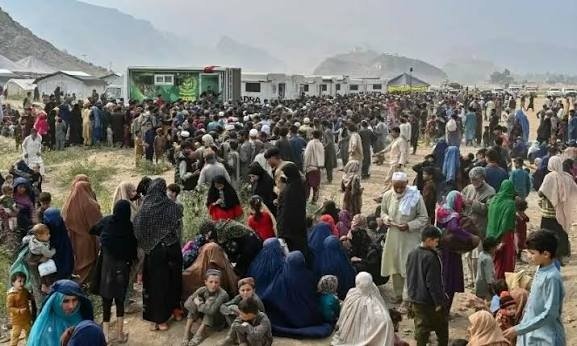
ISLAMABAD — The repatriation of Afghan nationals residing illegally in Pakistan saw a significant movement on Monday as 3,790 individuals were returned to Afghanistan through the Torkham border crossing, according to official figures. This process is part of ongoing efforts to manage the presence of Afghan nationals in Pakistan.
What Happened
The Torkham border crossing, a key point of transit between Pakistan and Afghanistan, witnessed the repatriation of 3,790 Afghan nationals within a span of 24 hours. These individuals were residing in various districts and holding camps across Khyber Pakhtunkhwa. The operation is part of a broader initiative to address the issue of illegal residency and ensure compliance with immigration laws.
Officials involved in the repatriation process have emphasized the importance of conducting the operation in a humane and organized manner. “We are committed to facilitating a smooth transition for these individuals back to their home country,” an official stated. The repatriation is being conducted under the supervision of relevant authorities to ensure that the process is carried out efficiently and respectfully.
The government has been working closely with Afghan authorities to coordinate the return of these nationals. This collaboration aims to ensure that the repatriated individuals are received and integrated back into Afghan society with the necessary support and resources.
Background
The repatriation of Afghan nationals from Pakistan is not a new phenomenon. Over the years, Pakistan has hosted millions of Afghan refugees, particularly following the Soviet invasion of Afghanistan in 1979 and subsequent conflicts. While many have returned voluntarily over the years, a significant number continue to reside in Pakistan, some without legal documentation.
In recent years, the Pakistani government has intensified efforts to regulate the presence of Afghan nationals, particularly those residing illegally. This has involved a combination of voluntary repatriation programs and more stringent immigration enforcement measures. The Torkham border crossing has been a focal point for these efforts, given its strategic importance and high volume of cross-border movement.
Why It Matters
The repatriation of Afghan nationals carries significant implications for both Pakistan and Afghanistan. For Pakistan, managing the presence of foreign nationals is crucial for maintaining social and economic stability. The presence of a large number of undocumented individuals can strain public resources and complicate security efforts.
Economically, the repatriation process can impact local communities, particularly in regions like Khyber Pakhtunkhwa, where many Afghan nationals have settled. Businesses and local economies that have adapted to the presence of Afghan residents may experience changes as these individuals return to Afghanistan.
For Afghanistan, the return of its nationals presents both opportunities and challenges. The Afghan government must ensure that it has the capacity to receive and integrate these individuals, providing them with access to essential services such as housing, education, and employment. Successful reintegration is critical for the stability and development of Afghan society.
Internationally, the repatriation process is being closely monitored by humanitarian organizations and foreign governments. Ensuring that the rights and dignity of repatriated individuals are upheld is a priority for these stakeholders, who are keen to see a peaceful and cooperative resolution to the issue of Afghan residency in Pakistan.
Key Takeaways
- 3,790 Afghan nationals were repatriated through the Torkham border crossing in 24 hours.
- The repatriation is part of efforts to manage illegal residency in Pakistan.
- Coordination with Afghan authorities is crucial to ensure smooth reintegration.
- The process has significant social and economic implications for both countries.
- International observers are monitoring the situation to ensure human rights are respected.
Source Attribution
This article is based on official government statements, press releases, and public communications from relevant authorities.














