
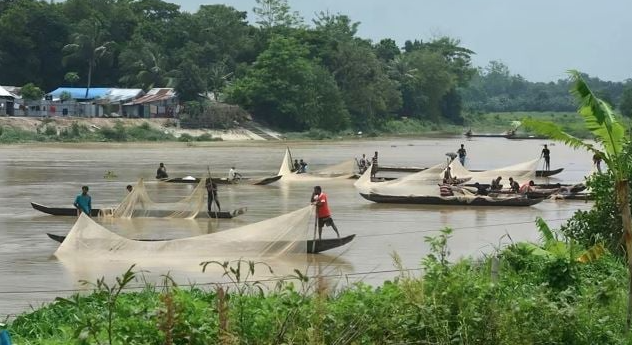
HATHAZARI — The Fisheries Department of Hathazari upazila has successfully conducted a special operation in the Halda River, seizing 6,300 metres of illegal nets and 12 fishing rods. This operation underscores ongoing efforts to protect the river, which is South Asia’s only natural fish breeding ground, from illegal fishing activities.
What Happened
The operation, carried out by the Fisheries Department, targeted illegal fishing practices that threaten the ecological balance of the Halda River. The department’s officials, equipped with boats and surveillance equipment, meticulously combed through the river, identifying and confiscating illegal fishing gear. The seizure of 6,300 metres of nets and 12 fishing rods marks a significant step in the department’s ongoing campaign to preserve the river’s biodiversity.
Officials involved in the operation emphasized the importance of such initiatives, stating that illegal fishing not only endangers the fish population but also disrupts the river’s natural breeding processes. “Our goal is to ensure that the Halda River remains a safe haven for fish breeding,” said a senior official from the Fisheries Department. The department plans to continue these operations regularly to deter illegal activities and protect the river’s ecosystem.
Background
The Halda River, located in the Chittagong Division of Bangladesh, is renowned for being the only natural fish breeding ground in South Asia. It is particularly famous for the spawning of major carp species, which are crucial to the region’s aquatic biodiversity. The river has faced numerous challenges over the years, including pollution, industrial waste, and illegal fishing practices, all of which threaten its ecological balance.
Efforts to protect the Halda River have been ongoing for decades. The government, along with local environmental groups, has implemented various measures to curb pollution and illegal fishing. These measures include stricter enforcement of fishing regulations, community awareness programs, and regular monitoring of the river’s health. Despite these efforts, illegal fishing remains a persistent issue, necessitating continued vigilance and enforcement actions.
Why It Matters
The preservation of the Halda River is of paramount importance to the region’s ecological and economic well-being. As the only natural fish breeding ground in South Asia, the river plays a crucial role in sustaining the fish population, which is vital for local fisheries and the livelihoods of communities dependent on fishing. Illegal fishing practices, if left unchecked, could lead to a decline in fish populations, affecting both biodiversity and the local economy.
Furthermore, the Halda River’s ecological health has broader implications for environmental conservation efforts in the region. Protecting the river contributes to maintaining the natural balance of the ecosystem, which is essential for the survival of various aquatic species. The river also serves as a critical resource for research and education, providing valuable insights into natural breeding processes and conservation strategies.
The recent operation by the Fisheries Department highlights the ongoing challenges faced in safeguarding the Halda River. It underscores the need for continued collaboration between government agencies, local communities, and environmental organizations to ensure the river’s protection. By addressing illegal fishing and other threats, stakeholders can work towards a sustainable future for the Halda River and its surrounding ecosystems.
Key Takeaways
- The Fisheries Department seized 6,300 metres of illegal nets and 12 fishing rods from the Halda River.
- The operation aims to protect the river’s status as South Asia’s only natural fish breeding ground.
- Illegal fishing poses a significant threat to the river’s ecological balance and fish populations.
- Efforts to preserve the Halda River are crucial for local biodiversity and the economy.
- Continued vigilance and enforcement are necessary to combat illegal fishing activities.
Source Attribution
This article is based on official government statements, press releases, and public communications from relevant authorities.














