
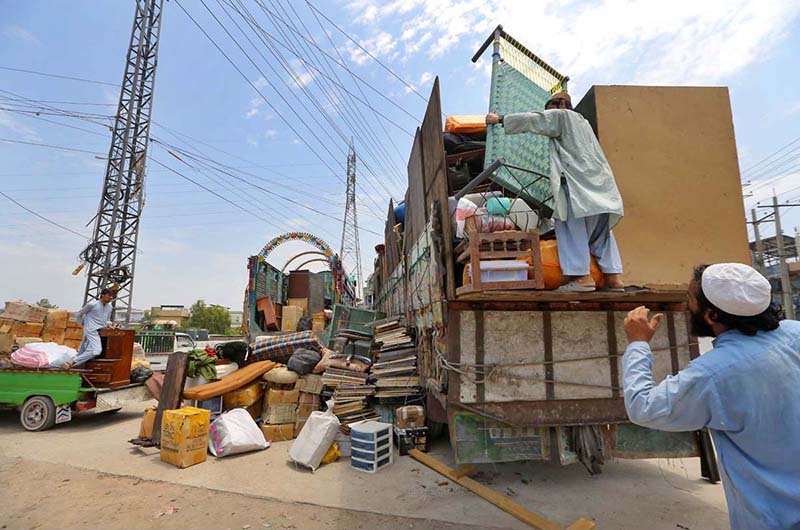
ISLAMABAD — Afghan nationals residing in Pakistan have started the process of returning to their homeland as part of an ongoing repatriation initiative. This movement comes as the Pakistani government continues its efforts to manage the presence of Afghan refugees within its borders.
What Happened
The repatriation process for Afghan nationals currently residing in Pakistan has commenced, with individuals seen loading their household belongings onto vehicles in preparation for their journey back to Afghanistan. This step is part of a broader initiative aimed at facilitating the voluntary return of Afghan refugees who have been living in Pakistan for decades.
According to official sources, the repatriation is being conducted in coordination with Afghan authorities and international organizations to ensure a smooth transition for those returning. The process involves logistical support and necessary documentation to ease the movement across the border.
One Afghan national, preparing to leave, expressed mixed emotions about the return. “We are hopeful about going back to our country, but there are uncertainties about what awaits us there,” he said. The sentiment reflects the complex feelings many Afghan refugees have about leaving a place they have called home for years.
The Pakistani government has reiterated its commitment to supporting Afghan nationals during this transition, emphasizing that the repatriation process is voluntary and conducted with respect for human rights. Authorities have also highlighted the importance of international assistance in facilitating this process.
Background
Pakistan has been a host to millions of Afghan refugees since the Soviet invasion of Afghanistan in 1979. Over the years, various repatriation efforts have been undertaken, often in collaboration with the United Nations High Commissioner for Refugees (UNHCR) and the Afghan government.
The current repatriation initiative is part of a larger strategy to manage the refugee population in Pakistan, which has been a point of contention in bilateral relations with Afghanistan. Previous efforts have seen varying degrees of success, often hindered by security concerns and economic instability in Afghanistan.
In recent years, the Pakistani government has sought to regularize the status of Afghan nationals through registration and documentation, aiming to balance humanitarian concerns with national security interests.
Why It Matters
The repatriation of Afghan nationals is significant for several reasons. Economically, it alleviates some of the pressures on Pakistan’s resources, as the country has been managing a substantial refugee population for decades. This move could potentially redirect resources towards domestic needs and development projects.
Socially, the repatriation process impacts the Afghan communities that have integrated into Pakistani society. Many Afghan nationals have established businesses, married locally, and contributed to the cultural tapestry of the regions they inhabit. Their departure marks a shift in the social dynamics of these areas.
Politically, the repatriation aligns with Pakistan’s broader foreign policy objectives of stabilizing relations with Afghanistan and addressing security concerns. By facilitating the return of Afghan nationals, Pakistan aims to strengthen its diplomatic ties with the Afghan government and contribute to regional stability.
Internationally, the success of this repatriation process could serve as a model for other countries hosting large refugee populations. It underscores the importance of international cooperation and support in addressing complex humanitarian issues.
Key Takeaways
- Afghan nationals in Pakistan are beginning to return to Afghanistan as part of a voluntary repatriation process.
- The initiative is conducted with the support of Afghan authorities and international organizations.
- Pakistan has hosted millions of Afghan refugees since 1979, with various repatriation efforts over the years.
- The repatriation process has economic, social, and political implications for both Pakistan and Afghanistan.
- International cooperation is crucial for the success of the repatriation initiative.
Source Attribution
This article is based on official government statements, press releases, and public communications from relevant authorities.














