
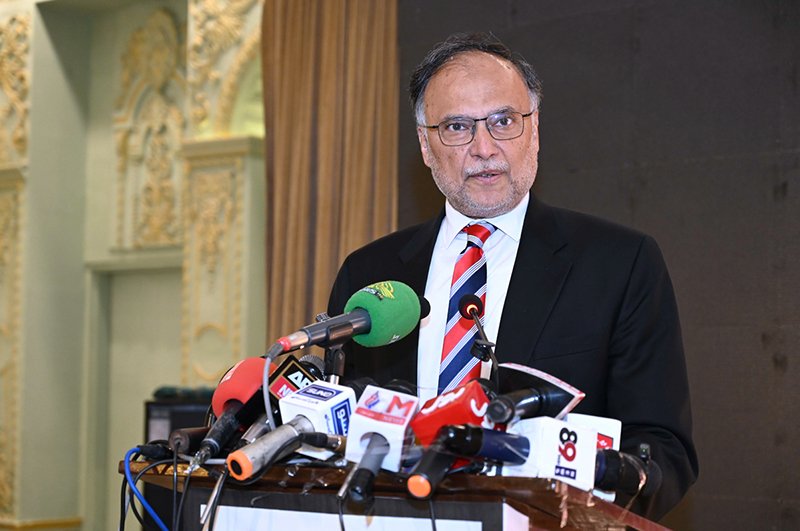
ISLAMABAD — Federal Minister for Planning, Development and Special Initiatives, Professor Ahsan Iqbal, on Tuesday called upon the youth of Pakistan to channel their energy and skills towards achieving the nation’s ambitious economic goals. Speaking at a public event, Iqbal emphasized that the country’s aim is not just economic stabilization but to transform into a $1 trillion economy by 2035, as envisioned in the URAAN Pakistan initiatives.
What Happened
During his address, Ahsan Iqbal highlighted the importance of youth involvement in national development, urging them to leverage their talents and innovative potential. He articulated that the path to economic recovery and growth is significantly dependent on the active participation of the younger generation. The minister outlined the government’s strategic plan under the URAAN Pakistan initiatives, which aims to foster economic growth through various developmental projects and policy reforms.
Iqbal stated, “The youth of Pakistan are the architects of our future. Their role is crucial in steering the nation towards prosperity and achieving the $1 trillion economy target by 2035.” He further noted that the government is committed to creating opportunities and providing platforms for young entrepreneurs and professionals to thrive.
The minister also discussed the economic recovery efforts post-pandemic, mentioning that the government has been working tirelessly to stabilize the economy. He pointed out the recent positive trends in economic indicators, suggesting a gradual recovery. However, he stressed that achieving the long-term goal of a $1 trillion economy requires sustained efforts and the active contribution of all sectors, particularly the youth.
Background
Pakistan’s economy has faced numerous challenges over the years, including political instability, security issues, and most recently, the global COVID-19 pandemic. The government has been implementing various reforms to stabilize the economy, focusing on enhancing exports, improving the business climate, and attracting foreign investment.
The URAAN Pakistan initiatives are part of a broader strategic vision to revitalize the economy. These initiatives focus on infrastructure development, technological advancement, and human resource development. The government aims to harness the potential of its young population, which constitutes a significant portion of the country’s demographic, to drive economic growth and innovation.
Why It Matters
The call to action by Ahsan Iqbal underscores the critical role of youth in shaping Pakistan’s economic future. With over 60% of the population under the age of 30, Pakistan is uniquely positioned to leverage its youthful demographic for economic advancement. Empowering young people with the right skills and opportunities can lead to significant economic dividends.
The emphasis on reaching a $1 trillion economy by 2035 is not just a numerical target but a vision for comprehensive economic transformation. Achieving this goal would mean improved living standards, increased employment opportunities, and enhanced global competitiveness for Pakistan. It would also require overcoming existing challenges such as energy shortages, infrastructure deficits, and educational disparities.
Moreover, the focus on youth aligns with global trends where nations are increasingly investing in their young populations as a strategy for sustainable development. For Pakistan, this approach could lead to innovation-driven growth, positioning the country as a key player in the regional and global economy.
Key Takeaways
- Federal Minister Ahsan Iqbal urges youth to drive Pakistan towards a $1 trillion economy by 2035.
- The URAAN Pakistan initiatives outline strategic plans for economic growth and development.
- Youth empowerment is seen as crucial for achieving long-term economic goals.
- Pakistan’s demographic advantage is a key asset in its economic transformation strategy.
- Achieving the $1 trillion economy target would significantly enhance Pakistan’s global competitiveness.
Source Attribution
This article is based on official government statements, press releases, and public communications from relevant authorities.














