
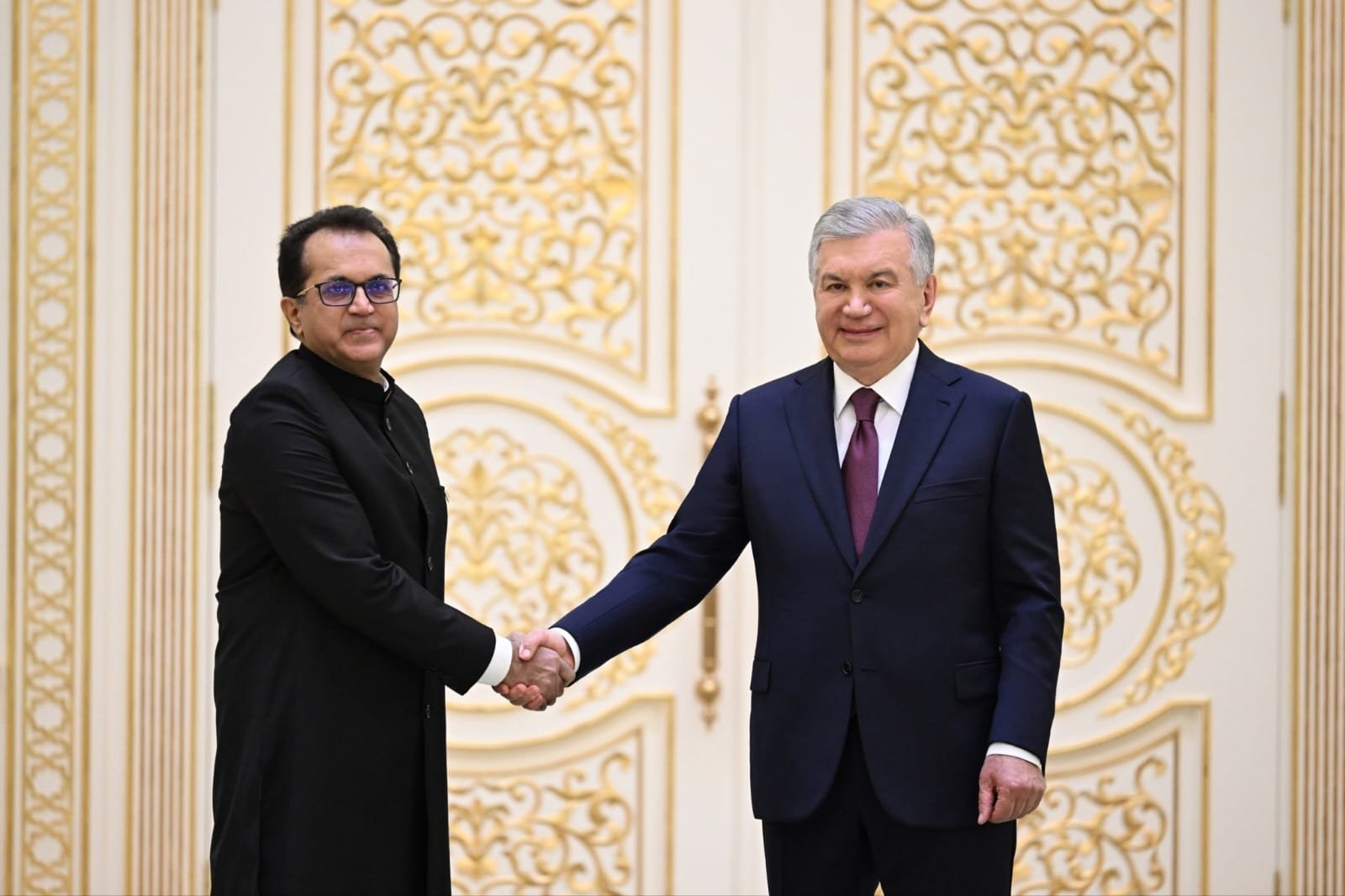
ISLAMABAD — On Tuesday, Ambassador Mudassir presented his credentials to President Shavkat Mirziyoyev of Uzbekistan, marking a significant step in reinforcing Pakistan-Uzbekistan relations. The ceremony underscored a mutual commitment to enhancing cooperation in trade, tourism, and regional connectivity.
What Happened
Ambassador Mudassir, representing Pakistan, formally presented his credentials to Uzbek President Shavkat Mirziyoyev in a ceremony held in Tashkent. This diplomatic gesture is a traditional process that signifies the beginning of an ambassador’s official duties in a foreign country. During the meeting, Ambassador Mudassir expressed his dedication to strengthening bilateral ties between the two nations. He emphasized the potential for collaboration in various sectors, including trade and tourism, which are seen as pivotal areas for mutual growth.
In a message shared on his official social media account, Ambassador Mudassir stated, “Privileged to present my credentials to the President of Uzbekistan. Looking forward to advancing our shared goals in trade, tourism, and regional connectivity.” This statement highlights the ambassador’s enthusiasm and commitment to fostering a robust partnership with Uzbekistan.
President Mirziyoyev reciprocated the sentiment, acknowledging the historical ties between Pakistan and Uzbekistan and expressing a desire to explore new avenues for cooperation. The Uzbek leader highlighted the importance of regional connectivity projects that could enhance economic opportunities for both countries.
Background
Pakistan and Uzbekistan have shared diplomatic relations since Uzbekistan’s independence from the Soviet Union in 1991. Over the years, both nations have engaged in various bilateral agreements to enhance cooperation in multiple sectors. The recent focus has been on improving trade relations and exploring joint ventures in tourism, given Uzbekistan’s rich cultural heritage and Pakistan’s diverse landscapes.
In recent years, both countries have shown interest in participating in regional connectivity projects, such as the China-Pakistan Economic Corridor (CPEC) and the Central Asia Regional Economic Cooperation (CAREC) program. These initiatives aim to improve infrastructure links and boost economic development across the region.
Why It Matters
The strengthening of diplomatic ties between Pakistan and Uzbekistan is significant for several reasons. Economically, both countries stand to benefit from increased trade and investment opportunities. Uzbekistan, with its strategic location in Central Asia, serves as a vital gateway for Pakistan to access markets in the region. Enhanced trade relations could lead to increased exports and imports, benefiting industries in both countries.
Socially, the promotion of tourism between Pakistan and Uzbekistan could foster greater cultural exchange and understanding. Both nations boast rich histories and cultural landmarks that attract international tourists. By collaborating in this sector, they can boost tourism revenues and create new jobs.
Politically, the reinforcement of bilateral ties aligns with Pakistan’s broader foreign policy goals of strengthening regional cooperation and connectivity. As both countries participate in regional initiatives, such as CAREC, they can work together to address common challenges, including security concerns and economic development.
Internationally, the collaboration between Pakistan and Uzbekistan can contribute to regional stability and prosperity. By working together on connectivity projects, they can enhance the region’s infrastructure, facilitating smoother trade routes and economic integration.
Key Takeaways
- Ambassador Mudassir presented his credentials to Uzbek President Shavkat Mirziyoyev, marking a new chapter in Pakistan-Uzbekistan relations.
- The focus of the bilateral ties is on enhancing cooperation in trade, tourism, and regional connectivity.
- Pakistan and Uzbekistan have shared diplomatic relations since 1991, with recent emphasis on regional connectivity projects.
- The strengthened ties are expected to boost economic opportunities, cultural exchange, and regional stability.
- Both countries aim to participate in regional initiatives like CAREC to address common challenges and improve infrastructure.
Source Attribution
This article is based on official government statements, press releases, and public communications from relevant authorities.














