
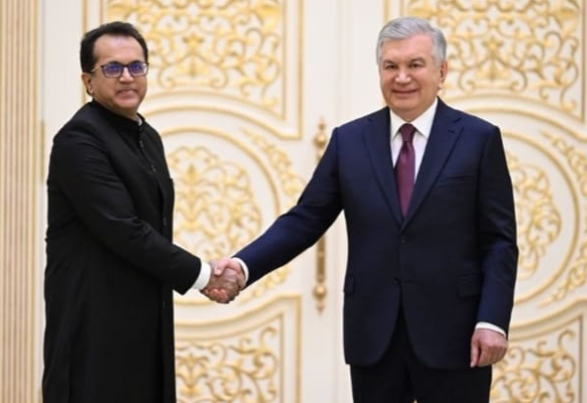
ISLAMABAD — Pakistan’s Ambassador to Uzbekistan, Muhammad Mudassir Tipu, formally presented his credentials to the President of Uzbekistan, Shavkat Mirziyoyev, in a ceremony held in Tashkent on July 29. This event marks the official commencement of Ambassador Tipu’s diplomatic duties in Uzbekistan, a key Central Asian nation.
What Happened
In a formal ceremony in Tashkent, Ambassador Muhammad Mudassir Tipu handed over his credentials to Uzbek President Shavkat Mirziyoyev. The ceremony signifies the start of Ambassador Tipu’s tenure as Pakistan’s representative in Uzbekistan, where he is expected to play a crucial role in enhancing bilateral relations between the two countries.
During the ceremony, Ambassador Tipu expressed his commitment to strengthening ties between Pakistan and Uzbekistan. He highlighted the potential for increased cooperation in various sectors, including trade, culture, and education. Ambassador Tipu also shared his experiences and objectives on his official social media account, emphasizing his dedication to fostering a robust partnership with Uzbekistan.
The President of Uzbekistan, Shavkat Mirziyoyev, welcomed Ambassador Tipu and expressed optimism about the future of Pakistan-Uzbekistan relations. President Mirziyoyev acknowledged the historical and cultural ties between the two nations and reiterated his commitment to working closely with Pakistan to explore new avenues of collaboration.
Background
Pakistan and Uzbekistan have a history of diplomatic relations that date back to Uzbekistan’s independence from the Soviet Union in 1991. Over the years, both countries have engaged in various diplomatic and economic initiatives to strengthen their bilateral ties. The appointment of Muhammad Mudassir Tipu as Ambassador to Uzbekistan comes at a time when both nations are looking to deepen their cooperation in multiple areas.
Uzbekistan, being a landlocked country in Central Asia, holds strategic importance for Pakistan. The two countries have worked together on initiatives related to regional connectivity, trade, and cultural exchange. In recent years, there has been a renewed focus on enhancing economic ties, with both countries exploring opportunities in sectors such as textiles, agriculture, and energy.
Why It Matters
The appointment of Ambassador Tipu and his presentation of credentials to President Mirziyoyev is significant for several reasons. Firstly, it underscores Pakistan’s commitment to strengthening its diplomatic presence in Central Asia, a region with growing geopolitical importance. Uzbekistan, as a key player in the region, offers Pakistan opportunities to expand its influence and foster economic partnerships.
Economically, the relationship between Pakistan and Uzbekistan holds the potential for mutual benefits. With Uzbekistan’s strategic location and Pakistan’s access to the Arabian Sea, both countries can serve as gateways for trade and transit. The development of transport corridors and trade routes can enhance connectivity and boost economic growth in the region.
Politically, the strengthening of ties with Uzbekistan aligns with Pakistan’s broader foreign policy objectives of fostering regional cooperation and stability. By building strong relationships with Central Asian countries, Pakistan can enhance its role in regional security and economic development initiatives.
On a cultural level, the historical and cultural connections between Pakistan and Uzbekistan provide a foundation for people-to-people exchanges and collaboration in areas such as education and tourism. These exchanges can promote mutual understanding and strengthen the bonds between the two nations.
Key Takeaways
- Ambassador Muhammad Mudassir Tipu presented his credentials to Uzbek President Shavkat Mirziyoyev in Tashkent.
- The ceremony marks the start of Ambassador Tipu’s diplomatic mission in Uzbekistan.
- Pakistan and Uzbekistan aim to enhance cooperation in trade, culture, and education.
- The relationship holds potential for economic growth through regional connectivity.
- Strengthened ties align with Pakistan’s foreign policy goals in Central Asia.
Source Attribution
This article is based on official government statements, press releases, and public communications from relevant authorities.














