
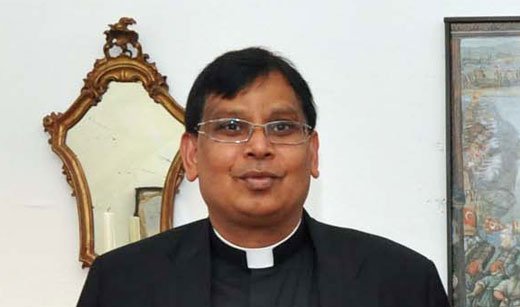
ISLAMABAD — Archbishop Dr. Joseph Arshad, the Bishop of Islamabad-Rawalpindi, has made a fervent appeal for a unified national strategy to combat child labour across Pakistan. On August 4, he described the practice as a severe infringement on human dignity, which strips millions of children of their rightful childhood, education, and prospects for a better future.
What Happened
In a statement issued from Islamabad, Archbishop Dr. Joseph Arshad condemned child labour, highlighting its detrimental impact on the lives of countless children in Pakistan. He emphasized the urgent need for a coordinated response involving various sectors of society, including the government, law enforcement agencies, educational institutions, religious leaders, and employers. “Child labour is a grave violation of human dignity,” he stated, urging all stakeholders to collaborate in eradicating this pervasive issue.
The Archbishop’s call to action comes amid growing concerns about the prevalence of child labour in Pakistan, where children are often forced into work due to economic hardships faced by their families. Dr. Arshad stressed the importance of education as a fundamental right that should be accessible to all children, advocating for policies that ensure children remain in school rather than being exploited in the workforce.
He also urged religious leaders to use their influence to raise awareness about the moral and ethical implications of child labour. By engaging communities in dialogue, he believes religious leaders can play a pivotal role in changing societal attitudes towards child labour and promoting the welfare of children.
Background
Child labour has been a persistent issue in Pakistan, with millions of children engaged in various forms of work. According to estimates by the International Labour Organization (ILO), Pakistan has one of the highest numbers of child labourers in the world. The country’s legal framework, including the Employment of Children Act 1991 and the Punjab Restriction on Employment of Children Ordinance 2016, prohibits child labour, yet enforcement remains weak.
Historically, economic factors, such as poverty and lack of access to quality education, have driven families to send their children to work. Despite legislative measures, child labour continues to thrive in informal sectors, including agriculture, brick kilns, and domestic work, where regulations are often poorly enforced.
Why It Matters
The eradication of child labour is critical for Pakistan’s socio-economic development. Child labour not only deprives children of their education and childhood but also perpetuates the cycle of poverty. Without education, children are less likely to secure well-paying jobs in the future, thereby limiting their economic mobility and contributing to intergenerational poverty.
Addressing child labour is also essential for improving Pakistan’s international standing and compliance with global human rights standards. The country’s reputation on the global stage is influenced by its ability to protect the rights of its most vulnerable citizens, including children. Effective measures to eliminate child labour would enhance Pakistan’s image and could lead to increased foreign investment and trade opportunities.
Moreover, tackling child labour aligns with Pakistan’s commitments under the United Nations Sustainable Development Goals (SDGs), particularly Goal 8, which aims to promote sustained, inclusive, and sustainable economic growth, full and productive employment, and decent work for all.
Key Takeaways
- Archbishop Dr. Joseph Arshad has called for a coordinated national effort to eliminate child labour in Pakistan.
- Child labour is a significant issue in Pakistan, affecting millions of children and depriving them of education and a brighter future.
- Legal frameworks exist to combat child labour, but enforcement is weak, particularly in informal sectors.
- Eradicating child labour is crucial for breaking the cycle of poverty and improving Pakistan’s international reputation.
- Efforts to address child labour align with Pakistan’s commitments to the United Nations Sustainable Development Goals.
Source Attribution
This article is based on official statements and public communications from relevant authorities.














