
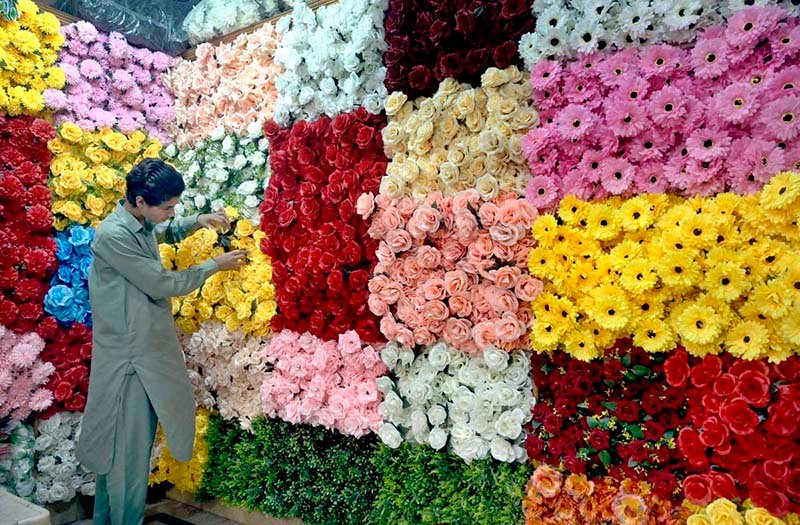
RAWALPINDI — Vendors in Rawalpindi’s bustling Banni Market are witnessing a surge in interest for artificial flowers, as they arrange vibrant displays outside their shops. On August 6, the market, known for its diverse commercial offerings, attracted numerous customers from the twin cities of Rawalpindi and Islamabad.
What Happened
In the heart of Rawalpindi’s Banni Market, a vendor meticulously arranged a colorful assortment of artificial flowers outside his shop. This activity is part of a broader trend where artificial flowers are gaining popularity among consumers seeking long-lasting decorative options. The vendor’s display attracted a steady stream of passersby, drawn by the vibrant colors and the promise of low-maintenance beauty.
The Banni Market, a well-known commercial area, is frequented by residents from both Rawalpindi and Islamabad. The market’s strategic location and diverse range of products make it a popular destination for shoppers. On this particular day, the artificial flower vendor’s efforts were complemented by the lively atmosphere of the market, which also featured street food stalls and other vendors showcasing their wares.
According to local shopkeepers, the demand for artificial flowers has been steadily increasing, driven by their affordability and durability compared to fresh flowers. “Customers appreciate the variety of colors and styles available,” said a vendor, adding that artificial flowers are often used for home decoration, events, and gifting purposes.
Background
Banni Market has long been a central hub for commerce in Rawalpindi, offering a wide array of products ranging from textiles to electronics. The market’s history dates back several decades, evolving over time to accommodate the changing needs of its clientele. In recent years, the market has seen a shift towards more decorative and lifestyle products, including artificial flowers.
The trend towards artificial flowers is not unique to Rawalpindi. Across Pakistan, there has been a growing preference for artificial over fresh flowers, particularly in urban areas. This shift is attributed to factors such as the convenience of maintenance-free decor and the increasing cost of fresh flowers.
Why It Matters
The rising popularity of artificial flowers in markets like Banni reflects broader changes in consumer behavior in Pakistan. As urbanization continues and lifestyles become busier, many consumers are opting for products that offer convenience and longevity. Artificial flowers, with their low maintenance requirements and long-lasting appeal, fit this demand perfectly.
Economically, the trend towards artificial flowers benefits local vendors and small business owners, providing them with a steady source of income. The affordability of these products makes them accessible to a wide range of consumers, supporting economic activity within local markets.
Socially, the use of artificial flowers can be seen as part of a larger movement towards sustainable living. By reducing the demand for fresh flowers, which often require significant resources to grow and transport, consumers can contribute to more sustainable consumption patterns.
Politically, the thriving commerce in markets like Banni highlights the importance of supporting local businesses and infrastructure development. As Pakistan continues to develop its urban centers, ensuring that markets remain vibrant and accessible is crucial for economic growth and stability.
Key Takeaways
- Artificial flowers are gaining popularity in Rawalpindi’s Banni Market due to their affordability and durability.
- Banni Market is a key commercial hub in the twin cities, attracting a diverse customer base.
- The shift towards artificial flowers reflects broader consumer trends towards convenience and sustainability.
- Local vendors benefit economically from the increased demand for artificial flowers.
- The trend supports sustainable consumption by reducing reliance on fresh flowers.
Source Attribution
This article is based on official government statements, press releases, and public communications from relevant authorities.














