
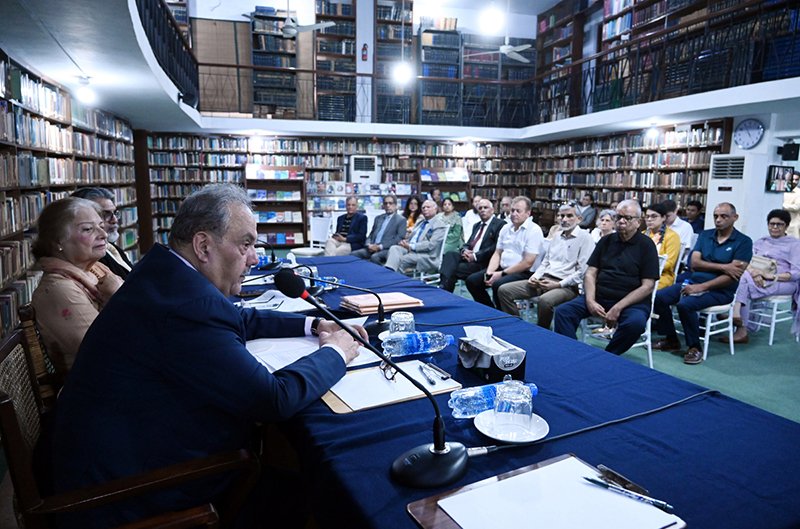
KARACHI — Former Ambassador to Iran and the UAE, Asif Ali Khan Durrani, addressed a seminar titled “Changing Dynamics of Power in the Middle East,” organized by the Pakistan Institute of International Affairs (PIIA) in Karachi. The seminar focused on the evolving geopolitical landscape in the Middle East and its implications for regional and global politics.
What Happened
During the seminar held on Thursday, Asif Ali Khan Durrani, who has also served as Pakistan’s Special Representative for Afghanistan, provided an in-depth analysis of the shifting power dynamics in the Middle East. He highlighted the complex interplay of regional alliances, the influence of major powers, and the impact of ongoing conflicts on the geopolitical stability of the region.
Durrani emphasized the importance of understanding the historical context of Middle Eastern politics to comprehend current developments. He noted, “The Middle East has always been a region of strategic importance due to its vast energy resources and its pivotal location, which connects Asia, Africa, and Europe.”
He further elaborated on the role of external powers, particularly the United States, Russia, and China, in shaping the region’s political landscape. “The involvement of these powers often complicates regional issues, as their interests do not always align with those of the Middle Eastern countries,” Durrani stated.
The seminar also addressed the ongoing conflicts in Syria and Yemen, the Iranian nuclear deal, and the normalization of relations between Israel and several Arab states. Durrani pointed out that these developments have significant implications for regional security and economic cooperation.
Background
The Middle East has historically been a region of strategic interest due to its vast oil reserves and geopolitical significance. Over the past decade, the region has witnessed significant upheaval, including the Arab Spring, the rise and fall of ISIS, and shifting alliances among key players such as Saudi Arabia, Iran, and Turkey.
Pakistan has maintained a keen interest in Middle Eastern affairs, given its economic ties and the presence of a large Pakistani diaspora in the Gulf states. The country has historically balanced its relations with various regional powers while advocating for peaceful resolutions to conflicts.
Why It Matters
The shifting dynamics in the Middle East have far-reaching implications for Pakistan, both economically and politically. As a country with deep-rooted ties to the region, changes in Middle Eastern geopolitics can influence Pakistan’s foreign policy and economic strategies.
Economically, Pakistan relies on remittances from its expatriates in the Gulf, which constitute a significant portion of its foreign exchange reserves. Any instability in the region could affect the livelihood of millions of Pakistani workers and, by extension, the Pakistani economy.
Politically, Pakistan’s diplomatic relations with Middle Eastern countries are crucial for its strategic interests. The evolving alliances and conflicts in the region require Pakistan to navigate its foreign policy carefully to maintain its relationships and protect its national interests.
Furthermore, the seminar’s discussions underscore the importance of Pakistan’s role in advocating for peace and stability in the Middle East. As a Muslim-majority country with historical ties to the region, Pakistan can play a mediating role in resolving conflicts and fostering dialogue among regional powers.
Key Takeaways
- Asif Ali Khan Durrani addressed a seminar on Middle Eastern power dynamics at the PIIA in Karachi.
- The seminar highlighted the influence of major powers and ongoing conflicts in the region.
- Pakistan’s economic and political interests are closely tied to Middle Eastern stability.
- The seminar underscored the need for Pakistan to navigate its foreign policy carefully.
- Pakistan can play a mediating role in fostering peace and dialogue in the Middle East.
Source Attribution
This article is based on official statements and public communications from relevant authorities.














