
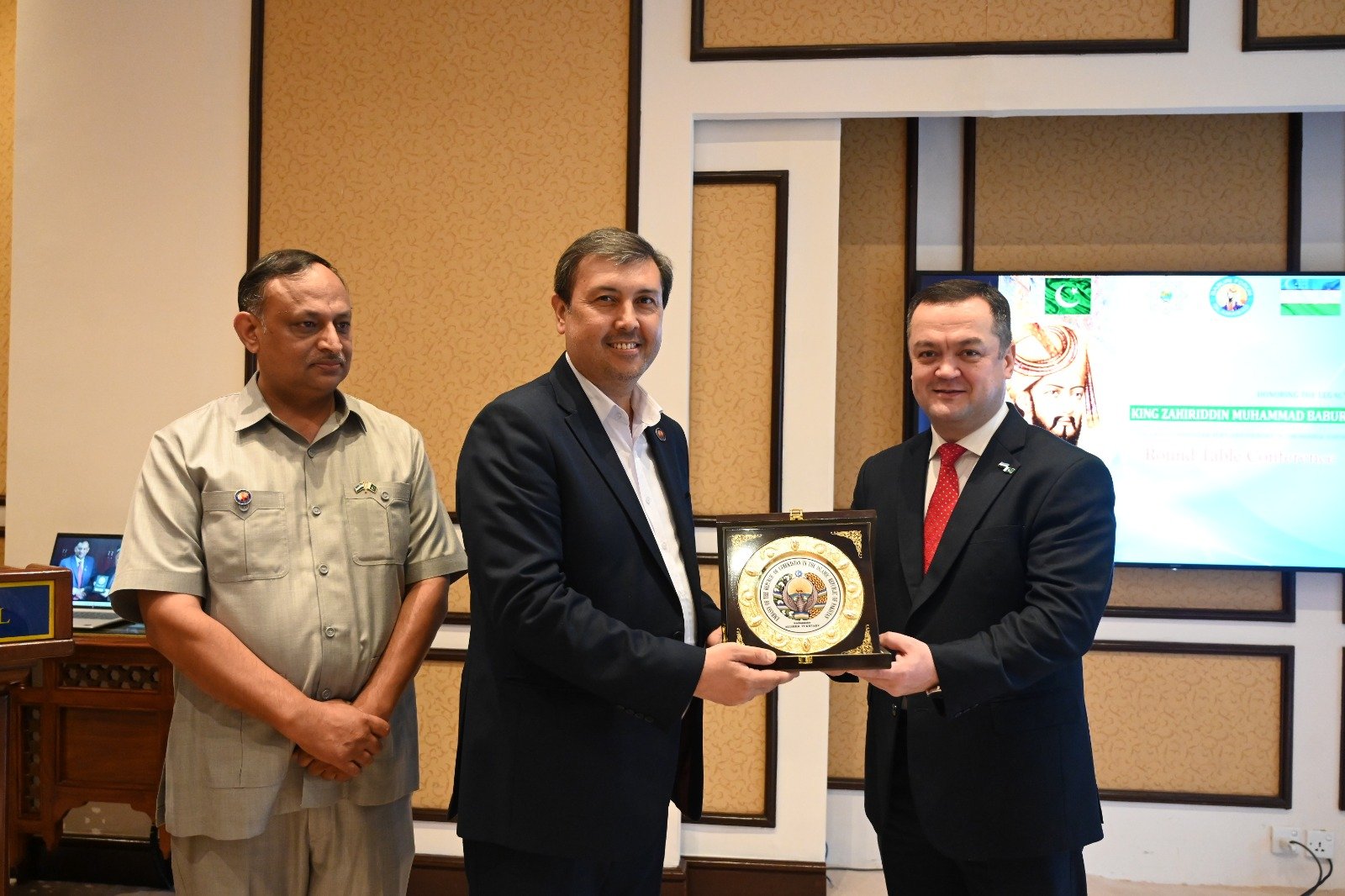
ISLAMABAD — The Ambassador of Uzbekistan to Pakistan, Alisher Tukhtaev, has highlighted the enduring legacy of Mughal Emperor Zahiruddin Muhammad Babur as a cultural bridge between Uzbekistan and Pakistan. Speaking on the historical ties between the two nations, the ambassador emphasized Babur’s multifaceted contributions as a statesman, military leader, poet, and thinker, which continue to resonate across Central and South Asia.
What Happened
During a recent event, Ambassador Alisher Tukhtaev underscored the significant role of Babur in fostering cultural and historical connections between Uzbekistan and Pakistan. Babur, who founded the Mughal Empire in the Indian subcontinent, was born in Andijan, present-day Uzbekistan, and his legacy is deeply rooted in both Uzbek and Pakistani cultures. The ambassador remarked, “Babur’s life and works are a testament to the shared history and cultural heritage that unite our two nations.”
Babur’s contributions extend beyond his military conquests; he was an accomplished poet and writer, whose works provide a vivid account of the society and nature of his time. His autobiography, the Baburnama, is considered a masterpiece of literature and offers insights into the cultural and social dynamics of the 16th century. Ambassador Tukhtaev noted that Babur’s literary and cultural achievements continue to inspire scholars and historians in both countries.
The ambassador also highlighted ongoing efforts to strengthen cultural ties between Uzbekistan and Pakistan, including academic exchanges and collaborative cultural projects. These initiatives aim to deepen mutual understanding and appreciation of the rich historical connections that Babur symbolizes.
Background
Zahiruddin Muhammad Babur, born in 1483 in the Fergana Valley, was a descendant of Timur on his father’s side and Genghis Khan on his mother’s side. After a series of military campaigns, he established the Mughal Empire in 1526, which marked the beginning of a new era in the Indian subcontinent. The Mughals brought significant advancements in architecture, art, and culture, leaving a lasting impact on the region.
Babur’s autobiography, the Baburnama, written in Chagatai Turkish, provides a detailed account of his life, including his observations on the geography, flora, and fauna of the lands he conquered. This work remains an important historical document, offering insights into the early 16th-century world.
Uzbekistan and Pakistan have long shared historical and cultural ties, with Babur’s legacy serving as a focal point for these connections. Both countries have engaged in various cultural and educational exchanges to celebrate their shared heritage and promote mutual understanding.
Why It Matters
The emphasis on Babur’s legacy as a cultural bridge between Uzbekistan and Pakistan is significant in the context of fostering regional cooperation and understanding. By celebrating shared historical figures like Babur, both countries can strengthen their bilateral relations and promote cultural diplomacy.
Cultural exchanges and collaborations, inspired by historical figures such as Babur, can lead to increased people-to-people connections, enhancing tourism and educational opportunities. These interactions can also pave the way for economic partnerships, benefiting both nations.
In a broader context, the celebration of Babur’s legacy highlights the importance of historical and cultural diplomacy in building bridges between nations. As Uzbekistan and Pakistan continue to explore their shared heritage, there is potential for deeper collaboration in various sectors, including trade, education, and tourism.
Key Takeaways
- Ambassador Alisher Tukhtaev emphasizes Babur’s legacy as a cultural bridge between Uzbekistan and Pakistan.
- Babur’s contributions as a statesman, poet, and thinker continue to resonate in both nations.
- Ongoing cultural and academic exchanges aim to strengthen bilateral relations.
- Babur’s legacy underscores the importance of historical and cultural diplomacy.
- Shared heritage can enhance regional cooperation and economic partnerships.
Source Attribution
This article is based on official statements and public communications from the Embassy of Uzbekistan in Pakistan.














