
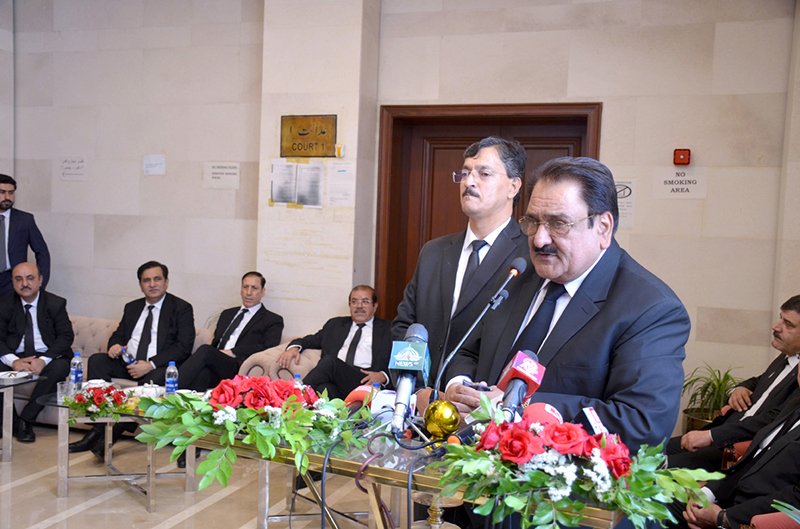
QUETTA — Chief Justice of the Balochistan High Court, Justice Muhammad Kamran Khan Mulakhail, addressed members of the legal fraternity at a tea reception held in honor of the judges of the Federal Constitutional Court in Quetta. The event, which took place on [insert date], was attended by prominent figures from the legal community and aimed to foster dialogue and cooperation among judicial institutions.
What Happened
The tea reception in Quetta served as a platform for Chief Justice Muhammad Kamran Khan Mulakhail to engage with members of the legal fraternity and discuss the challenges and opportunities facing the judiciary in Balochistan. During his address, Justice Mulakhail emphasized the importance of upholding the rule of law and ensuring justice for all citizens. He highlighted the need for continued collaboration between different levels of the judiciary to enhance the effectiveness and efficiency of the legal system.
Justice Mulakhail also acknowledged the efforts of the Federal Constitutional Court judges in maintaining constitutional integrity and providing guidance on complex legal matters. He expressed his appreciation for their dedication and commitment to justice, which he noted was crucial for the stability and development of the legal framework in Pakistan.
The event was attended by judges, lawyers, and other legal professionals who engaged in discussions about recent developments in the legal sector, including reforms aimed at improving access to justice and reducing case backlogs. The gathering provided an opportunity for the exchange of ideas and best practices among legal practitioners, with a focus on strengthening the judiciary’s role in upholding democratic principles.
Background
The Balochistan High Court, established in 1976, plays a critical role in the administration of justice in the province. Over the years, it has been instrumental in interpreting constitutional provisions and adjudicating on matters of public interest. The court’s decisions have often set important legal precedents that influence the broader judicial landscape in Pakistan.
In recent years, the judiciary in Balochistan has faced numerous challenges, including resource constraints, security concerns, and a high volume of pending cases. Efforts to address these issues have included judicial reforms, increased investment in legal infrastructure, and initiatives to enhance the capacity of judges and court staff.
Why It Matters
The address by Chief Justice Mulakhail is significant as it underscores the ongoing efforts to strengthen judicial institutions in Balochistan. The judiciary’s role in upholding the rule of law is vital for maintaining public confidence in the legal system and ensuring that justice is accessible to all citizens. By fostering dialogue among legal professionals, the event contributes to a more cohesive and effective judiciary that can better serve the needs of the public.
Furthermore, the collaboration between the Balochistan High Court and the Federal Constitutional Court highlights the interconnectedness of judicial bodies in Pakistan. Such interactions are essential for harmonizing legal interpretations and ensuring consistency in the application of laws across different jurisdictions.
The event also reflects broader efforts to promote legal reforms and enhance the capacity of the judiciary to address contemporary challenges. As Pakistan continues to navigate complex socio-political dynamics, a robust and independent judiciary is crucial for safeguarding democratic values and protecting citizens’ rights.
Key Takeaways
- Chief Justice Mulakhail emphasized the importance of the rule of law and justice for all.
- The event facilitated dialogue and cooperation among judicial institutions in Balochistan.
- Challenges facing the judiciary include resource constraints and case backlogs.
- Collaboration with the Federal Constitutional Court is crucial for legal consistency.
- The judiciary’s role is vital for maintaining public confidence and democratic values.
Source Attribution
This article is based on official government statements, press releases, and public communications from relevant authorities.














