
DHAKA — The Bangladesh Nationalist Party (BNP) government has announced plans to increase the country’s food grain storage capacity to 34 lakh metric tons over the next five years. This initiative comes despite Bangladesh currently maintaining a satisfactory official reserve of food grains.
What Happened
The Ministry of Food in Bangladesh has revealed that the current stock of food grains stands at 23,74,763 metric tons as of July 23, surpassing the standard safe food reserve threshold of 13,50,000 metric tons by approximately 10,24,000 metric tons. This indicates a robust food security system in place. The BNP government is determined to further enhance this capacity by expanding storage facilities across public warehouses.
According to the Directorate General of Food, public granaries currently hold 19,60,746 metric tons of rice and 2,95,689 metric tons of wheat. Additionally, 1,68,605 metric tons of paddy are in stock, which has been converted into the total rice inventory. Floating reserves of rice amount to 8,735 metric tons.
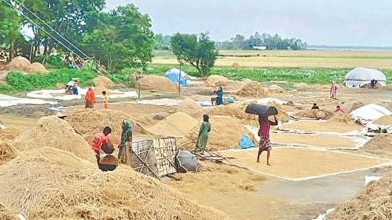
Under the ongoing domestic Boro procurement drive for the 2025-2026 fiscal year, a total of 13,65,431 metric tons of paddy and rice have been collected as of July 23. This includes 4,59,498 metric tons of paddy, 9,89,420 metric tons of parboiled rice, and 76,814 metric tons of sun-dried (Atap) rice. Additionally, 523 metric tons of wheat were procured during this period.
In the first 23 days of the current 2026-27 fiscal year, 3,20,800 metric tons of food grains were imported into Bangladesh. Public sector imports accounted for 11,65,000 metric tons, comprising 7,83,000 metric tons of rice and 3,82,000 metric tons of wheat. Private sector imports totaled 3,09,150 metric tons, including 2,94,000 metric tons of rice and 15,150 metric tons of wheat. Notably, no imports were required under food assistance during this period.
Background
Bangladesh has historically faced challenges related to food security, often exacerbated by natural disasters and fluctuating agricultural yields. The government has been proactive in implementing policies to stabilize food supplies and prices, ensuring that the population has access to essential grains. The Ministry of Food has been instrumental in managing reserves and procurement operations to maintain market stability.
The BNP government’s current initiative to increase storage capacity is part of a broader strategy to align reserves with growing national demand. This move is expected to bolster the country’s ability to respond to potential food shortages and stabilize market prices.
Why It Matters
The expansion of food grain storage capacity in Bangladesh is significant for several reasons. Economically, it ensures that the country can maintain stable food prices, which is crucial for the well-being of its citizens, particularly those in lower-income brackets. By increasing storage capacity, the government aims to mitigate the impact of potential supply chain disruptions and natural calamities.
Socially, a robust food reserve system supports the government’s social safety net programs, ensuring that vulnerable populations have access to essential food supplies. This is particularly important in a country where a significant portion of the population relies on government assistance for basic needs.
Politically, the BNP government’s efforts to enhance food security can strengthen its position domestically by demonstrating its commitment to addressing the needs of its citizens. Internationally, it positions Bangladesh as a country capable of managing its food resources effectively, potentially attracting foreign investment in the agricultural sector.
Key Takeaways
- The BNP government plans to increase food grain storage capacity to 34 lakh metric tons.
- Current food grain reserves exceed the safe threshold by over 10 lakh metric tons.
- Ongoing Boro procurement has successfully collected over 13 lakh metric tons of grains.
- Public and private sector imports have bolstered the country’s food reserves.
- Enhanced storage capacity is crucial for economic stability and social safety nets.
Source Attribution
This article is based on official government statements, press releases, and public communications from relevant authorities.














