
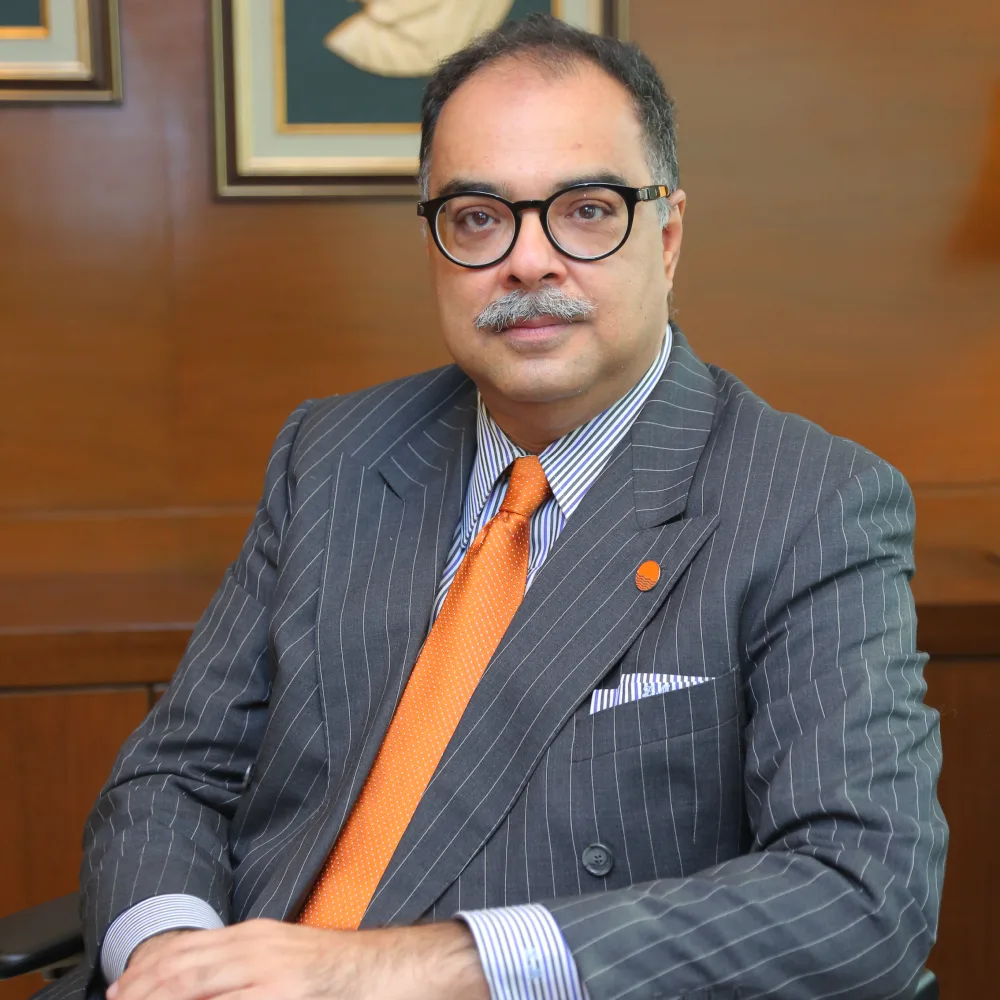
ISLAMABAD — The President and CEO of the Bank of Punjab, Zafar Masud, has advocated for a transition from a conventional GDP model to a ‘welfare GDP’ framework as a strategy to alleviate the economic challenges faced by Pakistani citizens. Addressing the Islamabad Policy Research Institute (IPRI) on August 9, Masud emphasized the need for a holistic approach to economic measurement that prioritizes citizen welfare.
What Happened
During his address at the IPRI event titled ‘Measuring Welfare-GDP Beyond Arithmetic’, Zafar Masud highlighted the limitations of traditional GDP metrics in capturing the true economic well-being of the population. He noted that while Pakistan’s headline GDP experienced an 18.8% growth over the past five fiscal years, this figure drops significantly to 9.6% when adjusted for population growth. This discrepancy underscores the need for a more nuanced approach to economic measurement.
Masud identified several structural weaknesses in Pakistan’s economy, particularly in the labor market. He pointed out that approximately four individuals rely on a single income earner, and the labor force participation rate remains at a low 45%. These factors contribute to the economic strain faced by many households.
Drawing comparisons with countries like Argentina, Greece, and Sri Lanka, Masud suggested that Pakistan could find cautious optimism in their experiences. These nations have endured severe economic crises yet managed to gradually reduce inflation and stabilize their economies. He emphasized the importance of learning from their strategies to achieve sustainable economic growth.
Masud also referenced successful economic models from the UK, US, and Sweden, where long-term prosperity was achieved through a framework of credible rules that lower capital costs and enhance living standards. He proposed a set of five broad reforms aimed at steering Pakistan towards a welfare-oriented GDP model. These reforms include moving beyond the stabilization trap with transparent fiscal accounting, channeling capital into high-return sectors like agriculture and SMEs, enhancing productivity for global competitiveness, ensuring policy predictability, and fostering inclusive growth through job creation and fair wages.
Background
The concept of GDP, or Gross Domestic Product, has long been the standard measure of a country’s economic performance. However, it primarily focuses on economic output without adequately accounting for the distribution of wealth and the overall well-being of citizens. In recent years, there has been a growing recognition of the need to incorporate welfare indicators into economic assessments to provide a more comprehensive picture of national prosperity.
Pakistan’s economy has faced numerous challenges, including high inflation, a large fiscal deficit, and a low tax-to-GDP ratio. These issues have been compounded by political instability and external economic pressures. The government has been working on various economic reforms to address these challenges, but progress has been slow.
Why It Matters
The call for a shift to a welfare GDP model is significant as it highlights the need for economic policies that prioritize the well-being of citizens rather than solely focusing on economic output. By adopting a welfare-oriented approach, Pakistan can aim to address the socio-economic disparities that have long plagued the nation.
Economically, this shift could lead to more equitable growth, where the benefits of economic development are more evenly distributed across different segments of society. This approach could also help in reducing poverty levels and improving the quality of life for the average citizen.
Politically, embracing a welfare GDP model could enhance the government’s credibility and public trust, as it demonstrates a commitment to addressing the needs of the population. It could also attract international support and investment by showcasing a stable and inclusive economic environment.
On an international level, Pakistan’s move towards a welfare GDP model could position it as a leader in the region, advocating for economic policies that balance growth with social welfare. This could strengthen its diplomatic ties and enhance its standing in global economic forums.
Key Takeaways
- Zafar Masud, CEO of the Bank of Punjab, calls for a shift to a welfare GDP model.
- Pakistan’s GDP growth of 18.8% over five years drops to 9.6% when adjusted for population growth.
- Structural weaknesses in the labor market include low participation and high dependency ratios.
- Masud proposes five reforms to enhance economic stability and citizen welfare.
- The shift to welfare GDP could improve socio-economic equity and international standing.
Source Attribution
This article is based on official statements and public communications from the Islamabad Policy Research Institute and the Bank of Punjab.














