
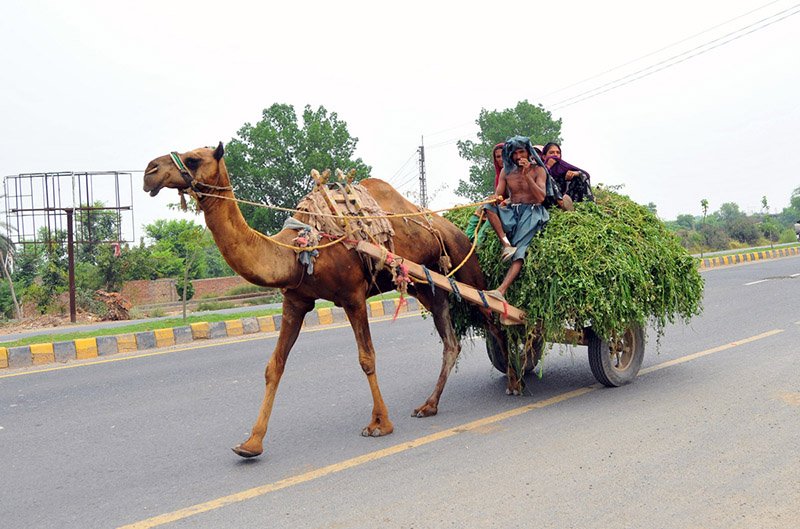
MULTAN — A camel pulling a cart laden with fresh green fodder while simultaneously carrying a family was spotted navigating a city road in Multan, illustrating a traditional mode of transport that remains a vital part of daily life for many residents.
What Happened
In Multan, a city known for its rich history and cultural heritage, a camel-drawn cart was observed making its way through the bustling streets. The cart, heavily loaded with fresh green fodder, also carried a family, showcasing a scene that is both a nod to traditional practices and a practical solution for transportation and livelihood. The use of camels for transport in Multan is not uncommon, as these animals are well-suited to the region’s climate and terrain. They provide an economical and efficient means of moving goods and people, especially in areas where modern vehicles may not be as accessible or affordable.
Local residents often rely on camel carts for transporting agricultural produce, household goods, and even as a means of personal transport. The sight of a camel cart in the city serves as a reminder of the enduring significance of traditional practices in the face of modernity. It also highlights the adaptability and resilience of communities that continue to embrace these age-old methods.
Background
Multan, one of the oldest cities in the Indian subcontinent, has a long history of using animals for transport. The camel, often referred to as the ‘ship of the desert,’ has been an integral part of life in the region for centuries. Historically, camels have been used for trade caravans, agricultural work, and transportation across the arid landscapes of South Asia.
Despite the advent of modern vehicles, many areas in Pakistan, including parts of Multan, still rely on traditional modes of transport. This is due to various factors such as economic constraints, cultural preferences, and the geographical landscape that can make modern vehicles impractical. The camel cart is a symbol of the region’s enduring cultural heritage and its ability to adapt to changing times while preserving traditional practices.
Why It Matters
The continued use of camel carts in Multan is significant for several reasons. Economically, it provides a cost-effective transportation option for many families who may not afford motorized vehicles. This is particularly important in rural and semi-urban areas where economic opportunities can be limited. Socially, the camel cart is a cultural icon that reinforces community identity and continuity. It represents a way of life that has been passed down through generations, offering a sense of stability and tradition in a rapidly modernizing world.
From an environmental perspective, camel carts offer a sustainable alternative to motorized transport, reducing reliance on fossil fuels and lowering carbon emissions. This aligns with global efforts to promote environmentally friendly practices and reduce the carbon footprint of transportation systems.
Furthermore, the presence of camel carts in urban settings like Multan underscores the diverse transport needs of the population and highlights the importance of inclusive transport policies that cater to all segments of society. It also raises awareness about the need to preserve cultural heritage while embracing technological advancements.
Key Takeaways
- Camel carts remain a practical and economical mode of transport in Multan.
- The use of camel carts highlights the cultural heritage and traditional practices of the region.
- Camel-drawn transport offers an environmentally friendly alternative to motorized vehicles.
- The persistence of traditional transport methods reflects the diverse needs of the population.
- Preserving traditional practices is vital for cultural continuity amid modernization.
Source Attribution
This article is based on official government statements, press releases, and public communications from relevant authorities.














