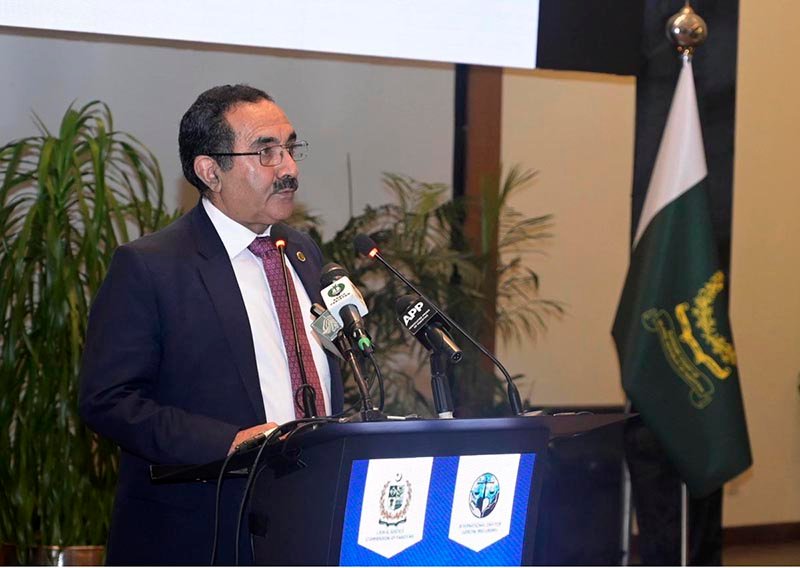
ISLAMABAD — Honorable Chief Justice Ali Baig of the Gilgit-Baltistan Chief Court addressed the National Conference on Judicial Wellbeing, held at the Supreme Court of Pakistan. The event, titled “From Reform to Recognition: Building a Responsive District Judiciary,” took place on Thursday, focusing on enhancing the efficiency and responsiveness of the district judiciary.
What Happened
The conference gathered legal luminaries, judges, and stakeholders from across Pakistan to discuss the pressing need for judicial reforms. Chief Justice Ali Baig emphasized the importance of a responsive judiciary in ensuring justice delivery. In his address, he stated, “The judiciary must evolve to meet the challenges of the modern era, ensuring timely and fair justice for all citizens.”
The event featured a series of panel discussions and workshops aimed at identifying key areas for reform within the district judiciary. Participants explored topics such as case management, judicial training, and the integration of technology to improve court efficiency. Justice Baig highlighted the role of judicial wellbeing in enhancing the overall performance of the judiciary, noting that a well-supported judiciary is essential for maintaining public trust and upholding the rule of law.
In addition to the speeches and discussions, the conference provided a platform for sharing best practices and successful reform initiatives from various regions. Legal experts shared insights on how to address systemic challenges and implement reforms that can adapt to the unique needs of different judicial districts.
Background
The conference is part of ongoing efforts to reform Pakistan’s judiciary, which has faced criticism for delays and inefficiencies. The district judiciary, being the first point of contact for most citizens seeking justice, plays a crucial role in the legal system. Historically, the judiciary in Pakistan has struggled with a backlog of cases, limited resources, and outdated procedural practices.
Efforts to reform the judiciary have been ongoing for several years, with various initiatives aimed at reducing case backlogs, improving judicial infrastructure, and enhancing the training and capacity of judges and court staff. The focus on judicial wellbeing is a relatively new aspect of these reforms, recognizing the impact of judges’ working conditions on their ability to deliver justice effectively.
Why It Matters
The conference’s focus on judicial wellbeing and reform is significant for several reasons. Firstly, it addresses the chronic issue of case backlogs, which have long hindered the judiciary’s ability to function effectively. By improving case management and integrating technology, the judiciary can become more efficient, reducing delays and ensuring timely justice for citizens.
Secondly, the emphasis on judicial wellbeing highlights the need to support judges and court staff in their roles. A judiciary that is well-resourced and supported is better equipped to handle the demands of the justice system, leading to higher morale and improved performance. This, in turn, can enhance public confidence in the judiciary and the rule of law.
Finally, the conference underscores the importance of continuous reform and adaptation within the judiciary. As societal needs and challenges evolve, the judiciary must also evolve to remain relevant and effective. By fostering a culture of innovation and responsiveness, the judiciary can better serve the public and uphold its constitutional mandate.
Key Takeaways
- Chief Justice Ali Baig emphasized the need for a responsive judiciary to ensure timely justice.
- The conference focused on judicial wellbeing as a key component of judicial reform.
- Participants discussed integrating technology and improving case management to enhance efficiency.
- Judicial wellbeing is recognized as essential for maintaining public trust in the judiciary.
- The event highlighted the importance of continuous reform to address evolving societal needs.
Source Attribution
This article is based on official government statements, press releases, and public communications from relevant authorities.