
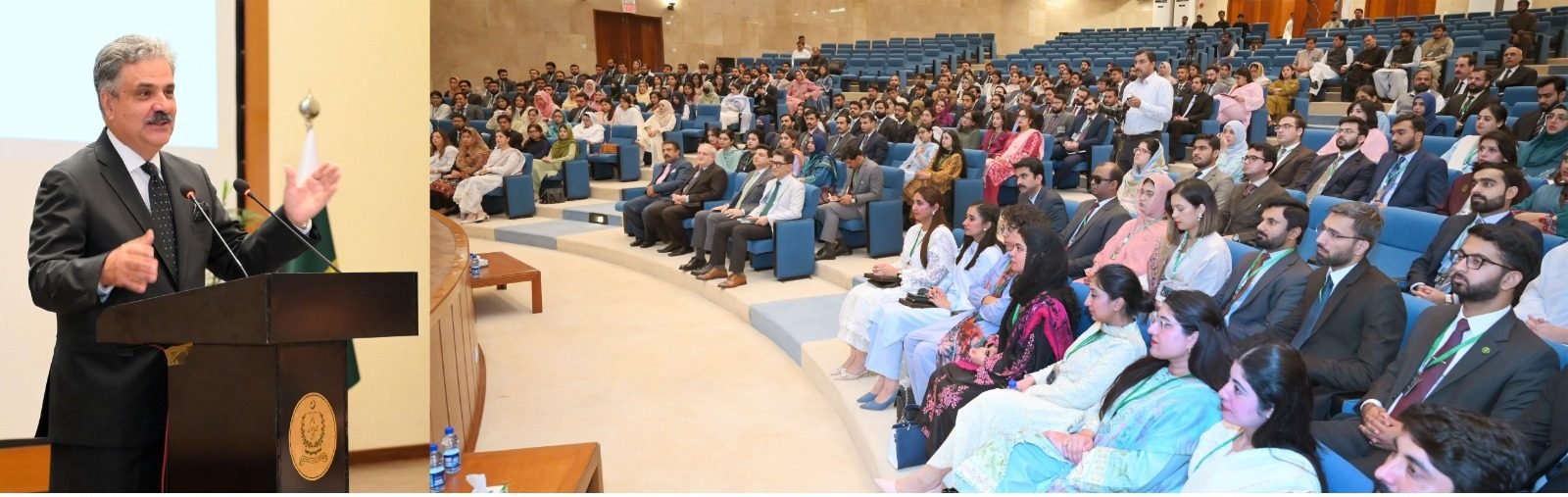
ISLAMABAD — Chief Justice of Pakistan engaged with probationary officers on Friday to discuss constitutional governance and responsive public service. The meeting, held at the Supreme Court, was part of the 54th Common Training Programme at the Civil Services Academy in Lahore.
What Happened
A delegation of probationary officers from the Civil Services Academy visited the Supreme Court as part of their mandatory exposure visits to state institutions. During their visit, the officers met with the Chief Justice of Pakistan, who provided insights into the workings of the judicial system and the importance of upholding constitutional governance. The Chief Justice emphasized the role of the judiciary in ensuring justice and maintaining the rule of law in Pakistan.
The Chief Justice highlighted the significance of responsive public service, urging the officers to prioritize the needs of the citizens in their future roles. He stated, “The judiciary plays a crucial role in safeguarding the rights of the people and ensuring that justice is served without delay.” The officers were encouraged to adopt a service-oriented approach in their careers to effectively address the challenges faced by the public sector.
Throughout the session, the officers were briefed on various aspects of constitutional law and the responsibilities of public servants in implementing these laws. The Chief Justice shared his experiences and challenges faced in the judiciary, providing a comprehensive understanding of the legal framework within which they would operate.
Background
The 54th Common Training Programme is a foundational course for newly inducted civil servants in Pakistan. Conducted at the Civil Services Academy in Lahore, the programme aims to equip probationary officers with the necessary skills and knowledge required for effective public administration. The training includes exposure visits to various state institutions, enabling officers to gain firsthand experience of the functioning of these bodies.
The role of the judiciary in Pakistan has been pivotal in upholding the constitution and ensuring the separation of powers among the branches of government. Over the years, the judiciary has played a significant role in interpreting laws, protecting fundamental rights, and providing checks and balances to the executive and legislative branches.
Why It Matters
The engagement between the Chief Justice and the probationary officers is significant as it underscores the importance of constitutional governance and public service in Pakistan. As future leaders in the civil service, these officers will be responsible for implementing policies and ensuring that the rule of law is upheld in their respective domains. The insights gained from this interaction will help shape their understanding of the legal and administrative frameworks within which they will operate.
In a country where governance challenges are prevalent, the emphasis on constitutional governance and responsive public service is crucial. It highlights the need for a public sector that is not only efficient but also accountable and transparent. By instilling these values in probationary officers, the judiciary aims to foster a culture of integrity and service-oriented governance.
The meeting also reflects the judiciary’s commitment to engaging with other branches of government and civil society to promote a holistic understanding of governance. It reinforces the idea that effective governance requires collaboration and communication between different state institutions.
Key Takeaways
- The Chief Justice of Pakistan engaged with probationary officers on constitutional governance and public service.
- The meeting was part of the 54th Common Training Programme at the Civil Services Academy in Lahore.
- The Chief Justice emphasized the importance of responsive public service and the role of the judiciary in upholding the rule of law.
- The engagement aims to instill values of integrity and service-oriented governance in future civil servants.
- The judiciary’s interaction with probationary officers highlights the need for collaboration among state institutions.
Source Attribution
This article is based on official government statements, press releases, and public communications from relevant authorities.














