
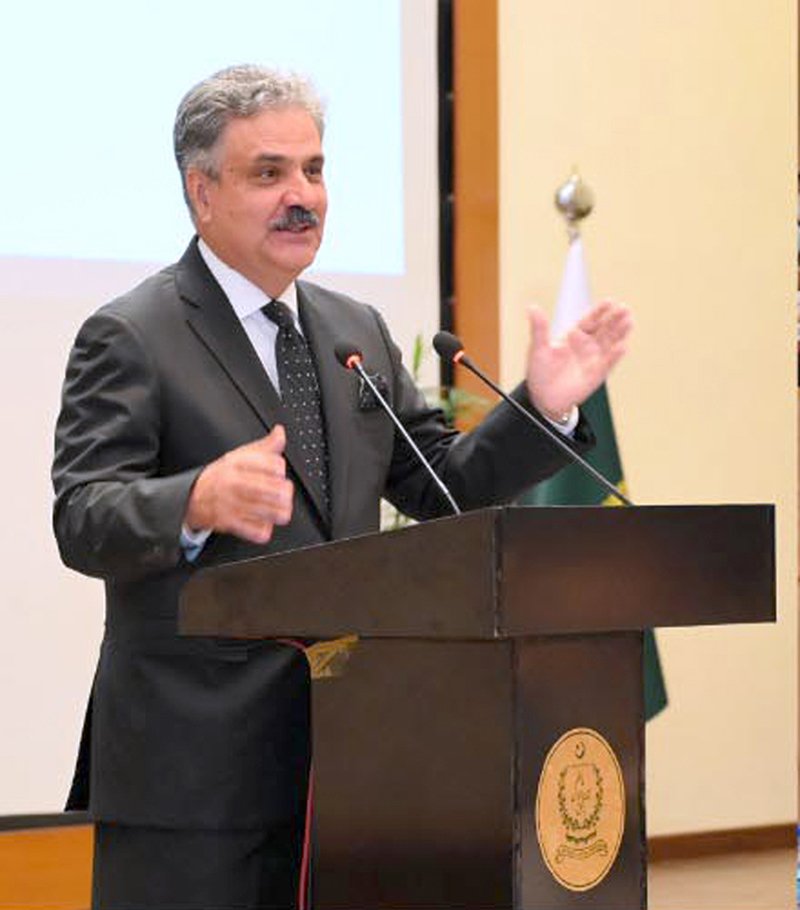
ISLAMABAD — Chief Justice of Pakistan, Justice Yahya Afridi, addressed a delegation of probationary officers from the 54th Common Training Program at the Civil Services Academy (CSA) during a session at the Supreme Court of Pakistan. The event, held on Tuesday, aimed to enlighten the officers on the judiciary’s role and responsibilities in upholding the rule of law.
What Happened
Justice Yahya Afridi engaged with the probationary officers, emphasizing the critical role that civil servants play in the governance and administration of the country. He highlighted the importance of integrity, dedication, and impartiality in their duties. “The judiciary and civil services are pillars of the state, and it is imperative that both work in harmony to ensure justice and good governance,” Justice Afridi stated.
The Chief Justice elaborated on the judiciary’s function in interpreting the law and protecting citizens’ rights. He encouraged the officers to maintain a strong ethical foundation and to serve the nation with a commitment to fairness and transparency. The discussion also touched upon the challenges faced by the judiciary, including case backlogs and the need for judicial reforms to enhance efficiency.
Justice Afridi’s address was part of a broader initiative to familiarize new civil servants with the workings of various state institutions. The session included a question-and-answer segment, where officers had the opportunity to engage directly with the Chief Justice, seeking insights into the legal system and its intersection with civil administration.
Background
The 54th Common Training Program is part of the foundational training for new entrants into Pakistan’s civil services. The Civil Services Academy, located in Lahore, is responsible for equipping these officers with the necessary skills and knowledge to perform their roles effectively. The program includes various modules covering administrative, legal, and policy aspects, aimed at developing well-rounded public servants.
Pakistan’s judiciary has historically played a pivotal role in shaping the country’s legal and political landscape. The Supreme Court, as the apex court, has been instrumental in interpreting constitutional matters and ensuring the enforcement of fundamental rights. The interaction between the judiciary and civil services is crucial for maintaining the balance of power and ensuring effective governance.
Why It Matters
The engagement between the Chief Justice and the probationary officers underscores the importance of collaboration between the judiciary and civil services. As future leaders in public administration, these officers will be at the forefront of implementing policies and ensuring the rule of law. Their understanding of the judiciary’s role is vital for fostering a culture of accountability and transparency within government institutions.
The session also reflects ongoing efforts to address systemic challenges within Pakistan’s judicial system. By fostering dialogue and understanding between different branches of government, there is potential for reforms that could reduce case backlogs and improve access to justice for ordinary citizens.
Furthermore, this interaction highlights the judiciary’s commitment to engaging with other state institutions to promote good governance. Such initiatives are essential in building a more robust and responsive legal framework that can adapt to the needs of a changing society.
Key Takeaways
- Chief Justice Yahya Afridi addressed probationary officers from the Civil Services Academy at the Supreme Court.
- The discussion focused on the roles of the judiciary and civil services in governance and justice.
- Justice Afridi emphasized integrity, dedication, and impartiality in public service.
- The session is part of efforts to enhance understanding between state institutions and promote judicial reforms.
- The interaction aims to prepare future civil servants for effective governance and policy implementation.
Source Attribution
This article is based on official government statements, press releases, and public communications from relevant authorities.














