
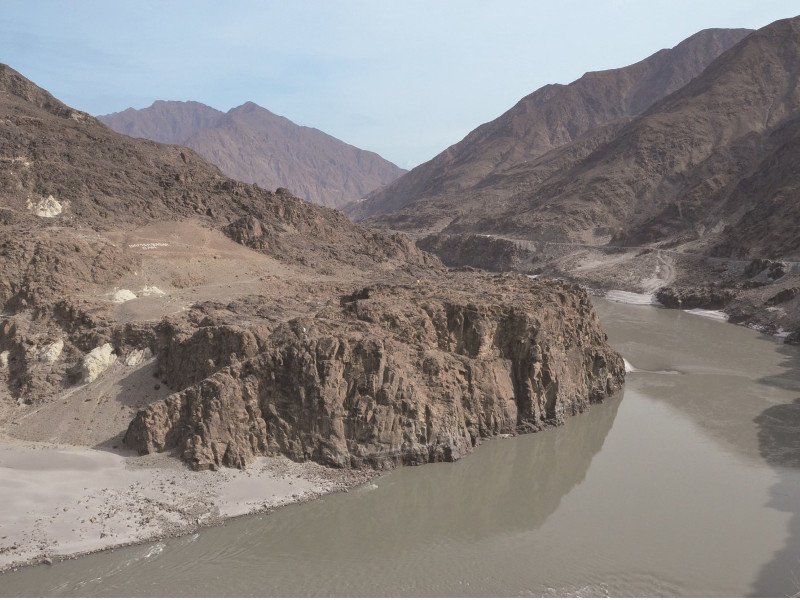
GILGIT — Chief Secretary Gilgit-Baltistan (GB) Arshad Majeed visited the Diamer district on July 5 to assess the ongoing progress of the Diamer Basha Dam Project. His visit focused on addressing land acquisition and resettlement challenges, implementing confidence-building measures, and evaluating key development initiatives associated with the project.
What Happened
During his visit, Chief Secretary Arshad Majeed engaged with local officials and project stakeholders to gain insights into the current status of the Diamer Basha Dam Project. The project, which is a critical component of Pakistan’s energy and water management strategy, has faced several challenges, particularly in terms of land acquisition and the resettlement of affected communities.
Chief Secretary Majeed emphasized the importance of resolving these issues promptly to ensure the project’s smooth progression. He stated, “The government is committed to addressing all outstanding issues and will work towards strengthening inter-agency coordination to facilitate the project’s timely completion.” His remarks underscored the government’s dedication to overcoming bureaucratic hurdles and fostering collaboration among various stakeholders.
The visit also included discussions on confidence-building measures aimed at gaining the trust and cooperation of local communities. These measures are crucial in ensuring that the affected populations are adequately compensated and resettled, thereby minimizing disruptions and grievances. The Chief Secretary highlighted that the government of Gilgit-Baltistan (GoGB) is fully supportive of these efforts and will provide the necessary resources to achieve these objectives.
Background
The Diamer Basha Dam Project is a significant infrastructure initiative in Pakistan, designed to enhance the country’s water storage capacity and generate hydroelectric power. Located on the Indus River, the dam is expected to produce 4,500 megawatts of electricity and store 8.1 million acre-feet of water. The project has been in the planning stages for several decades, with construction officially commencing in 2020.
The project has faced numerous challenges, including financial constraints, legal disputes over land acquisition, and concerns from local communities about displacement and environmental impacts. Despite these hurdles, the government has remained steadfast in its commitment to completing the dam, recognizing its potential to contribute significantly to Pakistan’s energy security and agricultural productivity.
Why It Matters
The Diamer Basha Dam Project holds immense significance for Pakistan’s economic and social development. As a major component of the country’s energy strategy, the dam is expected to alleviate power shortages and reduce reliance on fossil fuels, thereby contributing to a more sustainable energy mix. The hydroelectric power generated by the dam will provide a reliable source of electricity, supporting industrial growth and improving the quality of life for millions of citizens.
Furthermore, the dam’s water storage capacity will play a crucial role in managing the country’s water resources, particularly in the face of climate change and increasing water scarcity. By regulating river flows and providing irrigation water, the dam will enhance agricultural productivity and food security, benefiting farmers and rural communities across Pakistan.
The project’s successful completion also has geopolitical implications, as it strengthens Pakistan’s infrastructure and economic resilience. This, in turn, enhances the country’s ability to engage in regional cooperation and attract foreign investment, bolstering its position on the international stage.
Key Takeaways
- Chief Secretary Gilgit-Baltistan Arshad Majeed visited Diamer to review the Diamer Basha Dam Project.
- The visit focused on land acquisition, resettlement issues, and confidence-building measures.
- The Diamer Basha Dam is crucial for Pakistan’s energy and water management strategies.
- Successful completion of the dam will enhance energy security and agricultural productivity.
- The project has significant economic, social, and geopolitical implications for Pakistan.
Source Attribution
The article is based on official government statements, press releases, and public communications from relevant authorities.














