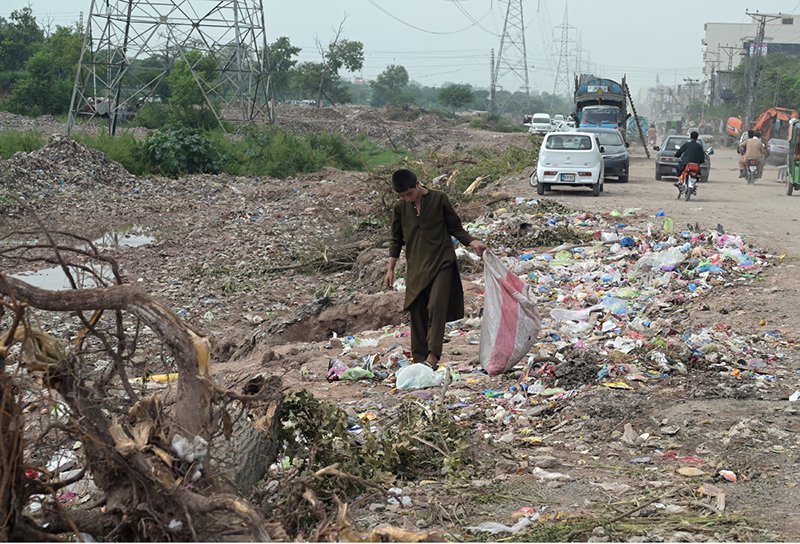
ISLAMABAD — A young boy was seen collecting recyclable materials from heaps of garbage scattered along a roadside in Islamabad on Thursday, highlighting the ongoing issue of waste management in the capital city. The sight underscores the challenges faced by informal waste collectors, often children, who play a crucial role in recycling efforts.
What Happened
The boy, whose identity remains unknown, was observed sifting through piles of refuse in search of items that could be sold for recycling. This activity is a common sight in various parts of Islamabad, where informal waste collectors, including children, contribute significantly to the recycling process. According to local estimates, these individuals collect a substantial portion of the city’s recyclable waste, which is then processed and reused in various industries.
Witnesses reported that the boy was meticulously sorting through the garbage, separating plastic bottles, metal cans, and other materials that could be sold to recycling centers. His actions are part of a larger, informal economy that thrives on the collection and sale of recyclable materials, providing a livelihood for many impoverished families in urban areas.
While the boy’s efforts contribute to environmental sustainability, they also highlight the socio-economic challenges faced by many families in Pakistan. The lack of formal waste management systems in several areas forces individuals, including children, to engage in such activities to support their families financially.
Background
Islamabad, like many other cities in Pakistan, struggles with effective waste management. The city’s rapid urbanization and population growth have outpaced the development of adequate waste disposal infrastructure. As a result, informal waste collectors have become an essential part of the waste management ecosystem.
In Pakistan, it is estimated that around 15 to 20 percent of waste is recycled, largely due to the efforts of informal waste collectors. These individuals often work without any protective gear, exposing themselves to health risks. Child labor in this sector is a significant concern, with many children working long hours in hazardous conditions.
The government has made efforts to address these issues through various initiatives aimed at improving waste management systems and reducing child labor. However, the implementation of such policies remains inconsistent, and many families continue to rely on informal waste collection as a primary source of income.
Why It Matters
The presence of children in the informal waste collection sector raises important questions about child labor and socio-economic inequality in Pakistan. The reliance on children for such work indicates a lack of social safety nets and the need for more robust policies to protect vulnerable populations.
Economically, the informal recycling sector contributes significantly to the national economy by providing raw materials for various industries. However, the lack of regulation and oversight means that workers, especially children, are often exploited and work in unsafe conditions.
Socially, the sight of children working in garbage heaps is a stark reminder of the disparity between different socio-economic groups in Pakistan. It highlights the urgent need for comprehensive policies that address both waste management and child welfare.
Internationally, Pakistan’s waste management challenges reflect broader global issues related to urbanization, poverty, and environmental sustainability. Addressing these challenges requires coordinated efforts from both the government and international partners to develop sustainable solutions that protect both people and the environment.
Key Takeaways
- A young boy was seen collecting recyclables from roadside garbage in Islamabad, highlighting waste management issues.
- Informal waste collectors, including children, play a crucial role in Pakistan’s recycling efforts.
- Child labor in the waste collection sector raises concerns about socio-economic inequality and safety.
- Pakistan’s waste management challenges require comprehensive policy solutions and international cooperation.
- The informal recycling sector significantly contributes to the economy but lacks regulation and oversight.
Source Attribution
This article is based on official government statements, press releases, and public communications from relevant authorities.