
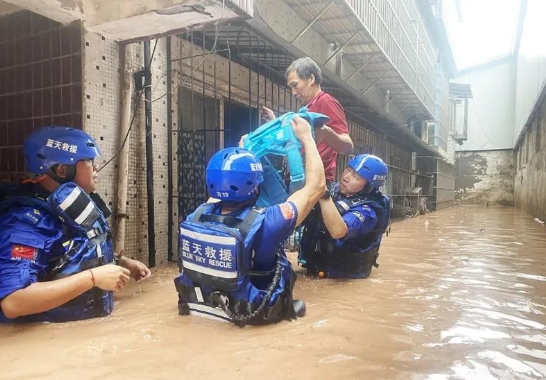
BEIJING — China’s Ministry of Water Resources has initiated a Level-IV emergency flood response across four provincial regions, as the country braces for heavy rainfall induced by Typhoon Dolphin and a cold air mass. The affected areas are primarily in central and northern China, where weather forecasts predict significant precipitation in the coming days.
What Happened
On Monday, the Ministry of Water Resources announced the activation of a Level-IV emergency flood response for four provinces due to the anticipated impact of Typhoon Dolphin. The typhoon, coupled with a cold air mass, is expected to bring substantial rainfall to central and northern China, increasing the risk of flooding in these regions.
The Level-IV emergency response is the lowest in China’s four-tier emergency response system. It involves heightened monitoring and preparedness measures to manage potential flood risks. Local authorities in the affected provinces have been instructed to remain vigilant and implement necessary precautions to safeguard lives and property.
According to the ministry, the provinces of Hebei, Shanxi, Henan, and Shandong are expected to experience the heaviest rainfall. “Local governments must prioritize the safety of people’s lives and property,” stated a ministry official, emphasizing the need for coordinated efforts to mitigate the impact of potential floods.
Weather forecasts indicate that the typhoon will bring heavy downpours, with some areas potentially receiving over 100 millimeters of rain within a 24-hour period. The ministry has urged local authorities to prepare for possible evacuations and to ensure that emergency response teams are ready to act swiftly if conditions worsen.
Background
China’s emergency response system for floods is categorized into four levels, with Level I being the most severe. The system is designed to provide a structured response to varying degrees of flood risk, allowing for efficient resource allocation and coordination among different government agencies and local authorities.
Typhoon Dolphin is the latest in a series of weather events impacting China this year. The country has faced several typhoons and heavy rainfall events, which have led to significant flooding in various regions. These events have highlighted the vulnerability of certain areas to extreme weather conditions, prompting the government to enhance its disaster preparedness and response strategies.
Historically, China has experienced severe flooding, particularly during the summer months. The Yangtze River basin, in particular, is prone to flooding, which can result in widespread damage and displacement of communities.
Why It Matters
The activation of a flood emergency response in four provinces underscores the ongoing challenges China faces in managing natural disasters. The potential for severe flooding poses significant risks to both urban and rural communities, impacting infrastructure, agriculture, and the overall economy.
Economically, flooding can disrupt supply chains, damage crops, and affect industrial production, leading to financial losses. Socially, the displacement of communities and the potential loss of life highlight the human cost of such natural disasters.
Politically, the government’s response to natural disasters is closely scrutinized, as effective management can bolster public confidence, while inadequate responses may lead to criticism and unrest. The activation of the emergency response reflects the government’s commitment to proactive disaster management and the protection of its citizens.
Internationally, China’s handling of natural disasters is observed by other nations, as it provides insights into the country’s resilience and capacity to manage large-scale emergencies. The response to Typhoon Dolphin will be a test of China’s disaster preparedness and its ability to coordinate efforts across multiple regions.
Key Takeaways
- China has activated a Level-IV emergency flood response for four provinces due to Typhoon Dolphin.
- The affected regions are Hebei, Shanxi, Henan, and Shandong, with heavy rainfall expected.
- The emergency response involves heightened monitoring and preparedness measures.
- Flooding poses economic, social, and political challenges for China.
- Effective disaster management is crucial for maintaining public confidence and minimizing damage.
Source Attribution
This article is based on official government statements, press releases, and public communications from relevant authorities.














