
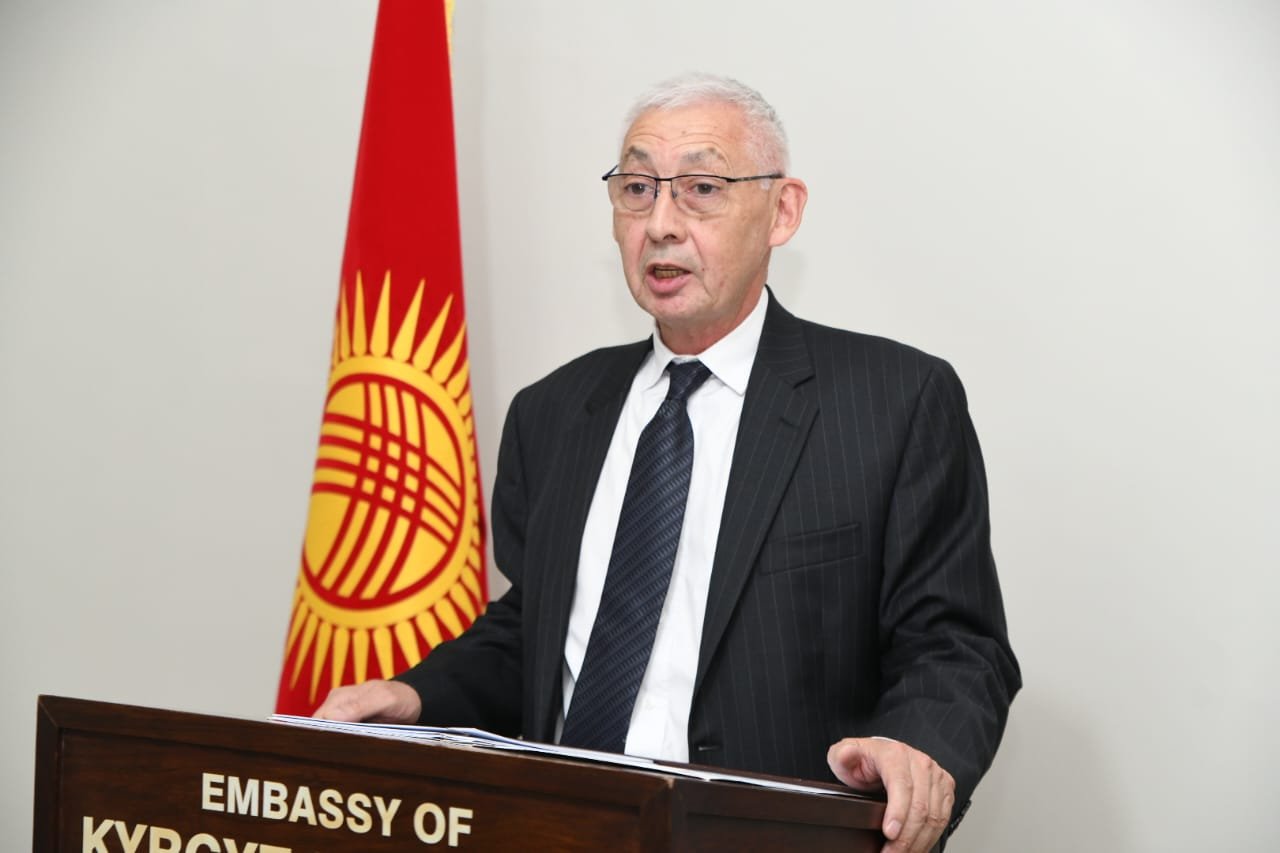
ISLAMABAD — Kyrgyzstan’s Charge d’Affaires in Pakistan, Aibek Tilebeliev, has highlighted the significance of the recent Cholpon-Ata Summit, describing it as a pivotal moment for Central Asian geopolitics. Held in Kyrgyzstan, the summit brought together the heads of state from Central Asia and the Republic of Azerbaijan, marking a new era of regional cooperation and connectivity.
What Happened
The Cholpon-Ata Summit, an informal consultative meeting, was convened to discuss and enhance regional collaboration among Central Asian nations and Azerbaijan. According to Aibek Tilebeliev, the summit has been instrumental in opening new corridors to Europe, which could significantly boost trade and energy exchanges. The summit, held on August 10, 2023, in the picturesque town of Cholpon-Ata, focused on creating a unified approach to regional challenges and opportunities.
Tilebeliev emphasized the summit’s role in redefining geopolitical dynamics by fostering stronger ties among participating countries. “This expanded platform has created new opportunities for connectivity, trade, and energy collaboration,” he stated. The summit’s discussions revolved around enhancing infrastructure, streamlining trade routes, and developing energy projects that could serve as a backbone for regional economic growth.
The leaders also explored the potential of tapping into the vast natural resources of Central Asia and Azerbaijan. By leveraging these resources, the countries aim to establish themselves as key players in the global energy market. The summit underscored the importance of collective efforts in addressing common regional issues such as security, economic development, and climate change.
Background
The Cholpon-Ata Summit is part of a broader initiative to strengthen regional cooperation in Central Asia, a region historically characterized by diverse political and economic landscapes. In recent years, there has been a growing recognition of the need for a collaborative approach to harness the region’s potential. Previous summits and meetings have laid the groundwork for this latest gathering, which aims to solidify partnerships and create a cohesive regional strategy.
Central Asia has long been a crossroads of trade and cultural exchange, with the Silk Road serving as a historical conduit between East and West. In the modern era, the region’s strategic location offers significant opportunities for economic integration and development. The summit builds on past efforts to revitalize these historical connections and adapt them to contemporary geopolitical realities.
Why It Matters
The outcomes of the Cholpon-Ata Summit are poised to have far-reaching implications for Central Asia and beyond. Economically, the establishment of new corridors to Europe could facilitate increased trade and investment, providing a much-needed boost to regional economies. For Pakistan, enhanced connectivity with Central Asia could open up new markets and create opportunities for collaboration in sectors such as energy, agriculture, and technology.
Politically, the summit represents a shift towards greater regional integration, which could contribute to stability and security in a historically volatile area. By working together, Central Asian countries and Azerbaijan can address shared challenges more effectively, reducing the risk of conflict and fostering a more stable environment for growth.
Internationally, the summit’s focus on energy cooperation could have significant implications for global energy markets. As Central Asia and Azerbaijan develop their energy resources, they could become key suppliers to Europe, diversifying supply sources and enhancing energy security for the continent.
Key Takeaways
- The Cholpon-Ata Summit marks a significant step in Central Asian regional cooperation.
- New corridors to Europe could boost trade and energy exchanges.
- The summit emphasizes the importance of collective efforts to address regional challenges.
- Enhanced connectivity could create new opportunities for Pakistan and other neighboring countries.
- Central Asia and Azerbaijan aim to become key players in the global energy market.
Source Attribution
This article is based on official government statements and public communications from relevant authorities.














