
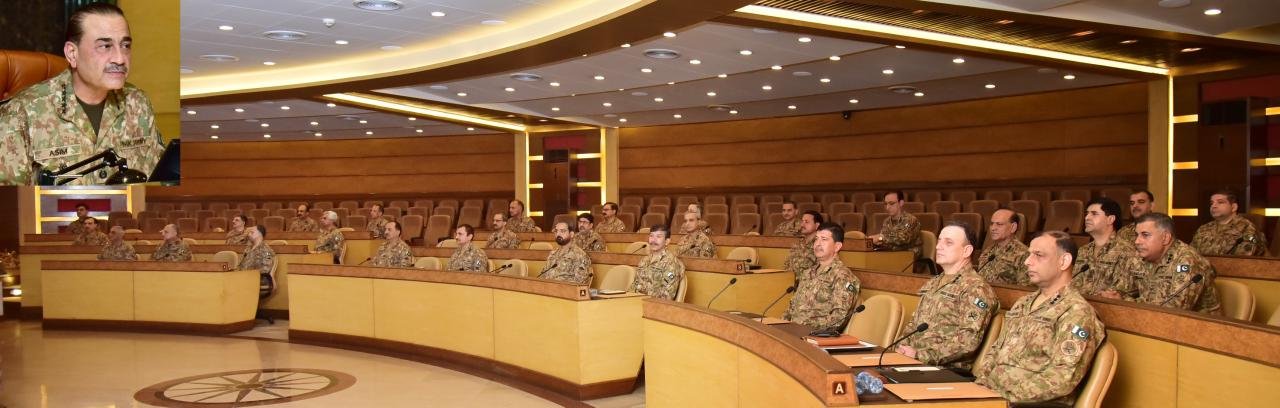
RAWALPINDI — The Corps Commanders’ Conference (CCC) has reaffirmed its commitment to protect Pakistan’s water rights under the Indus Waters Treaty (IWT). Meeting on Monday, the military leadership addressed recent statements from India regarding the treaty, emphasizing the necessity of ensuring Pakistan’s rightful water share in accordance with government directives and public expectations.
What Happened
The 276th Corps Commanders’ Conference convened in Rawalpindi, focusing on the strategic and operational concerns impacting Pakistan’s national security. A significant portion of the discussion centered around the Indus Waters Treaty, a critical agreement between Pakistan and India that governs the distribution of water from the Indus River system. The CCC expressed its determination to take all requisite measures to secure Pakistan’s water rights, highlighting the importance of water security for the nation.
During the meeting, the commanders reviewed the current situation and deliberated on potential strategies to counter any challenges posed by India’s recent rhetoric. The conference underscored the military’s role in supporting the government’s efforts to ensure compliance with the treaty. A senior military official stated, “We are committed to safeguarding Pakistan’s water rights as per the Indus Waters Treaty and will implement all necessary measures to achieve this goal.”
The CCC also discussed the broader implications of water security on national stability and development, recognizing the vital role that water resources play in sustaining Pakistan’s agricultural and economic sectors.
Background
The Indus Waters Treaty, signed in 1960, is a water-distribution agreement brokered by the World Bank between Pakistan and India. It allocates the use of the Indus River and its tributaries, granting control of the eastern rivers (Sutlej, Beas, and Ravi) to India, while Pakistan receives the western rivers (Indus, Jhelum, and Chenab). Despite its success in preventing major conflicts over water, the treaty has faced challenges, particularly in recent years, as both countries have accused each other of violations.
India’s construction of dams and hydroelectric projects on the western rivers has been a point of contention, with Pakistan expressing concerns over potential reductions in water flow. The treaty includes mechanisms for dispute resolution, but tensions have persisted, exacerbated by broader geopolitical issues between the two nations.
Why It Matters
Water security is a critical issue for Pakistan, a country heavily reliant on its agricultural sector, which constitutes a significant portion of its economy and employs a large segment of the population. The availability of water from the Indus River system is essential for irrigation, drinking, and industrial use. Any disruption in water supply could have severe implications for food security, economic stability, and social welfare.
The Corps Commanders’ emphasis on safeguarding water rights reflects the strategic importance of water resources in national security planning. As climate change and population growth exert additional pressure on water availability, ensuring equitable distribution and sustainable management becomes increasingly crucial.
Furthermore, the military’s involvement underscores the intersection of environmental and security concerns in Pakistan. By aligning with government efforts, the military aims to present a united front in addressing potential threats to the country’s water resources, thereby reinforcing national resilience.
Key Takeaways
- The Corps Commanders’ Conference has pledged to protect Pakistan’s water rights under the Indus Waters Treaty.
- The meeting addressed India’s recent statements and explored strategies to ensure water security.
- The Indus Waters Treaty is vital for managing water distribution between Pakistan and India.
- Water security is crucial for Pakistan’s agriculture, economy, and national stability.
- The military’s role highlights the strategic importance of water resources in national security.
Source Attribution
This article is based on official government statements, press releases, and public communications from relevant authorities.














