
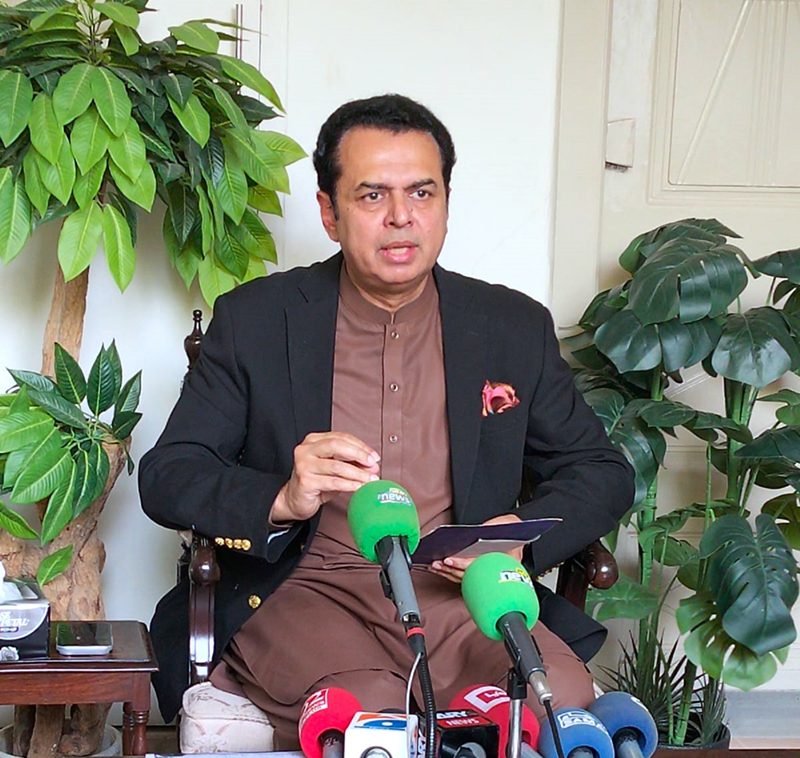
ISLAMABAD — Minister of State for Interior Talal Chaudhary stated on Wednesday that a recent court ruling concerning a jailed political leader underscores the functionality of institutions within their constitutional boundaries in Pakistan.
What Happened
The court decision, which has become a focal point in national discourse, was announced earlier this week. It pertains to a high-profile political figure who has been embroiled in legal battles over the past few years. According to Talal Chaudhary, the ruling exemplifies the judiciary’s independence and its commitment to uphold the law, despite external pressures and political narratives attempting to sway public opinion.
Chaudhary emphasized, “This decision is a testament to the rule of law prevailing in the country. It clearly demonstrates that our institutions are operating within their constitutional limits and are not influenced by political agendas.” His remarks came during a press briefing held in Islamabad, where he addressed the media’s questions regarding the implications of the court’s ruling.
The Minister of State highlighted the importance of respecting judicial decisions, noting that such outcomes are critical for maintaining democratic norms and ensuring justice. He further added that the judiciary’s role is pivotal in safeguarding the rights of citizens and maintaining the balance of power among the state’s institutions.
Background
The political leader in question has been a central figure in Pakistan’s political landscape, with a career marked by both significant achievements and controversies. Over the years, several legal cases have been filed against this individual, leading to a series of trials and appeals. These legal proceedings have often been accompanied by widespread media coverage and public debate, reflecting the leader’s influence and the polarizing nature of their political career.
The judiciary in Pakistan has a history of navigating complex political cases, often under intense scrutiny from both domestic and international observers. The courts have been tasked with balancing legal principles with the broader political context, a challenge that has been particularly pronounced in cases involving prominent political figures.
Why It Matters
This court decision is significant for several reasons. Firstly, it reinforces the judiciary’s role as an independent arbiter in Pakistan’s political system. By upholding the rule of law, the court has sent a clear message that legal principles will not be compromised, even in politically charged cases. This is crucial for maintaining public confidence in the judicial system and ensuring that justice is served impartially.
Economically, the decision may have implications for investor confidence. A stable and predictable legal environment is essential for attracting foreign investment, and the affirmation of judicial independence can be seen as a positive signal to international markets. This could potentially lead to increased economic activity and growth, benefiting the broader population.
Socially, the ruling has the potential to influence public perceptions of the political system. By demonstrating that no individual is above the law, the court has reinforced the principle of equality before the law, which is a cornerstone of democratic governance. This could lead to greater civic engagement and trust in public institutions.
Politically, the decision challenges narratives that seek to undermine the credibility of state institutions. By rejecting political interference, the judiciary has positioned itself as a guardian of constitutional order, which is essential for the functioning of a healthy democracy.
Key Takeaways
- The court ruling highlights the judiciary’s independence and commitment to the rule of law.
- The decision may positively impact investor confidence and economic stability.
- Public trust in the political and legal systems could be strengthened by the ruling.
- The case underscores the importance of respecting judicial decisions in a democratic society.
- The ruling challenges political narratives that question the credibility of state institutions.
Source Attribution
This article is based on official government statements, press releases, and public communications from relevant authorities.














