
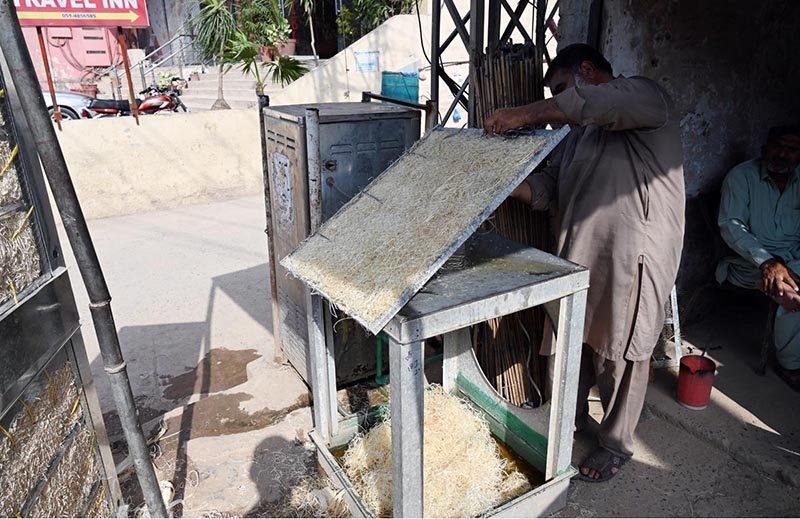
RAWALPINDI — A skilled craftsman is diligently repairing traditional khus (vetiver grass) coolers at a roadside workshop in Rawalpindi, offering a sustainable solution to beat the summer heat. These eco-friendly coolers are gaining popularity as temperatures soar, providing an alternative to electric air conditioning.
The Revival of Khus Coolers
This craftsman, with over two decades of experience working with khus grass, is part of a dedicated group of artisans keeping this traditional craft alive. At his workshop on a bustling Rawalpindi street, he meticulously weaves vetiver grass into cooler frames, securing each piece to enhance the cooling effect.
“These coolers are not only environmentally friendly but also cost-effective,” the craftsman explained. “They use minimal electricity and provide a natural cooling effect that is soothing and refreshing.” The demand has surged as more seek sustainable cooling options amid rising electricity costs and power outages.
Crafting Process and Materials
Using locally sourced materials, the craftsman crafts each cooler by hand. Depending on the size and complexity of the design, this process can take several days. Vetiver grass, known for its cooling properties, enhances the natural breeze when water circulates through the cooler.
Historical Context of Khus Coolers
Khus coolers have been a staple in South Asian households for centuries, especially in hot, dry regions. The use of vetiver grass dates back to ancient times for heat relief. Historically, these coolers were common in homes and public spaces before modern air conditioning systems emerged.
Recently, traditional cooling methods have regained interest due to their environmental benefits and cost-effectiveness. As climate change intensifies heatwaves, sustainable cooling solutions like khus coolers are becoming increasingly important.
The Significance of Khus Coolers
Khus coolers offer a low-cost alternative to electric air conditioning, often too expensive for many Pakistani households. With rising electricity prices and frequent power shortages, they provide a reliable solution that operates independently of the grid.
Environmentally, these coolers are a sustainable choice, consuming less electricity than conventional air conditioners and reducing household carbon footprints. This is crucial as Pakistan tackles challenges like air pollution and resource scarcity.
Socially, reviving khus cooler craftsmanship supports local artisans, preserving traditional skills passed down through generations. Choosing these coolers allows consumers to make environmentally conscious choices while supporting local economies and cultural heritage.
Globally, the trend towards sustainable cooling aligns with efforts to combat climate change by reducing energy use and promoting green technologies. As Pakistan urbanizes and develops, adopting these methods could serve as a model for other nations facing similar challenges.
- A Rawalpindi craftsman is reviving the traditional craft of khus cooler making.
- Khus coolers are an eco-friendly, cost-effective alternative to electric air conditioning.
- This resurgence supports local artisans and cultural heritage preservation.
- Traditional cooling methods align with global sustainable practices.














