
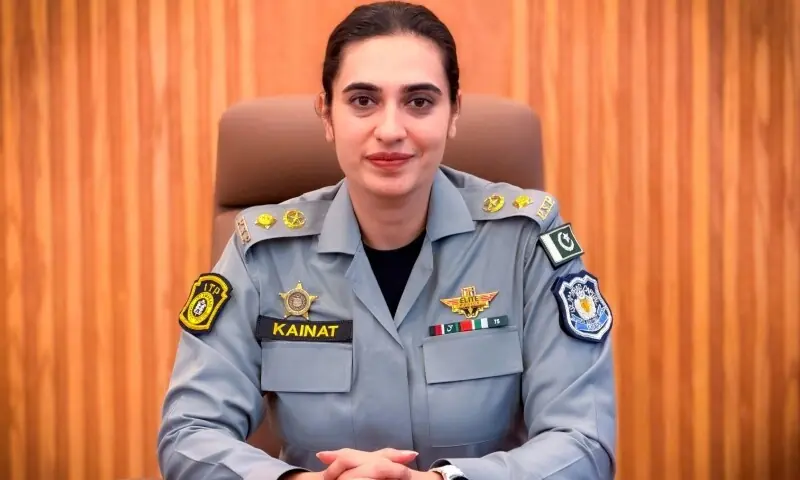
ISLAMABAD — Chief Traffic Officer (CTO) Kainat Azhar Khan has emphasized the importance of public cooperation for a safe Muharram procession in Islamabad. During her visit to the G-6 area on Thursday morning, she reviewed the traffic management and security arrangements for the upcoming event.
Inspection and Preparations
CTO Kainat Azhar Khan conducted an on-site inspection of the primary Muharram procession route in Islamabad’s G-6 area. The goal of the visit was to evaluate the traffic management strategies and security measures. Khan expressed satisfaction with the arrangements, but emphasized the need for public discipline to ensure the event proceeds smoothly.
In discussions with media representatives, CTO Khan highlighted the deployment of additional traffic personnel to manage vehicular flow and ensure participant safety. “Our primary objective is to facilitate the procession while minimizing inconvenience to the public,” she stated. She also noted that the traffic police have coordinated with other law enforcement agencies to strengthen security measures along the procession route.
Specific traffic diversions and parking restrictions will be implemented to maintain order and prevent congestion. Khan urged citizens to comply with the designated routes and follow instructions from traffic personnel. “Public cooperation is crucial for the success of these arrangements,” she added.
Understanding Muharram
Muharram marks the first month of the Islamic lunar calendar and holds religious importance, especially for the Shia community. The tenth day, Ashura, commemorates the martyrdom of Imam Hussain, the grandson of Prophet Muhammad, at the Battle of Karbala. Global processions and gatherings honor his sacrifice.
In Pakistan, Muharram processions are observed with deep reverence, drawing large crowds. Government and law enforcement agencies take extensive measures to ensure the safety and security of participants due to historical threats and incidents of violence at such gatherings.
Significance of Public Safety
The safety of Muharram processions holds national importance in Pakistan, where sectarian tensions have historically led to violence. Ensuring a peaceful observance helps maintain communal harmony and public safety. The efforts of the Islamabad Traffic Police, under CTO Kainat Azhar Khan, demonstrate a commitment to safeguarding religious freedoms while maintaining public order.
The emphasis on public cooperation highlights the role citizens play in supporting law enforcement. By adhering to traffic regulations and security protocols, the public contributes to a peaceful and orderly Muharram observance. This cooperation is vital for the safety of participants and for minimizing disruptions in the capital city.
Key Points
- CTO Islamabad Kainat Azhar Khan stresses public cooperation for safe Muharram processions.
- Additional traffic personnel and enhanced security measures are in place.
- Muharram holds deep religious importance, requiring strong safety protocols.
- Public adherence to traffic and security guidelines ensures a peaceful observance.
- Effective management of processions enhances Pakistan’s international image and sets a precedent for future events.














