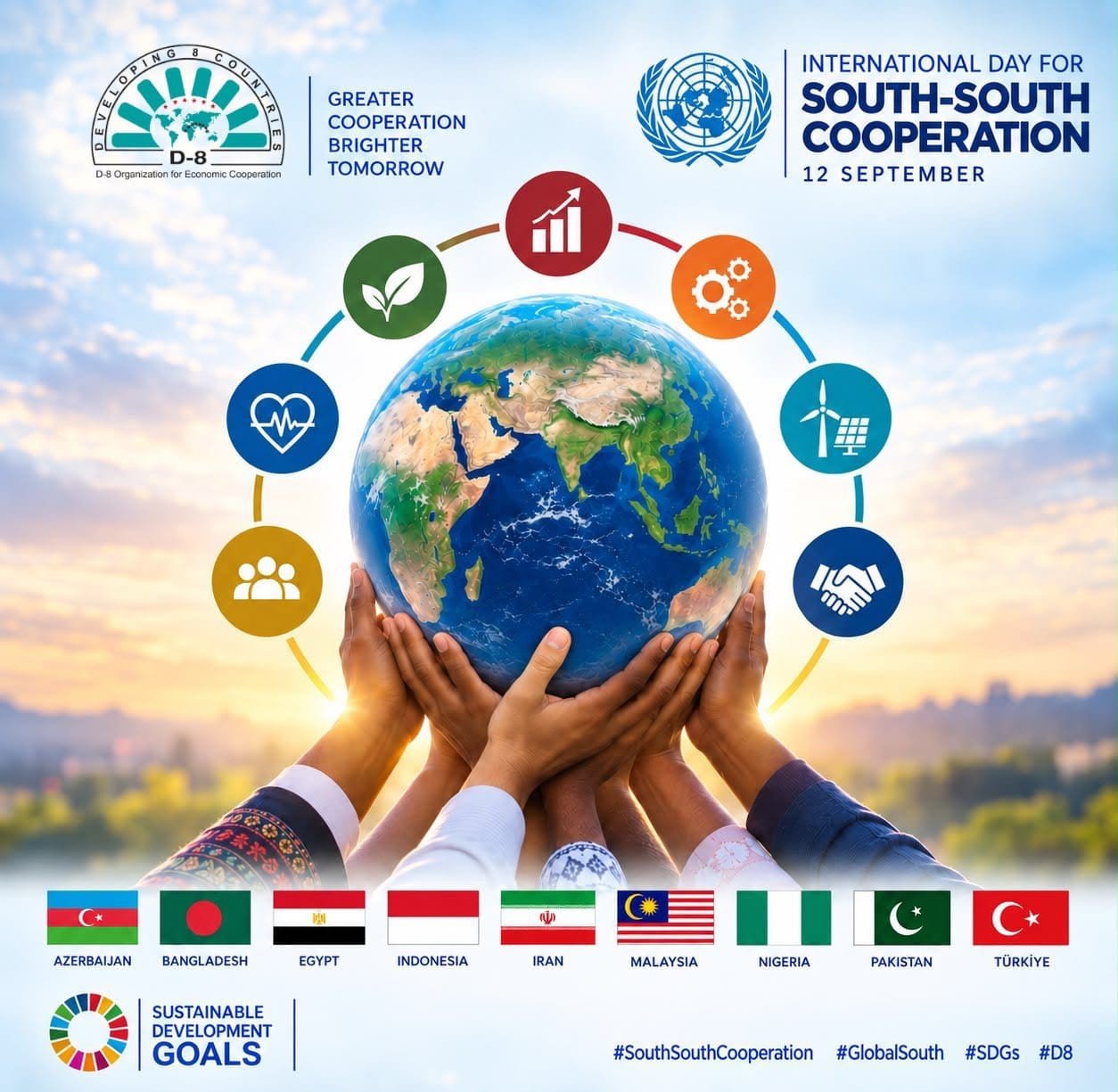
ISLAMABAD — The Developing-8 Organization for Economic Cooperation (D-8) has reiterated its dedication to bolstering South-South cooperation. This commitment was emphasized on the International Day for South-South Cooperation, aiming to foster solidarity, knowledge exchange, and collaborative efforts to address challenges faced by the Global South.
What Happened
The D-8, an organization comprising Bangladesh, Egypt, Indonesia, Iran, Malaysia, Nigeria, Pakistan, and Turkey, reaffirmed its commitment through a message from the D-8 Secretary General on September 12. The statement highlighted the importance of South-South cooperation as a means to leverage collective strengths and develop practical solutions for the socio-economic challenges faced by member countries.
The D-8 Secretary General emphasized the role of knowledge sharing and experience exchange in achieving sustainable development goals. “The D-8 remains steadfast in its mission to enhance cooperation among member states to achieve economic growth and development,” the Secretary General stated. The organization aims to facilitate joint projects and initiatives that can lead to tangible benefits for the Global South.
The message underscored the importance of solidarity among developing nations, particularly in the face of global challenges such as climate change, economic instability, and health crises. By pooling resources and expertise, the D-8 aims to create a platform for innovative solutions that can be implemented across member states.
Background
Established in 1997, the D-8 is a multilateral organization that seeks to improve the position of developing countries in the global economy, diversify and create new opportunities in trade relations, enhance participation in decision-making at the international level, and provide better standards of living. The organization has been instrumental in promoting economic cooperation among its members, focusing on areas such as trade, agriculture, industry, energy, and tourism.
South-South cooperation refers to the exchange of resources, technology, and knowledge between developing countries, also known as countries of the Global South. This concept gained prominence following the Buenos Aires Plan of Action in 1978, which set the framework for technical cooperation among developing countries.
Why It Matters
The reaffirmation of commitment by the D-8 is significant in the current global context where developing countries face numerous challenges exacerbated by the COVID-19 pandemic, climate change, and geopolitical tensions. South-South cooperation offers an alternative framework for development that is based on mutual benefit and solidarity rather than dependency on traditional North-South aid dynamics.
Economically, enhanced cooperation among D-8 countries can lead to increased trade and investment opportunities, fostering economic growth and job creation. By focusing on sectors such as agriculture and energy, member states can work towards food security and sustainable energy solutions, which are critical for long-term development.
Socially, the exchange of knowledge and best practices can improve healthcare systems, education, and infrastructure in member countries. This cooperation can lead to improved living standards and reduced poverty levels, contributing to the achievement of the United Nations Sustainable Development Goals (SDGs).
Politically, the D-8’s commitment to South-South cooperation can strengthen the collective voice of developing countries in international forums, allowing them to advocate more effectively for policies that address their specific needs and challenges.
Key Takeaways
- The D-8 organization has reaffirmed its commitment to strengthening South-South cooperation among its member countries.
- South-South cooperation is crucial for developing practical solutions to the socio-economic challenges faced by the Global South.
- The D-8 aims to enhance economic growth, trade, and development through collaborative projects and knowledge exchange.
- This initiative is expected to contribute to achieving the United Nations Sustainable Development Goals (SDGs).
- Strengthened cooperation can enhance the collective voice of developing countries in international decision-making processes.
Source Attribution
This article is based on official statements and public communications from the Developing-8 Organization for Economic Cooperation.