
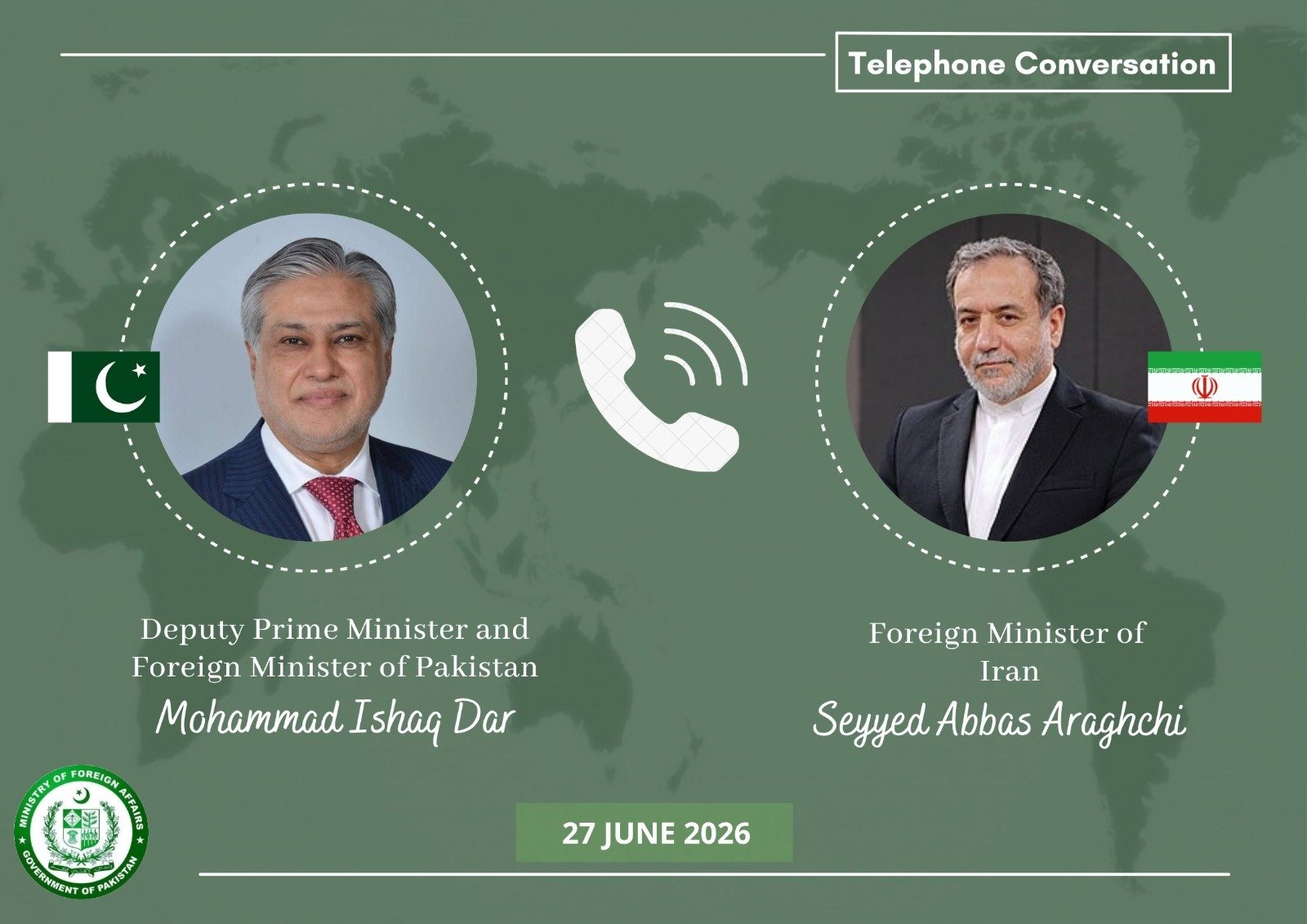
ISLAMABAD — In a significant move, Deputy Prime Minister and Foreign Minister Senator Mohammad Ishaq Dar reaffirmed Pakistan’s dedication to regional peace. This was highlighted during a conversation with Iranian Foreign Minister Abbas Araghchi on June 26, emphasizing Pakistan’s role in ensuring long-lasting peace and stability.
Telephonic Dialogue with Iran
On the evening of June 26, Deputy Prime Minister Mohammad Ishaq Dar engaged in a telephonic discussion with Iranian Foreign Minister Abbas Araghchi. The call reinforced Pakistan’s ongoing efforts to foster peace in the region, positioning itself as a stabilizing force. Both ministers stressed the need for collaboration between Pakistan and Iran to tackle regional challenges and promote shared interests.
Foreign Minister Araghchi expressed his appreciation for Pakistan’s unwavering support in advancing regional peace initiatives. He noted Pakistan’s critical role in facilitating dialogue and cooperation among neighboring countries. This exchange reflects their mutual commitment to strengthening bilateral relations and addressing regional issues collaboratively.
This dialogue is particularly relevant as both nations navigate complex geopolitical dynamics. Pakistan’s reaffirmed commitment is perceived as a positive move towards enhancing diplomatic ties and fostering cooperation in South Asia and the Middle East.
Pakistan’s Diplomatic Role
Historically, Pakistan has been an integral player in regional diplomacy, often mediating conflicts. Sharing borders with Iran, Afghanistan, and India, Pakistan’s function in regional stability is crucial. The country has consistently engaged in peace initiatives, particularly involving Afghanistan’s ongoing conflicts.
The Pakistan-Iran relationship has experienced fluctuations due to broader geopolitical tensions. However, both nations have shown a consistent desire to enhance their relationship, focusing on trade, security, and cultural exchange.
Economic and Political Implications
Pakistan’s commitment to regional peace holds significant implications domestically and internationally. Economically, stability can lead to heightened trade and investment opportunities, strengthening Pakistan’s economy. Acting as a peace facilitator, Pakistan stands to attract foreign investments and foster its economic partnerships.
Socially, regional peace enhances living conditions, reducing conflict threats, and improving security. This creates a conducive environment for development, benefiting both Pakistan and its neighbors.
Politically, advocating for peace bolsters Pakistan’s international standing. Active participation in regional diplomacy can consolidate Pakistan’s relationships with global powers, enhancing its influence in regional affairs. This facilitates greater cooperation on issues like counter-terrorism and sustainable development.
Internationally, the partnership between Pakistan and Iran can aid broader efforts to stabilize the Middle East and South Asia, contributing to global peace initiatives.














