
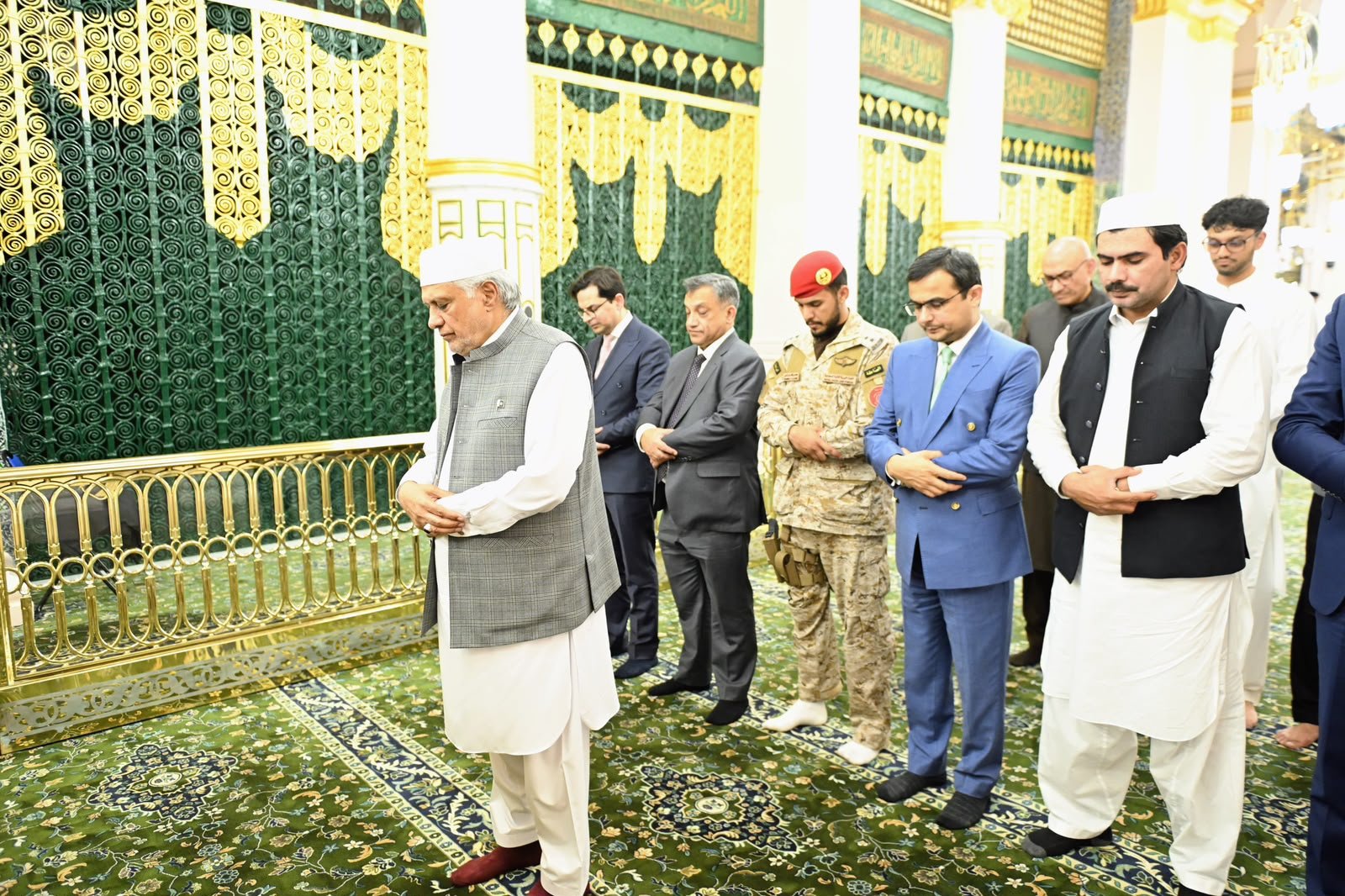
MADINA MUNAWARA — Deputy Prime Minister and Foreign Minister Senator Mohammad Ishaq Dar visited the holy city of Madina Munawara on Thursday, where he paid his respects at Masjid-e-Nabawi (PBUH) and offered prayers. During his visit, he prayed for the peace, progress, and prosperity of Pakistan and the well-being of the Muslim Ummah.
What Happened
Deputy Prime Minister Ishaq Dar, upon his arrival in Madina Munawara, engaged in a spiritual visit to one of Islam’s holiest sites, Masjid-e-Nabawi. This visit, occurring on August 6, 2023, was marked by his prayers for the nation of Pakistan and the broader Muslim community. Dar’s prayers emphasized the themes of peace, progress, and prosperity, reflecting his hopes for a stable and flourishing future for Pakistan.
In addition to his visit to Masjid-e-Nabawi, Dar also visited Jabal Uhud, a site of historical significance in Islamic history. At Jabal Uhud, he paid his respects at the resting place of Hazrat Ameer Hamza (RA), a revered figure in Islam and a martyr of the Battle of Uhud. Dar offered prayers for all martyrs who laid down their lives in this significant battle, which holds a profound place in Islamic history due to its lessons on resilience and faith.
Background
The visit to Masjid-e-Nabawi is a significant spiritual journey for Muslims worldwide. The mosque, located in the city of Madina, is the second holiest site in Islam after the Masjid al-Haram in Mecca. It is revered as the resting place of the Prophet Muhammad (PBUH), making it a focal point for Islamic pilgrimage and worship.
Jabal Uhud, another site visited by Dar, is historically significant due to the Battle of Uhud, fought in 625 CE between the early Muslims and the Quraysh of Mecca. The battle is remembered for the lessons it imparted on unity and faith, despite the Muslims’ tactical retreat. Hazrat Ameer Hamza, the Prophet Muhammad’s (PBUH) uncle, is one of the most notable martyrs of this battle, and his resting place is a site of homage for many Muslims.
Why It Matters
Dar’s visit to these holy sites underscores the importance of spiritual reflection and prayer in the face of national challenges. As Pakistan navigates complex socio-economic and political landscapes, such gestures by high-ranking officials highlight the role of faith and spirituality in seeking guidance and strength. This visit comes at a time when Pakistan is striving for economic stability and social cohesion, amidst global economic pressures and domestic challenges.
The prayers for peace and prosperity resonate with the aspirations of many Pakistanis who hope for a future marked by economic growth, political stability, and social harmony. Such visits can also strengthen the cultural and religious ties between Pakistan and Saudi Arabia, fostering goodwill and mutual respect between the two nations.
Furthermore, the emphasis on the well-being of the Muslim Ummah reflects Pakistan’s broader diplomatic stance of advocating for unity and cooperation among Muslim-majority countries. This aligns with Pakistan’s foreign policy objectives of fostering peace and collaboration within the Islamic world.
Key Takeaways
- Deputy Prime Minister Ishaq Dar visited Masjid-e-Nabawi in Madina Munawara, offering prayers for Pakistan’s peace and prosperity.
- Dar also paid respects at Jabal Uhud, honoring the martyrs of the Battle of Uhud, including Hazrat Ameer Hamza (RA).
- The visit highlights the role of spirituality in addressing national challenges and seeking divine guidance.
- Strengthening religious and cultural ties with Saudi Arabia is a key aspect of Pakistan’s diplomatic relationships.
- The emphasis on the Muslim Ummah’s well-being aligns with Pakistan’s foreign policy of promoting unity among Muslim-majority nations.
Source Attribution
This article is based on official government statements, press releases, and public communications from relevant authorities.














