
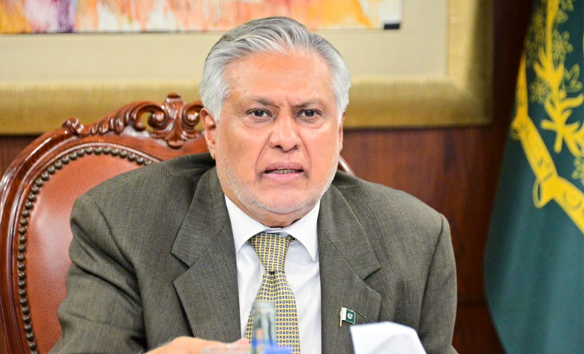
ISLAMABAD — Deputy Prime Minister and Foreign Minister Senator Mohammad Ishaq Dar chaired a meeting on Friday to assess the progress of the Prime Minister’s Special Relief Scheme. The National Steering Committee on Fuel Subsidy convened to review the scheme’s implementation and consider public feedback collected during the initial 48 hours of its nationwide launch.
What Happened
The meeting, led by Deputy Prime Minister Dar, focused on evaluating the early stages of the Prime Minister’s Special Relief Scheme, which aims to alleviate the financial burden on citizens by providing fuel subsidies. The scheme was rolled out nationwide earlier this week, and the committee gathered to examine its effectiveness and address any initial challenges.
During the session, the committee reviewed feedback from the public, which was collected over the first two days of the scheme’s implementation. This feedback is crucial for assessing the scheme’s impact and making necessary adjustments to ensure its success. The Deputy Prime Minister emphasized the importance of addressing any issues promptly to maximize the scheme’s benefits for the intended recipients.
“The government is committed to ensuring that the relief reaches those who need it the most,” stated Deputy Prime Minister Dar. The committee discussed potential measures to streamline the distribution process and enhance the scheme’s efficiency based on the feedback received.
Background
The Prime Minister’s Special Relief Scheme was introduced as part of the government’s broader strategy to mitigate the economic challenges faced by Pakistani citizens due to rising fuel prices. The initiative aims to provide targeted subsidies to lower-income households and individuals affected by the increasing cost of living.
Historically, Pakistan has faced significant economic challenges, including inflation and fluctuating fuel prices, which have placed a considerable strain on the average citizen. The government has periodically introduced relief measures to cushion the impact of these economic pressures, with varying degrees of success.
The current scheme is part of a series of policy measures aimed at stabilizing the economy and providing immediate relief to those most affected by economic fluctuations.
Why It Matters
The implementation of the Prime Minister’s Special Relief Scheme is a critical component of the government’s strategy to address the economic hardships faced by the population. Rising fuel prices have a cascading effect on the cost of goods and services, disproportionately affecting lower-income households. By providing subsidies, the government aims to alleviate some of this financial pressure.
The scheme’s success is vital not only for the immediate relief it offers but also for maintaining public confidence in the government’s ability to manage economic challenges. Effective implementation can enhance the government’s credibility and demonstrate its commitment to addressing the needs of its citizens.
Moreover, the scheme has implications for Pakistan’s broader economic stability. By easing the financial burden on households, the government hopes to stimulate economic activity and support consumer spending, which are essential for economic growth. The feedback collected during the initial rollout will be instrumental in refining the scheme to ensure it meets its objectives efficiently.
Key Takeaways
- Deputy Prime Minister Mohammad Ishaq Dar chaired a meeting to review the Prime Minister’s Special Relief Scheme.
- The scheme aims to provide fuel subsidies to alleviate economic pressures on citizens.
- Public feedback from the first 48 hours of the scheme’s rollout was discussed to improve implementation.
- The scheme is part of broader efforts to stabilize Pakistan’s economy and support lower-income households.
- Effective implementation is crucial for maintaining public confidence and supporting economic growth.
Source Attribution
This article is based on official government statements, press releases, and public communications from relevant authorities.














