
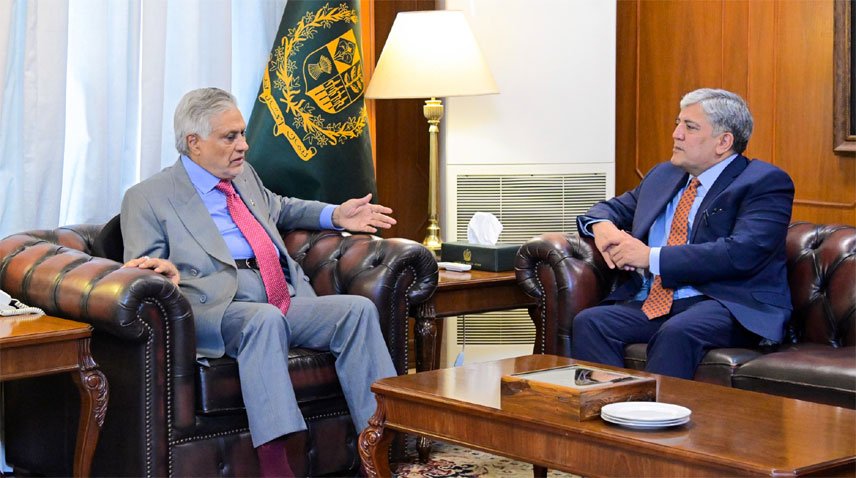
ISLAMABAD — Pakistan’s Deputy Prime Minister and Foreign Minister, Senator Mohammad Ishaq Dar, emphasized the strategic importance of Pakistan’s relationship with the United Arab Emirates (UAE) during a meeting with Pakistan’s Ambassador to the UAE, Shafqat Ali Khan. The meeting took place on Tuesday in Abu Dhabi, where both officials discussed various aspects of bilateral cooperation.
What Happened
During the meeting, Deputy Prime Minister Ishaq Dar reiterated Pakistan’s commitment to strengthening ties with the UAE, highlighting the historical and cultural bonds shared between the two nations. He noted that the UAE is one of Pakistan’s most significant partners in the Gulf region, with collaborations spanning across trade, investment, and cultural exchanges.
“Our relationship with the UAE is not only strategic but also deeply rooted in mutual respect and shared interests,” Dar stated. He further acknowledged the UAE’s role in supporting Pakistan’s economic development through investments in various sectors, including energy, infrastructure, and real estate.
Ambassador Shafqat Ali Khan echoed these sentiments, emphasizing the need for continued engagement at all levels to explore new avenues for cooperation. He highlighted the potential for increased trade and investment opportunities, particularly in the context of Pakistan’s growing economy and strategic location.
The meeting also covered discussions on regional security issues, with both officials agreeing on the importance of collaborative efforts to ensure peace and stability in the region. They underscored the need for joint initiatives to combat terrorism and promote economic development as a means to achieve long-term stability.
Background
Pakistan and the UAE have enjoyed a robust relationship since the establishment of diplomatic ties in 1971. Over the years, the UAE has emerged as a key economic partner for Pakistan, with bilateral trade reaching approximately $8 billion annually. The UAE is also home to a significant Pakistani expatriate community, which contributes to the economic and cultural ties between the two nations.
In recent years, both countries have worked towards enhancing cooperation in various fields, including defense, energy, and technology. The UAE has been a major investor in Pakistan’s infrastructure projects, including the development of ports and highways. Additionally, the two countries have collaborated on various cultural and educational initiatives, further strengthening their bilateral relationship.
Why It Matters
The strategic partnership between Pakistan and the UAE holds significant implications for both countries, particularly in terms of economic and regional security. For Pakistan, the UAE’s investments and economic support are crucial for sustaining its economic growth and development. The UAE’s role as a major investor in Pakistan’s infrastructure projects has been instrumental in boosting the country’s economic prospects.
Moreover, the UAE’s support in regional security initiatives is vital for Pakistan, given the ongoing challenges posed by terrorism and regional instability. Collaborative efforts in combating these issues are essential for ensuring peace and stability in the region, which in turn, supports economic development and prosperity.
For the UAE, maintaining strong ties with Pakistan is strategically important, given Pakistan’s geopolitical significance and its role as a gateway to South Asia. The partnership allows the UAE to expand its influence in the region and leverage Pakistan’s strategic location for trade and investment opportunities.
Key Takeaways
- Deputy Prime Minister Ishaq Dar emphasized the strategic importance of Pakistan-UAE relations during a meeting with Ambassador Shafqat Ali Khan.
- The meeting focused on enhancing bilateral cooperation in trade, investment, and regional security.
- Pakistan and the UAE have a long-standing relationship, with significant economic and cultural ties.
- The UAE’s investments in Pakistan are crucial for the country’s economic growth and development.
- Both countries agreed on the importance of collaborative efforts to ensure regional stability and security.
Source Attribution
This article is based on official government statements and public communications from relevant authorities.














