
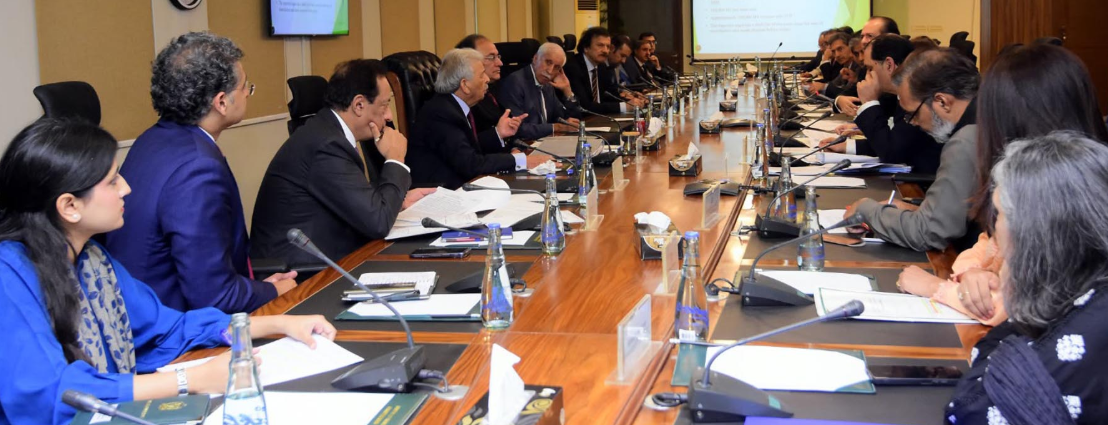
ISLAMABAD — The Economic Coordination Committee (ECC) of the Cabinet, chaired by Federal Minister for Finance and Revenue, convened on Wednesday to deliberate on a proposal from the Ministry of National Food Security and Research. The proposal seeks to initiate international tenders for the export of 108,000 metric tonnes of sugar currently held by the Trading Corporation of Pakistan (TCP).
What Happened
During the meeting, the ECC reviewed the Ministry of National Food Security and Research’s proposal to export a substantial quantity of sugar. The sugar stock in question, amounting to 108,000 metric tonnes, is currently under the custody of the Trading Corporation of Pakistan (TCP). The proposal aims to invite international tenders for the export, potentially opening new markets and generating revenue for the country.
The decision to consider exporting sugar comes amidst fluctuating domestic and international sugar markets. The ECC’s deliberations are crucial as they will determine the strategic direction for the country’s sugar industry, balancing domestic needs with export opportunities.
In addition to the sugar export proposal, the ECC meeting addressed several other economic matters, reflecting the government’s ongoing efforts to stabilize and grow the national economy. However, the sugar export proposal remained a focal point due to its potential impact on both domestic market dynamics and international trade relations.
Background
The Trading Corporation of Pakistan (TCP) is a government-owned entity responsible for the import and export of essential commodities. Historically, the TCP has played a pivotal role in stabilizing the prices of key commodities, including sugar, by managing surplus stocks and ensuring adequate supply in the domestic market.
Pakistan’s sugar industry has experienced various challenges over the years, including fluctuating production levels, changing climatic conditions, and international market pressures. The decision to export surplus sugar stocks is part of a broader strategy to manage these challenges effectively while ensuring that domestic supply remains stable.
Previous export initiatives have been met with mixed results, often influenced by global sugar prices and domestic production capabilities. The ECC’s current consideration reflects an ongoing effort to optimize the balance between domestic consumption and export potential.
Why It Matters
The proposal to export 108,000 metric tonnes of sugar holds significant economic implications for Pakistan. Firstly, it represents an opportunity to generate foreign exchange revenue, which is crucial for the country’s economic stability. By tapping into international markets, Pakistan can potentially enhance its trade balance and strengthen its foreign reserves.
Socially, the export of surplus sugar can help stabilize domestic sugar prices by preventing an oversupply in the local market. This is particularly important for consumers who are sensitive to price fluctuations in essential commodities. By maintaining a balanced supply, the government can help ensure that sugar remains affordable for the average Pakistani household.
Politically, the decision to export sugar may influence Pakistan’s trade relations with other countries. Engaging in international sugar markets can foster stronger economic ties and open avenues for future trade agreements. It also positions Pakistan as a competitive player in the global sugar industry, potentially attracting foreign investment in the agricultural sector.
Furthermore, the move aligns with Pakistan’s broader economic strategy to diversify its export portfolio. By expanding into new markets, the country can reduce its reliance on traditional exports and enhance its economic resilience against global market volatility.
Key Takeaways
- The ECC is considering a proposal to export 108,000 metric tonnes of sugar held by the TCP.
- This initiative aims to invite international tenders, potentially boosting Pakistan’s foreign exchange earnings.
- Exporting surplus sugar can help stabilize domestic prices and prevent market oversupply.
- The decision may strengthen Pakistan’s trade relations and position in the global sugar market.
- This move is part of a broader strategy to diversify Pakistan’s export portfolio.
Source Attribution
This article is based on official government statements, press releases, and public communications from relevant authorities.














