
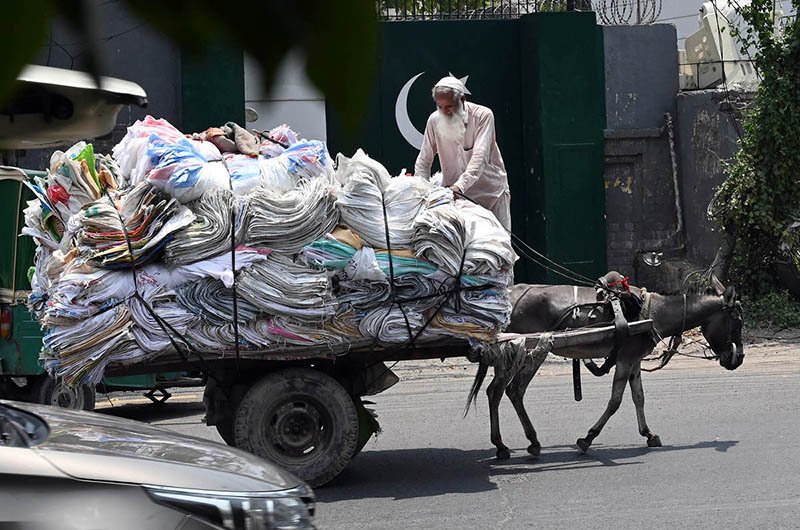
LAHORE — An elderly man in Lahore braves the intense summer heat, transporting empty plastic bags on a donkey cart to support his family. This scene illustrates the hardships low-income workers face in Pakistan’s urban areas.
Challenges of Manual Labor in Lahore
Photographed on a scorching summer day, this elderly man represents the struggles of manual labor in bustling Lahore. Despite his age, he continues to work under the blazing sun, showcasing remarkable resilience and determination.
As a member of Pakistan’s informal worker community, his identity remains undisclosed. He lacks social security benefits and operates under precarious conditions. His daily routine involves transporting recyclable materials, providing modest earnings crucial for supporting his children and fulfilling basic needs.
With temperatures exceeding 40 degrees Celsius in Lahore, outdoor labor is daunting. His struggle highlights broader socio-economic challenges affecting millions, where limited employment opportunities force many into such extreme conditions.
Backdrop of Pakistan’s Informal Sector
Poverty and unemployment are significant issues in Pakistan, pushing many into informal labor. The Pakistan Bureau of Statistics notes that the informal sector makes up a substantial portion of the workforce, often characterized by low wages and job insecurity.
Historically, informal workers have sought labor law recognition and protection. However, their integration into the formal economy is hampered by bureaucratic challenges and limited resources. Economic pressures and rising inflation intensify these difficulties, diminishing purchasing power and increasing living costs.
Economic and Social Implications
The story of this elderly man embodies the economic struggles faced by many Pakistanis. It highlights the urgent need for policies addressing the vulnerabilities of informal workers, frequently excluded from social safety nets. Enhancing their conditions and granting access to social services could drastically improve their lives.
Economically, reliance on informal labor hinders Pakistan’s development. Despite their vital contribution, the lack of formal recognition restricts access to credit and financial services, limiting their economic mobility and growth potential.
Community Resilience and Global Attention
Socially, the tale emphasizes the significance of community support and resilience. Despite adversity, families persevere, driven by the necessity to provide for their loved ones. This resilience attests to the enduring strength and determination of Pakistan’s working class.
Internationally, the plight of informal workers in Pakistan draws attention to labor rights and the importance of inclusive economic policies. As countries recover from the economic impacts of COVID-19, ensuring equitable support for all workers becomes imperative.
Key Takeaways
- An elderly man in Lahore laboriously collects and sells recyclables in extreme heat to support his family.
- Pakistan’s informal labor sector is extensive but often deprived of social security and legal protections.
- High temperatures and economic pressures exacerbate the difficulties faced by informal workers.
- Addressing the needs of informal workers is crucial for Pakistan’s economic growth and stability.














