
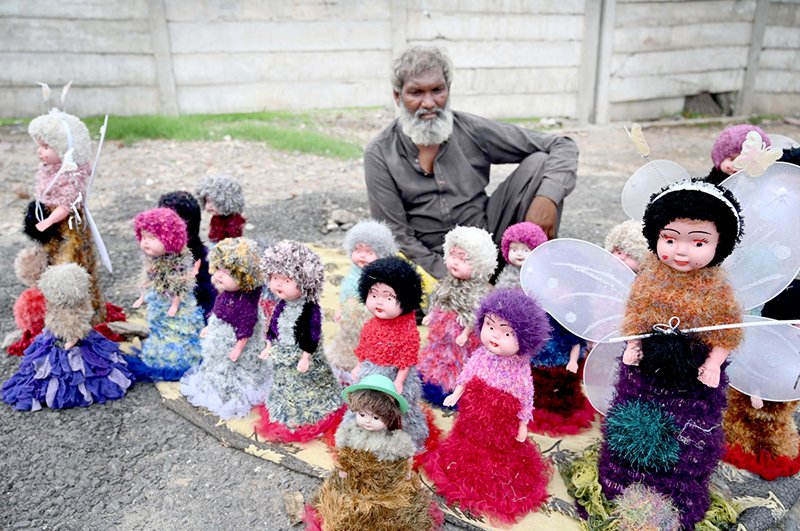
ISLAMABAD — An elderly vendor has set up a vibrant display of colorful toy dolls at his roadside stall in Pakistan, seeking to attract customers and make a living. The vendor, whose identity remains undisclosed, has become a familiar sight for passersby in the bustling area where his stall is located.
What Happened
The vendor, an elderly man, has arranged an eye-catching assortment of toy dolls at his roadside setup, hoping to draw the attention of potential buyers. His stall, adorned with a variety of colorful dolls, stands out amidst the usual roadside hustle and bustle. Despite the challenges posed by the harsh outdoor conditions and fluctuating customer interest, the vendor remains hopeful that his unique products will appeal to children and their parents.
According to local sources, the vendor has been operating his stall for several years, relying on the sale of these toy dolls as his primary source of income. The dolls, which are crafted in vibrant hues and designs, are priced affordably to cater to a wide range of customers. The vendor’s dedication to his craft and his determination to earn a livelihood are evident in the meticulous way he arranges his merchandise each day.
“I have been selling these dolls for many years. Children love them, and they bring joy to their faces,” the vendor was quoted as saying. His commitment to maintaining a welcoming and colorful display is a testament to his resilience and entrepreneurial spirit in the face of economic challenges.
Background
Street vending is a common occupation in Pakistan, providing a means of livelihood for many individuals who lack formal employment opportunities. Vendors like the one selling toy dolls often face numerous challenges, including competition from other sellers, fluctuating demand, and the need to adapt to changing market conditions. Despite these hurdles, street vending remains a vital part of the informal economy in Pakistan, offering affordable goods and services to the public.
Historically, street vendors have played a significant role in urban economies, contributing to the vibrancy and diversity of local markets. In Pakistan, vendors often sell a variety of goods, ranging from fresh produce and snacks to clothing and toys. The informal nature of their work, however, means that they are often excluded from social security benefits and face legal uncertainties regarding their right to operate in public spaces.
Why It Matters
The presence of street vendors selling affordable goods like toy dolls highlights the economic realities faced by many individuals in Pakistan. For the elderly vendor, his roadside stall represents not only a source of income but also a means of maintaining his independence and dignity. In a country where social safety nets are limited, such entrepreneurial endeavors are crucial for survival.
Economically, street vendors contribute to the local economy by providing low-cost goods and creating employment opportunities. Their activities also support the supply chain of small-scale manufacturers and artisans who produce the goods sold at these stalls. Socially, vendors like the elderly man selling toy dolls foster community engagement and provide accessible shopping options for families.
Moreover, the vendor’s story reflects broader socio-economic challenges, such as the lack of formal employment opportunities for older citizens and the need for policies that support informal workers. Addressing these issues requires a multifaceted approach, including legal recognition of street vendors, access to microfinance, and social protection measures.
Key Takeaways
- An elderly vendor in Pakistan sells colorful toy dolls at a roadside stall to earn a living.
- Street vending is a common occupation in Pakistan, vital for the informal economy.
- Vendors face challenges such as competition, demand fluctuations, and legal uncertainties.
- The vendor’s efforts highlight the economic and social importance of street vending.
- There is a need for policies supporting informal workers and addressing socio-economic challenges.
Source Attribution
This article is based on official government statements, press releases, and public communications from relevant authorities.














