
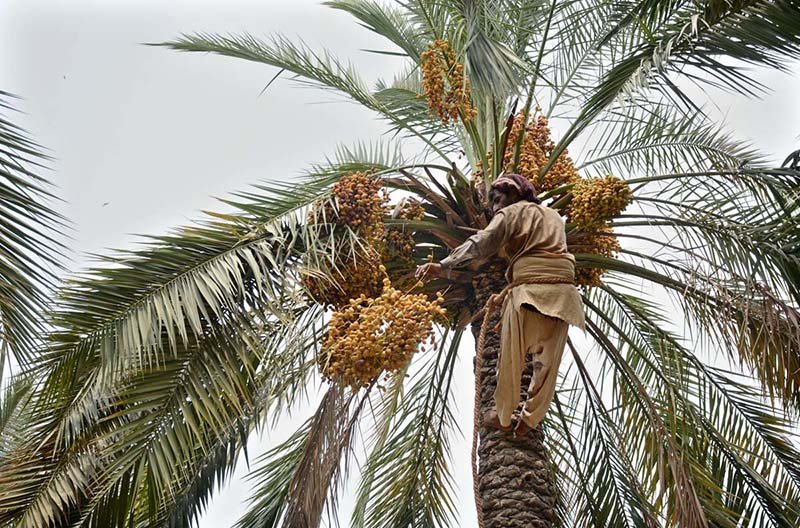
FAISALABAD — A farmer has successfully harvested fresh dates from a palm tree at the University of Agriculture’s garden in Faisalabad, marking a productive season for the institution’s horticultural efforts. The harvest took place this week, showcasing the university’s commitment to agricultural innovation and sustainability.
What Happened
The University of Agriculture in Faisalabad witnessed a successful harvest of dates from its palm trees, an event that highlights the institution’s ongoing agricultural projects. The farmer, who is part of the university’s skilled workforce, carefully collected the ripe dates, which are expected to contribute to both research and local consumption.
According to university officials, the date palm trees have been cultivated as part of an initiative to explore sustainable agricultural practices and enhance local food production. The harvested dates are of high quality, reflecting the favorable growing conditions and the expertise of the university’s agricultural team.
Dr. Muhammad Ashraf, a senior horticulturist at the university, stated, “The successful harvest of dates is a testament to our commitment to advancing agricultural practices. Our efforts are focused on not only research but also on practical applications that benefit the community.”
The dates are now being processed and evaluated for their nutritional content and potential market value. The university plans to use the data collected from this harvest to improve future yields and expand their agricultural projects.
Background
The University of Agriculture in Faisalabad has a long-standing tradition of contributing to Pakistan’s agricultural sector through research, education, and practical applications. The institution has been at the forefront of developing innovative farming techniques and promoting sustainable agriculture.
Date cultivation in Pakistan has a rich history, with the country being one of the largest producers of dates in the world. The climate in regions like Faisalabad is conducive to date palm growth, providing an opportunity for institutions like the University of Agriculture to experiment with and refine cultivation techniques.
In recent years, there has been a growing emphasis on enhancing agricultural productivity and sustainability in Pakistan, driven by the need to support a rapidly growing population and address food security challenges.
Why It Matters
The successful harvest of dates at the University of Agriculture has several implications for Pakistan’s agricultural sector. Firstly, it underscores the potential for universities to play a pivotal role in advancing agricultural research and development. By integrating practical farming experiences with academic research, institutions can contribute to the development of more efficient and sustainable agricultural practices.
Economically, the cultivation of dates and other crops can provide a significant boost to local economies. As the university continues to refine its techniques and increase yields, there is potential for creating new market opportunities for farmers and contributing to the country’s agricultural exports.
Socially, initiatives like these can inspire local farmers to adopt innovative practices and improve their own productivity. The dissemination of knowledge and techniques developed at the university can lead to widespread improvements in agricultural efficiency and sustainability across the region.
Furthermore, the focus on sustainable agriculture is crucial in the context of climate change and environmental degradation. By promoting practices that conserve resources and enhance productivity, the University of Agriculture is contributing to a more resilient agricultural sector in Pakistan.
Key Takeaways
- The University of Agriculture in Faisalabad successfully harvested dates, showcasing its agricultural innovation.
- The initiative is part of efforts to enhance sustainable agricultural practices in Pakistan.
- The harvest contributes to research, local consumption, and potential economic opportunities.
- Pakistan is a major date producer, with favorable conditions for cultivation in regions like Faisalabad.
- The project highlights the role of educational institutions in advancing agricultural development.
Source Attribution
This article is based on official statements and public communications from the University of Agriculture, Faisalabad.














