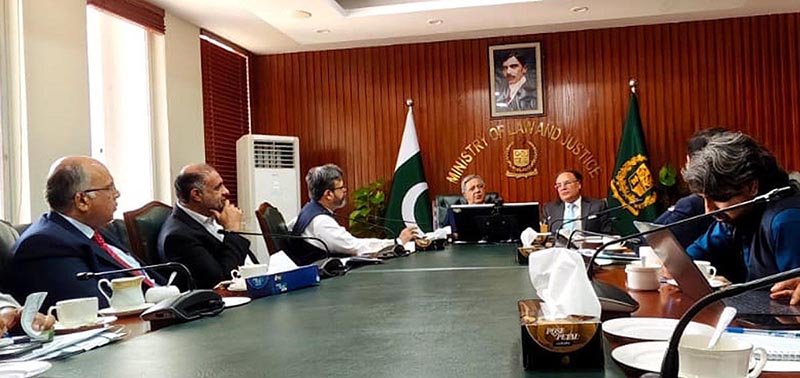
ISLAMABAD — Federal Minister for Law, Justice and Human Rights Senator Azam Nazeer Tarar, along with Federal Minister for Finance and Revenue Senator Muhammad Aurangzeb, chaired a high-level meeting on the Real Estate Regulatory Authority (RERA) in Islamabad. The meeting, held on Thursday, aimed to discuss the establishment and operationalization of RERA to regulate the real estate sector in Pakistan.
What Happened
The meeting was convened to address the pressing need for a regulatory framework in the real estate sector, which has been largely unregulated and prone to fraudulent practices. Senator Azam Nazeer Tarar emphasized the importance of RERA in safeguarding the interests of consumers and ensuring transparency in real estate transactions. He stated, “The establishment of RERA will bring a much-needed legal structure to the real estate sector, protecting both buyers and sellers from malpractices.”
Senator Muhammad Aurangzeb highlighted the economic significance of the real estate sector and its potential contribution to Pakistan’s GDP. He noted that a regulated real estate market could attract more foreign investment and boost economic growth. “A transparent and well-regulated real estate market is crucial for economic stability and growth,” he added.
The meeting also discussed the draft legislation for RERA, which includes provisions for the registration of real estate agents, developers, and projects. The ministers reviewed the proposed framework, which aims to enforce accountability and ensure compliance with legal standards. The draft legislation is expected to be presented to the parliament for approval in the coming months.
Background
The real estate sector in Pakistan has long been criticized for its lack of regulation, leading to issues such as land grabbing, fraudulent property deals, and tax evasion. The absence of a regulatory body has made it difficult for consumers to seek redressal in cases of disputes. In recent years, there have been numerous calls from stakeholders, including real estate developers and consumer rights groups, to establish a regulatory authority to oversee the sector.
RERA, once operational, is expected to address these concerns by providing a legal framework for real estate transactions and ensuring that all parties involved adhere to the rules. The authority will also be responsible for maintaining a database of registered projects and agents, which will be accessible to the public.
Why It Matters
The establishment of RERA holds significant implications for Pakistan’s economy and its citizens. A regulated real estate sector can lead to increased investor confidence, both domestically and internationally. This is particularly important as Pakistan seeks to attract foreign direct investment to boost its economy. By ensuring transparency and accountability, RERA can help mitigate the risks associated with real estate investments, making the sector more attractive to investors.
For consumers, RERA promises to provide a safer environment for real estate transactions. With clear guidelines and a mechanism for dispute resolution, buyers and sellers can engage in property deals with greater confidence. This could lead to an increase in property transactions, further stimulating economic activity.
Politically, the establishment of RERA demonstrates the government’s commitment to reforming key sectors of the economy. It aligns with broader efforts to enhance governance and reduce corruption, which are critical for sustainable development. The successful implementation of RERA could serve as a model for regulatory reforms in other sectors, contributing to Pakistan’s overall progress.
Key Takeaways
- Federal ministers discussed the establishment of the Real Estate Regulatory Authority (RERA) in Islamabad.
- RERA aims to regulate the real estate sector, ensuring transparency and protecting consumer interests.
- The draft legislation for RERA includes provisions for registering real estate agents and projects.
- RERA is expected to boost investor confidence and stimulate economic growth in Pakistan.
- The initiative aligns with government efforts to enhance governance and reduce corruption.
Source Attribution
This article is based on official government statements, press releases, and public communications from relevant authorities.