
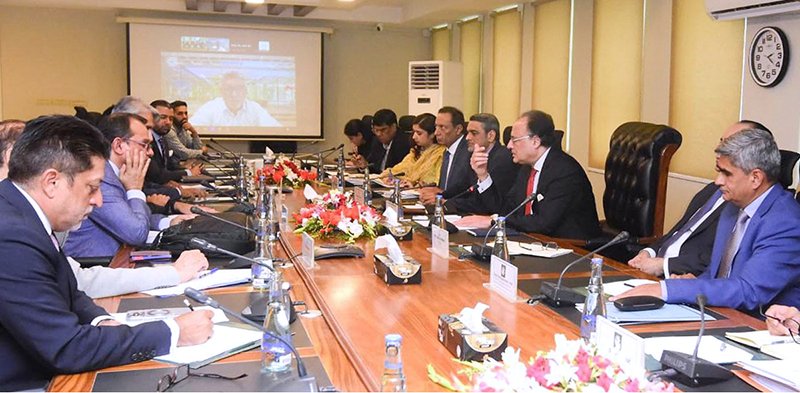
ISLAMABAD — Federal Minister for Finance and Revenue, Senator Muhammad Aurangzeb, chaired the second meeting of the Committee on Genetically Modified (GM) Corn at the Finance Division in Islamabad. The meeting focused on assessing the economic and agricultural implications of GM corn in Pakistan, aiming to develop a comprehensive policy framework.
What Happened
The meeting, held at the Finance Division, brought together key stakeholders from various sectors, including agriculture, finance, and biotechnology. The primary agenda was to evaluate the potential impact of genetically modified corn on Pakistan’s agricultural economy and food security. Senator Aurangzeb emphasized the importance of a balanced approach that considers both economic benefits and potential risks associated with GM crops.
During the meeting, experts presented data on the current state of GM corn cultivation globally and its economic advantages. They highlighted that GM corn could potentially lead to increased crop yields and reduced pesticide use, which could benefit farmers economically. However, concerns were raised about the environmental and health implications of GM crops, necessitating thorough research and regulation.
Senator Aurangzeb stated, “Our goal is to ensure that any decision regarding GM corn is based on sound scientific evidence and aligns with our national interests.” He further stressed the need for collaboration between government bodies, scientists, and farmers to develop a policy that supports sustainable agricultural practices.
Background
Genetically modified organisms (GMOs) have been a topic of debate worldwide, with GM corn being one of the most widely cultivated GM crops. In Pakistan, the introduction of GM corn has been met with both support and opposition. Proponents argue that GM corn can boost agricultural productivity and contribute to food security, while critics are concerned about potential environmental and health risks.
Pakistan’s regulatory framework for GMOs is governed by the National Biosafety Centre, which oversees the approval and monitoring of GM crops. The country has previously approved the cultivation of GM cotton, which has been credited with increasing yields and reducing pesticide use. However, the approval process for GM corn has been more contentious, with calls for more rigorous safety assessments.
Why It Matters
The discussion on GM corn is crucial for Pakistan’s agricultural sector, which is a significant contributor to the national economy. With a growing population and increasing demand for food, enhancing agricultural productivity is vital. GM corn presents an opportunity to improve yields and reduce reliance on chemical pesticides, potentially leading to economic gains for farmers and increased food security.
However, the adoption of GM corn also poses challenges. Environmentalists and health advocates have raised concerns about the long-term effects of GM crops on biodiversity and human health. Ensuring that GM corn is safe for consumption and cultivation requires robust regulatory mechanisms and scientific research.
Internationally, the use of GM crops has been a subject of trade discussions, with some countries imposing restrictions on GM imports. Pakistan’s stance on GM corn could influence its trade relations, particularly with countries that have stringent GMO regulations. Developing a clear and scientifically backed policy on GM corn is essential for maintaining international trade partnerships and ensuring public trust in food safety.
Key Takeaways
- Federal Minister Muhammad Aurangzeb chaired a meeting on GM corn policy in Islamabad.
- The meeting focused on the economic and agricultural impacts of GM corn.
- Stakeholders discussed potential benefits and risks associated with GM crops.
- Pakistan’s regulatory framework for GMOs is crucial for safe adoption.
- GM corn policy could affect Pakistan’s agricultural economy and trade relations.
Source Attribution
This article is based on official government statements, press releases, and public communications from relevant authorities.














