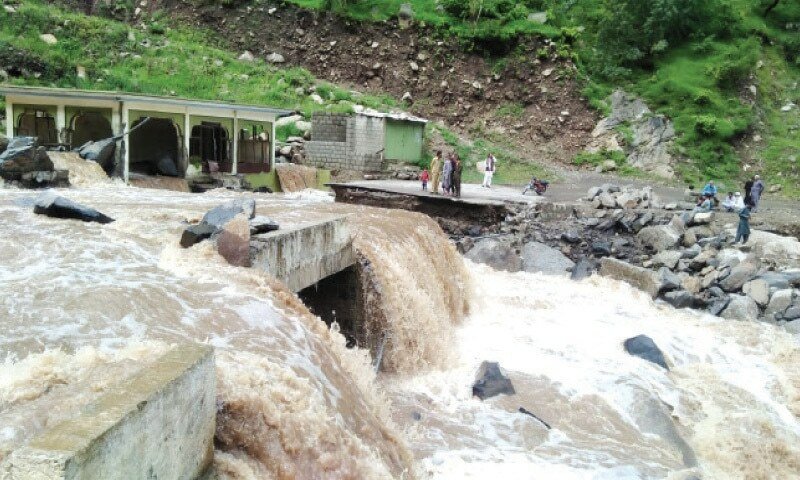
MANSEHRA — Flash floods caused by intense monsoon rains have severely damaged infrastructure in the Mansehra district, particularly affecting the Kaghan and Siran valleys, as of Monday. The local authorities have ramped up emergency response efforts in anticipation of further rainfall forecasted across the Hazara Division this week.
What Happened
The Mansehra district in Khyber Pakhtunkhwa has been hit hard by flash floods following heavy monsoon rains, leading to widespread damage to bridges, homes, and businesses. The Kaghan and Siran valleys bore the brunt of the flooding, with several key bridges washed away, disrupting transportation and isolating communities. Local businesses have reported significant losses due to water damage, and numerous homes have been inundated, forcing residents to seek shelter elsewhere.
Emergency services have been deployed to the affected areas to assist with evacuation efforts and provide immediate relief to those impacted. The district administration has set up temporary shelters and is distributing essential supplies, including food and clean water, to displaced families. “Our priority is to ensure the safety and well-being of our citizens. We are working round the clock to provide relief and restore essential services,” stated a local government official.
Weather forecasts indicate that the monsoon rains are expected to continue throughout the week, raising concerns about further flooding and damage. The Provincial Disaster Management Authority (PDMA) has issued alerts and is coordinating with local authorities to monitor the situation closely.
Background
The Mansehra district is no stranger to the challenges posed by monsoon rains. Historically, the region has experienced severe flooding during the monsoon season, with previous incidents causing extensive damage to infrastructure and livelihoods. The geography of the area, characterized by its valleys and rivers, makes it particularly susceptible to flash floods.
In response to past flooding events, local authorities have implemented various measures to mitigate the impact of such natural disasters. These include the construction of flood barriers and improved drainage systems. However, the intensity of the current monsoon season has overwhelmed these defenses, highlighting the need for further investment in infrastructure resilience.
Why It Matters
The impact of the flash floods in Mansehra extends beyond immediate physical damage. Economically, the destruction of infrastructure and disruption of local businesses is likely to have a lasting effect on the region’s economy. Many small businesses, which form the backbone of the local economy, have suffered significant losses, and the cost of rebuilding damaged infrastructure will place a substantial financial burden on the district.
Socially, the displacement of families and the loss of homes have created a humanitarian challenge. The provision of temporary shelters and relief supplies is a short-term solution, but long-term recovery will require significant resources and coordinated efforts from government agencies and non-governmental organizations.
Politically, the government’s response to the crisis will be closely scrutinized by the public and could influence future policy decisions regarding disaster management and infrastructure development. The situation underscores the need for comprehensive planning and investment to enhance the resilience of vulnerable regions against natural disasters.
Key Takeaways
- Flash floods in Mansehra have caused extensive damage to infrastructure, particularly in the Kaghan and Siran valleys.
- Emergency response efforts are underway, with authorities providing relief to affected residents.
- Continued monsoon rains are expected, raising concerns about further flooding.
- The economic and social impacts of the floods are significant, affecting local businesses and displacing families.
- The situation highlights the need for improved disaster management and infrastructure resilience in vulnerable regions.
Source Attribution
This article is based on official government statements, press releases, and public communications from relevant authorities.