
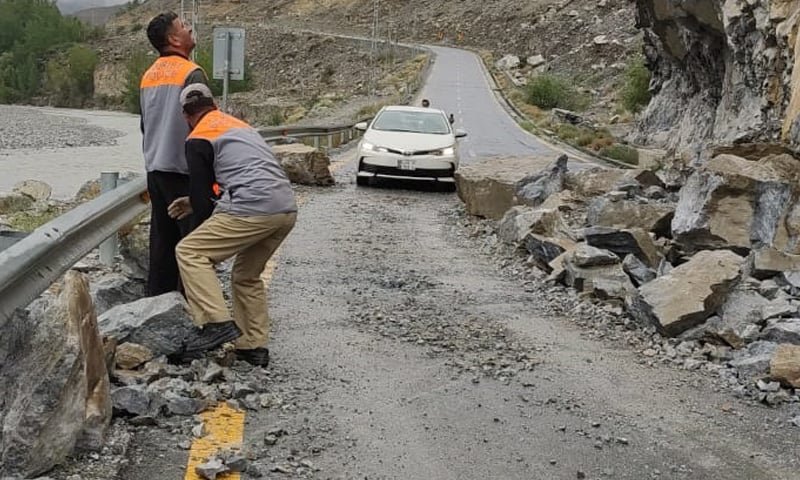
ISLAMABAD — The National Highway Authority (NHA) has announced the closure of the Babusar Highway due to severe flooding at Thak, and has suspended traffic on the Karakoram Highway after a freight truck overturned near Shing Nala (Goner Farm). These disruptions have significantly impacted travel to Pakistan’s northern areas, with authorities advising motorists to avoid non-essential journeys.
What Happened
The Babusar Highway, a critical route connecting the northern regions of Pakistan, was closed on Tuesday following high-level flooding at Thak. The National Highway Authority (NHA) took this precautionary measure to ensure the safety of travelers amid the rising water levels. Concurrently, the Karakoram Highway, another vital artery for travel and trade, faced a temporary suspension of traffic. This was due to an incident involving a freight truck that overturned near Shing Nala, causing further disruption.
According to NHA officials, the flooding has reached levels that pose a significant risk to vehicles and passengers. “The safety of travelers is our utmost priority,” stated an NHA spokesperson, emphasizing the need for caution and the avoidance of unnecessary travel in the affected areas. The closure of these highways is expected to remain in place until the water levels recede and the roads are deemed safe for passage.
The incident with the freight truck on the Karakoram Highway has added to the logistical challenges. The overturned truck has blocked a portion of the road, complicating efforts to maintain a steady flow of traffic. Emergency response teams have been deployed to manage the situation and clear the road as quickly as possible.
Background
The Babusar and Karakoram highways are crucial for connecting the northern areas of Pakistan with the rest of the country. The Babusar Highway, in particular, is a scenic route that attracts tourists and facilitates trade. However, these regions are prone to natural calamities, including landslides and flooding, especially during the monsoon season. The Karakoram Highway, known as the highest paved international road, is a key trade route between Pakistan and China, often referred to as the ‘Eighth Wonder of the World’ due to its engineering marvel.
Historically, these highways have faced closures due to weather-related incidents. The monsoon rains, which typically occur from July to September, often lead to flooding and landslides, disrupting travel and commerce in the region.
Why It Matters
The closure of the Babusar and Karakoram highways has significant implications for both local and international stakeholders. Economically, these routes are vital for the transportation of goods and services between Pakistan and its northern regions, as well as with China. The disruption can lead to delays in the supply chain, affecting businesses and consumers alike.
Socially, the closure impacts the local population who rely on these highways for daily commuting and access to essential services. The northern areas, known for their tourism potential, may also see a decline in visitors, affecting the livelihoods of those dependent on tourism.
Politically, the situation underscores the challenges faced by the government in maintaining infrastructure resilience against natural disasters. It highlights the need for improved disaster management strategies and infrastructure development to mitigate the impact of such events in the future.
Internationally, the closure of the Karakoram Highway can affect trade relations with China, as it is a crucial link in the China-Pakistan Economic Corridor (CPEC). Any prolonged disruption can have broader implications for regional trade dynamics.
Key Takeaways
- The Babusar and Karakoram highways are closed due to flooding and a truck accident.
- The closures impact travel and trade in Pakistan’s northern regions.
- Authorities are urging motorists to avoid non-essential travel.
- The situation highlights infrastructure vulnerabilities during the monsoon season.
- Potential economic and social impacts include disrupted supply chains and reduced tourism.
Source Attribution
This article is based on official government statements, press releases, and public communications from relevant authorities.














