
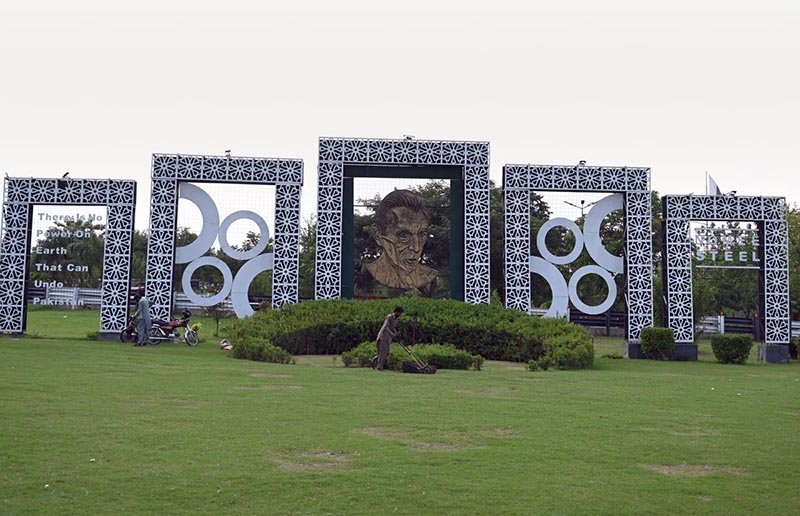
ISLAMABAD — A gardener was seen meticulously mowing the lawn along the green belt on Faisal Avenue, which prominently features a portrait of Quaid-e-Azam Muhammad Ali Jinnah, in Islamabad. This activity underscores the ongoing efforts to maintain the aesthetic appeal of the Federal Capital’s public spaces.
What Happened
On a routine day, a gardener was observed maintaining the lush greenery along Faisal Avenue, a major thoroughfare in Islamabad. The green belt, which is adorned with a portrait of Pakistan’s founding father, Quaid-e-Azam Muhammad Ali Jinnah, is a testament to the city’s commitment to preserving its historical and cultural heritage. The gardener’s work ensures that the area remains visually appealing and accessible to the public.
The presence of Jinnah’s portrait serves not only as a decorative element but also as a reminder of the country’s roots and the vision of its founding leaders. The green belt along Faisal Avenue is one of many such areas in Islamabad that are regularly maintained by the Capital Development Authority (CDA) to enhance the city’s environment and provide residents with well-kept public spaces.
According to a CDA official, “Maintaining the green belts and public spaces is crucial for the city’s environment and the well-being of its residents. It is our responsibility to ensure these areas are kept in pristine condition.” The official further emphasized the importance of such efforts in promoting a healthy urban environment.
Background
Islamabad, the capital city of Pakistan, is known for its organized layout and abundant green spaces. The city was designed in the 1960s to serve as the nation’s capital, with a focus on modern infrastructure and environmental sustainability. The green belts and parks scattered throughout the city are integral to its design, providing residents with recreational areas and contributing to the city’s air quality.
Faisal Avenue, named after King Faisal of Saudi Arabia, is a significant road in Islamabad, connecting various parts of the city. The avenue is lined with green belts, which are maintained by the CDA, an agency responsible for municipal services and development in the capital. The inclusion of historical figures like Quaid-e-Azam Muhammad Ali Jinnah in these spaces reflects the city’s dedication to honoring its past while looking towards the future.
Why It Matters
The maintenance of Islamabad’s green belts is crucial for several reasons. Firstly, these spaces provide a much-needed respite from the urban environment, offering residents areas for leisure and relaxation. In a city where temperatures can soar during the summer months, the green belts also play a role in cooling the environment and improving air quality.
Moreover, the presence of historical figures like Jinnah in public spaces serves an educational purpose, reminding citizens of the country’s history and the values upon which it was founded. This is particularly important for younger generations who may not have a direct connection to the events that shaped Pakistan’s independence.
Economically, well-maintained public spaces can enhance property values and attract tourism, contributing to the city’s overall development. Politically, they reflect the government’s commitment to preserving national heritage and promoting environmental sustainability, both of which are key components of Pakistan’s broader development goals.
Key Takeaways
- A gardener was seen maintaining the green belt on Faisal Avenue, featuring a portrait of Quaid-e-Azam Muhammad Ali Jinnah.
- The green belt’s maintenance is part of Islamabad’s efforts to preserve its aesthetic and cultural heritage.
- Islamabad’s design includes numerous green spaces, contributing to environmental sustainability and urban quality of life.
- Public spaces featuring historical figures serve educational and cultural purposes, reinforcing national identity.
- Well-maintained public areas can boost property values and tourism, supporting economic growth.
Source Attribution
This article is based on official government statements, press releases, and public communications from relevant authorities.














