
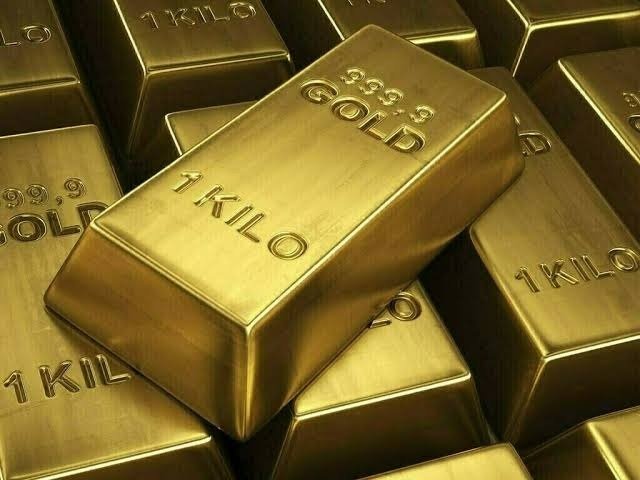
LAHORE — Gold prices in Pakistan experienced a significant drop as the international bullion market witnessed a decline, resulting in a substantial decrease in the prices of both gold and silver locally. On July 17, the price of gold per tola in the local market fell by Rs3,600 to Rs421,836, reflecting the global market trends.
What Happened
The international bullion market saw a sharp decline in gold prices, with the price per ounce falling by $36 to $3,994. This decrease in the global market had a direct impact on the local bullion market in Pakistan. As a result, the price of gold per tola dropped by Rs3,600, settling at Rs421,836. Similarly, the price for 10 grams of gold fell by Rs3,086, bringing it down to Rs361,656.
Silver prices were not immune to this trend, as they also experienced a decline. The price of silver per tola decreased by Rs126, reaching Rs6,029, while the price for 10 grams of silver fell by Rs108 to Rs5,168. This trend reflects the interconnected nature of global and local markets, where changes in international prices have immediate effects on domestic markets.
Background
Gold and silver prices are influenced by a variety of factors, including global economic conditions, currency fluctuations, and investor sentiment. Historically, precious metals have been viewed as safe-haven assets, particularly during times of economic uncertainty. However, fluctuations in the global market can lead to significant changes in prices, affecting local markets as well.
In recent years, the global bullion market has experienced volatility due to various factors such as geopolitical tensions, changes in monetary policies by major economies, and fluctuations in the value of the US dollar. These factors contribute to the dynamic nature of gold and silver prices, impacting both international and local markets.
Why It Matters
The decline in gold prices holds significant implications for various stakeholders in Pakistan. For investors and traders in the bullion market, this drop represents a potential opportunity to purchase gold at lower prices. However, it also poses challenges for those who have invested in gold as a hedge against inflation or economic instability.
For the general public, changes in gold prices can affect consumer behavior, particularly in a country like Pakistan where gold is often purchased for weddings and other cultural events. A decrease in prices may encourage more purchases, while an increase could lead to reduced consumer spending on gold.
Economically, the fluctuation in gold prices can impact the country’s trade balance. Pakistan, being an importer of gold, may benefit from lower prices in terms of reduced import costs. However, it also means that local jewelers and traders may face reduced margins, affecting their profitability.
On a broader scale, the changes in gold prices can reflect underlying economic conditions, both globally and locally. A decline may indicate a stronger US dollar or changing investor sentiment, which can have ripple effects on other aspects of the economy, including currency exchange rates and stock market performance.
Key Takeaways
- Gold prices in Pakistan dropped by Rs3,600 per tola, influenced by a $36 decline per ounce in the international market.
- The price of 10 grams of gold fell by Rs3,086, while silver prices also decreased, with a Rs126 drop per tola.
- Fluctuations in global bullion prices directly impact local markets, affecting investors, traders, and consumers.
- The decline in prices may offer buying opportunities but also poses challenges for those relying on gold as a stable investment.
- Changes in gold prices can have broader economic implications, influencing trade balances and reflecting global economic conditions.
Source Attribution
This article is based on official government statements, press releases, and public communications from relevant authorities.














