
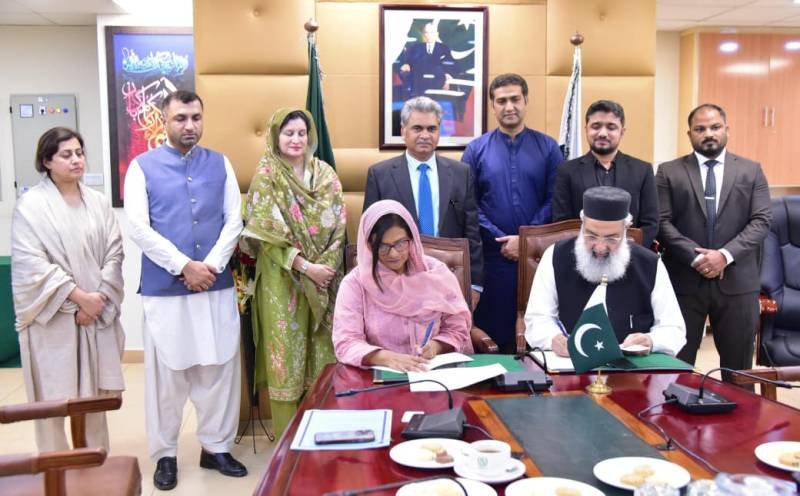
ISLAMABAD — The Ministry of National Health Services, Regulations and Coordination (MoNHSRC) has entered into a memorandum of understanding (MoU) with the National AI Hub to promote the responsible use of artificial intelligence in Pakistan’s healthcare sector. The agreement, signed on Friday, aims to enhance healthcare outcomes, particularly focusing on maternal, newborn, and child health.
What Happened
The MoU was signed between MoNHSRC and the National AI Hub, a pioneering initiative established by the Lahore University of Management Sciences (LUMS). This collaboration is set to leverage artificial intelligence to address critical healthcare challenges in Pakistan. The primary focus is on improving the health outcomes for mothers, newborns, and children, a segment that has historically faced numerous challenges in the country.
Dr. Faisal Sultan, Special Assistant to the Prime Minister on Health, emphasized the transformative potential of AI in healthcare. “The integration of AI can significantly improve diagnostic accuracy and treatment outcomes, especially in rural and underserved areas,” he stated during the signing ceremony. The partnership aims to develop AI-driven solutions that can be implemented across various healthcare settings, from urban hospitals to rural clinics.
The National AI Hub, under the aegis of LUMS, will spearhead the development of these AI technologies. The hub is tasked with ensuring that the AI solutions are ethically designed and implemented, with a strong emphasis on data privacy and security. The collaboration will also focus on capacity building, providing training to healthcare professionals on the use of AI tools.
Background
Pakistan’s healthcare sector has long struggled with inadequate resources and infrastructure, particularly in rural areas. Maternal and child health indicators have shown improvement over the years but remain below global standards. The introduction of AI is seen as a potential game-changer in addressing these challenges by providing more efficient and accurate healthcare solutions.
Globally, AI has been increasingly integrated into healthcare systems to improve patient outcomes, streamline operations, and reduce costs. Countries like the United States and the United Kingdom have successfully implemented AI technologies in various healthcare applications, including predictive analytics, personalized medicine, and automated diagnostics.
Why It Matters
The integration of AI into Pakistan’s healthcare system represents a significant step towards modernizing the sector. By focusing on maternal, newborn, and child health, the initiative addresses some of the most pressing healthcare challenges in the country. Improved health outcomes in these areas can lead to a reduction in mortality rates and better quality of life for families across Pakistan.
Economically, the use of AI in healthcare could lead to cost savings by reducing the need for expensive diagnostic tests and treatments. AI can help in early detection of diseases, allowing for timely interventions that are less costly and more effective. This is particularly important in a country like Pakistan, where healthcare resources are limited.
Socially, the initiative has the potential to bridge the healthcare gap between urban and rural areas. By providing AI-driven tools to rural healthcare providers, the quality of care can be improved, reducing disparities in health outcomes based on geographic location.
Internationally, the successful implementation of AI in Pakistan’s healthcare sector could position the country as a leader in innovative healthcare solutions in the region. It could also attract international partnerships and investments, further boosting the sector’s development.
Key Takeaways
- The MoU between MoNHSRC and the National AI Hub aims to integrate AI into Pakistan’s healthcare system.
- The focus is on improving maternal, newborn, and child health outcomes.
- AI technologies will be developed and implemented with a focus on ethical standards and data privacy.
- The initiative could lead to significant cost savings and improved healthcare access, particularly in rural areas.
- Successful implementation could enhance Pakistan’s standing in global healthcare innovation.
Source Attribution
This article is based on official government statements, press releases, and public communications from relevant authorities.














