
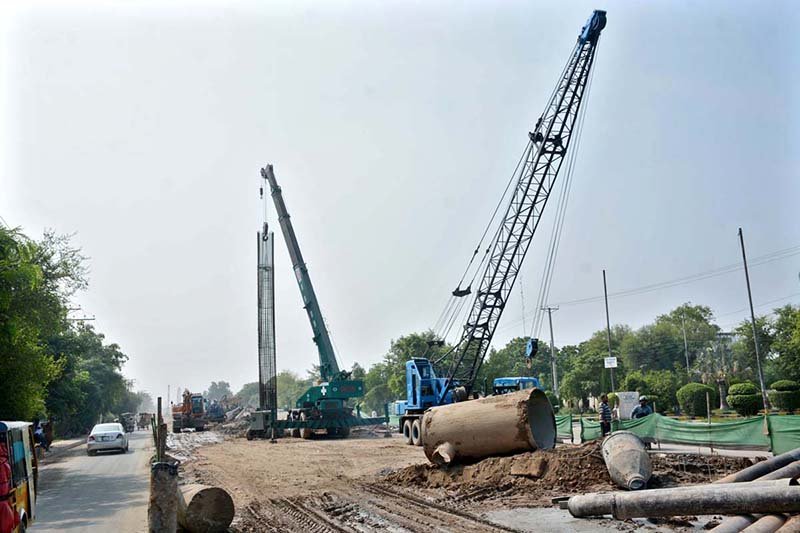
FAISALABAD — Heavy machinery has been deployed for the ongoing development and construction work on Jaranwala Road, part of the ambitious Metro project aimed at enhancing urban mobility in Faisalabad. The deployment marks a significant phase in the project, which is expected to improve transportation infrastructure in the region.
What Happened
The deployment of heavy machinery on Jaranwala Road signifies the commencement of a critical stage in the Metro project, which aims to alleviate traffic congestion and provide a reliable public transport system in Faisalabad. According to local authorities, the machinery includes excavators, bulldozers, and cranes, which are essential for the construction of the road and associated infrastructure.
The project, which has been in the planning stages for several years, is part of a broader initiative to modernize the city’s transport network. “We are committed to ensuring that the Metro project progresses smoothly and meets its deadlines,” said a spokesperson from the local government. The construction work is expected to create numerous jobs and boost the local economy, while also addressing the long-standing issue of traffic congestion in the city.
Officials have indicated that the project is being carried out in phases, with the current focus on road construction and the installation of necessary utilities. The Metro project is expected to feature dedicated bus lanes, modern stations, and a state-of-the-art ticketing system, all designed to provide a seamless travel experience for commuters.
Background
The Metro project in Faisalabad is part of a nationwide effort to improve urban transport infrastructure in Pakistan’s major cities. Similar projects have been launched in Lahore, Islamabad, and Karachi, with varying degrees of success. These initiatives are aimed at reducing traffic congestion, lowering pollution levels, and providing citizens with efficient and affordable public transport options.
Faisalabad, known as the industrial hub of Pakistan, has faced significant challenges in terms of urban planning and transport management. The city’s rapid industrial growth has led to increased vehicular traffic, putting immense pressure on existing road networks. The Metro project is seen as a crucial step towards addressing these challenges and facilitating smoother movement within the city.
Why It Matters
The successful implementation of the Metro project on Jaranwala Road holds significant implications for Faisalabad’s urban landscape. Economically, the project is expected to create jobs during the construction phase and beyond, as improved transport infrastructure can attract more businesses and investments to the region. The project also promises to enhance the quality of life for residents by reducing travel times and providing a reliable alternative to private vehicle use.
Socially, the Metro project is expected to improve accessibility for all segments of the population, including those who rely on public transport for their daily commutes. By providing a more efficient and affordable transport option, the project can contribute to greater social equity and mobility.
On a broader scale, successful urban transport projects like the Metro can serve as models for other cities facing similar challenges. They highlight the potential for public infrastructure projects to drive economic growth and improve urban living conditions. However, the project’s success will depend on effective management, timely completion, and sustained investment in maintenance and operations.
Key Takeaways
- Heavy machinery has been deployed on Jaranwala Road as part of Faisalabad’s Metro project.
- The project aims to improve urban mobility and reduce traffic congestion in the city.
- Construction is expected to create jobs and boost the local economy.
- The Metro project is part of a nationwide effort to enhance public transport infrastructure.
- Successful implementation could serve as a model for other cities in Pakistan.
Source Attribution
This article is based on official government statements, press releases, and public communications from relevant authorities.














