
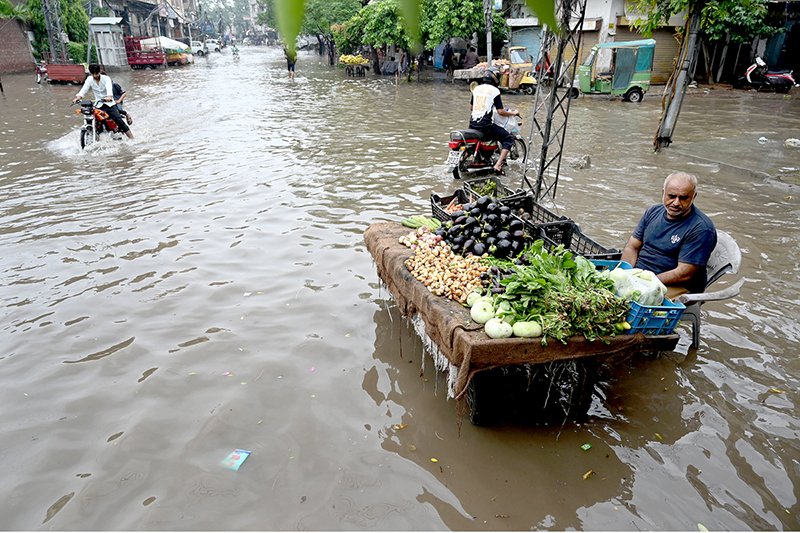
LAHORE — Heavy rainfall in Lahore has led to significant flooding across the city, causing disruptions to daily life and impacting local businesses. The downpour, which occurred over the weekend, left streets inundated with water, posing challenges for residents and vendors alike.
What Happened
The provincial capital of Punjab experienced torrential rains that resulted in substantial water accumulation on the roads. This has particularly affected small business owners, including vegetable vendors who rely on foot traffic for their sales. One such vendor was seen waiting for customers while sitting on a chair amid the rainwater that had collected on the roadside. The scene is indicative of the broader challenges faced by many in the city as they navigate the aftermath of the heavy rainfall.
The Meteorological Department reported that the city received over 100 millimeters of rain within a span of 24 hours. This deluge overwhelmed the drainage systems, leading to waterlogging in several low-lying areas. Many roads became impassable, and traffic was severely disrupted, adding to the woes of daily commuters.
Local authorities have been working to clear the waterlogged areas, but the persistent rain has hampered their efforts. “We are doing our best to manage the situation, but the continuous rain is making it difficult,” said a spokesperson for the Lahore Municipal Corporation. The spokesperson also urged residents to stay indoors and avoid unnecessary travel until the water levels recede.
Background
Lahore, like many other cities in Pakistan, is prone to flooding during the monsoon season. The city’s drainage infrastructure often struggles to cope with the heavy rains, leading to frequent waterlogging issues. In recent years, the government has initiated several projects aimed at improving the drainage systems, but the rapid pace of urbanization has outpaced these efforts.
Historically, the monsoon season in Pakistan runs from July to September, bringing with it both relief from the summer heat and challenges in the form of flooding. The country’s major cities, including Karachi and Islamabad, also face similar issues during this period, highlighting the need for comprehensive urban planning and infrastructure development.
Why It Matters
The flooding in Lahore has significant implications for the city’s economy and the well-being of its residents. Small business owners, particularly those in the informal sector, are among the hardest hit. With roads flooded and foot traffic reduced, vendors face a sharp decline in sales, which can have a cascading effect on their livelihoods.
Moreover, the flooding highlights the urgent need for improved urban infrastructure. As Lahore continues to grow, the pressure on its drainage systems will only increase. Without substantial investment in infrastructure, the city will continue to face severe disruptions during the monsoon season, affecting not only the economy but also the quality of life for its residents.
On a broader scale, the situation in Lahore underscores the challenges faced by rapidly urbanizing cities in developing countries. The need for sustainable urban planning is critical to ensure that cities can cope with the impacts of climate change, which is expected to increase the frequency and intensity of extreme weather events.
Key Takeaways
- Heavy rainfall in Lahore has led to significant flooding, disrupting daily life and local businesses.
- The city’s drainage systems were overwhelmed by over 100 millimeters of rain in 24 hours.
- Local authorities are working to clear waterlogged areas, but continuous rain is hampering efforts.
- The flooding highlights the need for improved urban infrastructure and sustainable planning.
- The situation reflects broader challenges faced by rapidly urbanizing cities in developing countries.
Source Attribution
The article is based on official government statements, press releases, and public communications from relevant authorities.














