
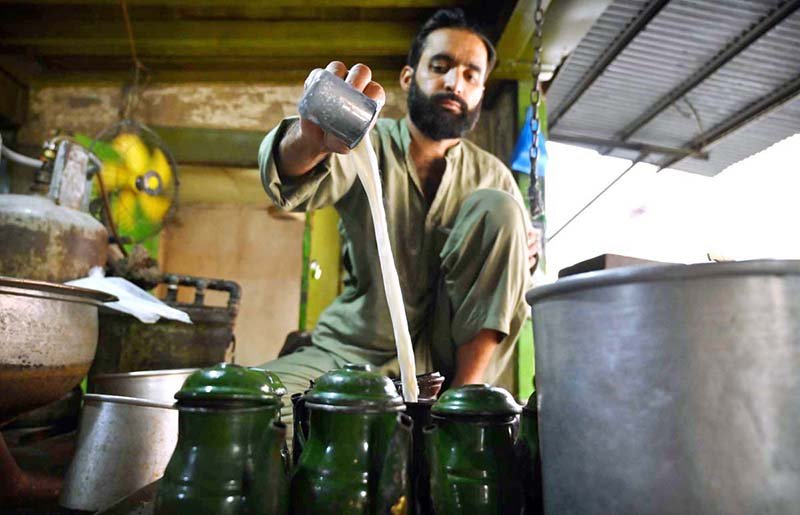
PESHAWAR — At the heart of Peshawar’s bustling Qissa Khawani Bazaar, the historic Kehwa Khana continues to serve as a vibrant hub for cultural preservation, offering traditional tea and Peshawari green tea to its patrons. This iconic establishment is renowned for its role in maintaining the city’s rich cultural and culinary heritage.
What Happened
The Kehwa Khana, located in the historic Qissa Khawani Bazaar, is a popular gathering place for locals and tourists alike. Known for its traditional teas, the establishment is a testament to Peshawar’s enduring cultural legacy. A vendor at the Kehwa Khana meticulously prepares traditional tea and Peshawari green tea, drawing in crowds who seek to experience the authentic flavors and ambiance of the region.
The Qissa Khawani Bazaar, often referred to as the ‘Bazaar of Storytellers,’ has long been a focal point of social and cultural interaction in Peshawar. The Kehwa Khana, with its aromatic teas and vibrant atmosphere, plays a crucial role in this narrative, offering a space where stories, traditions, and culinary arts converge.
According to local patrons, the Kehwa Khana is more than just a tea house; it is a cultural institution. “This place is a living museum of our heritage,” said a regular visitor. “Every cup of tea here tells a story of our past.” The vendor’s skillful preparation of traditional tea and Peshawari green tea is a ritual that attracts both the young and the old, eager to partake in this cultural experience.
Background
The Qissa Khawani Bazaar has a storied history dating back centuries. It was once a major trading hub on the ancient Silk Road, where merchants, travelers, and storytellers would gather to exchange goods and tales. The bazaar’s name, which translates to ‘Market of Storytellers,’ reflects its historical significance as a center for cultural exchange and storytelling.
Kehwa Khana, nestled within this historic market, has been serving traditional tea for generations. The preparation of Peshawari green tea is a craft passed down through families, with each vendor adding their unique touch to the recipe. This tradition is deeply rooted in the region’s history, with tea houses serving as communal spaces for discussion and socialization.
Why It Matters
The preservation of cultural heritage through establishments like Kehwa Khana is vital for maintaining Peshawar’s unique identity in an increasingly globalized world. As modern influences permeate traditional societies, places like the Kehwa Khana offer a refuge where cultural practices can be safeguarded and celebrated.
Economically, the Kehwa Khana and similar establishments contribute to the local economy by attracting tourists and fostering a sense of community among residents. The bazaar’s vibrant atmosphere and historical significance draw visitors from across the country and beyond, boosting local businesses and preserving traditional crafts.
Socially, the Kehwa Khana serves as a gathering place where people from diverse backgrounds can come together, fostering dialogue and understanding. In a region often characterized by its complex socio-political landscape, such spaces are crucial for promoting unity and cultural appreciation.
Internationally, the preservation of Peshawar’s cultural heritage enhances Pakistan’s image as a country rich in history and tradition. It underscores the importance of cultural tourism, which can play a significant role in the nation’s economic development and international relations.
Key Takeaways
- The Kehwa Khana in Qissa Khawani Bazaar is a key cultural institution in Peshawar, known for its traditional tea offerings.
- The bazaar has historical significance as a center for trade and storytelling on the ancient Silk Road.
- Preserving cultural heritage through traditional tea houses contributes to local economic growth and social cohesion.
- Such establishments enhance Pakistan’s international image as a nation with a rich cultural history.
- The Kehwa Khana serves as a communal space, fostering dialogue and cultural appreciation among diverse groups.
Source Attribution
This article is based on official government statements, press releases, and public communications from relevant authorities.














