
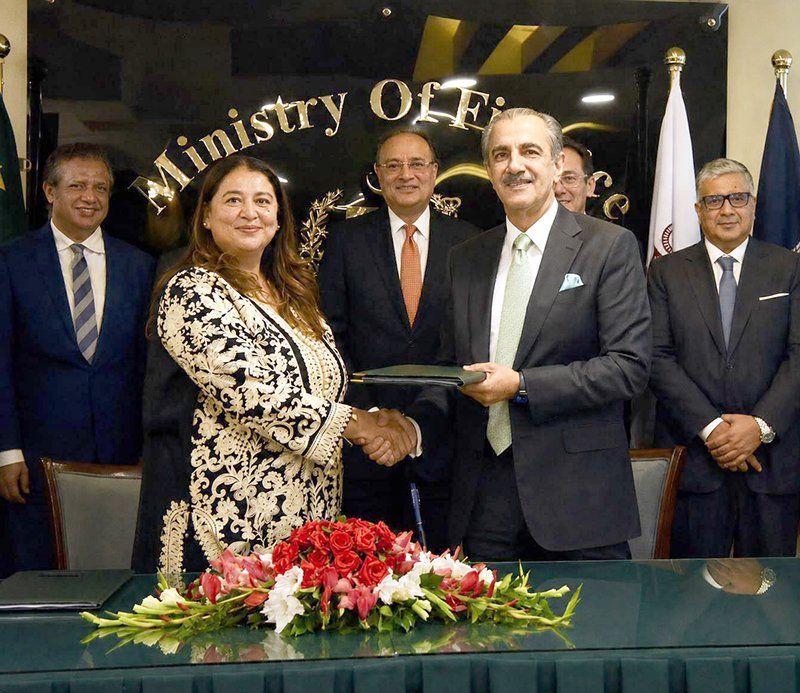
ISLAMABAD — The International Finance Corporation (IFC) and Bank Alfalah Limited (BAFL) have signed a project agreement to launch Pakistan’s first Diversified Payment Rights (DPR) programme. The signing ceremony took place at the Finance Division in the presence of Federal Minister for Finance and Revenue, Senator Muhammad Aurangzeb.
What Happened
The agreement marks a pioneering step in Pakistan’s financial sector as it introduces the country’s first DPR programme. The initiative is a collaboration between IFC, a member of the World Bank Group, and Bank Alfalah, one of Pakistan’s leading private banks. The ceremony was attended by key stakeholders, including government officials and representatives from both institutions.
The DPR programme is designed to enhance Bank Alfalah’s capacity to manage its foreign currency liquidity and diversify its funding base. By securitizing future payment flows, the programme aims to provide the bank with a stable source of funding, thereby strengthening its financial position and enabling it to extend more credit to businesses and consumers.
Senator Muhammad Aurangzeb, present at the event, expressed optimism about the programme’s potential impact on Pakistan’s economy. He stated, “This initiative is a testament to the commitment of both the government and the private sector to innovate and strengthen our financial infrastructure.”
Background
Diversified Payment Rights (DPR) are a form of securitization that involves the sale of future payment receivables, typically from foreign currency transactions. This financial instrument has been used in various emerging markets to improve liquidity and access to international capital markets. In Pakistan, the introduction of DPRs represents a significant development in the financial sector, offering new avenues for funding and risk management.
Bank Alfalah, established in 1997, has grown to become one of the largest private banks in Pakistan, with a network of over 700 branches across the country. The bank has been at the forefront of adopting innovative financial solutions to meet the evolving needs of its customers. The partnership with IFC aligns with its strategy to enhance its financial offerings and expand its market presence.
Why It Matters
The launch of the DPR programme is expected to have far-reaching implications for Pakistan’s banking sector and the broader economy. By providing Bank Alfalah with a more diversified funding base, the programme will help mitigate foreign exchange risks and improve the bank’s ability to lend to the private sector. This, in turn, can stimulate economic growth by facilitating increased investment and consumption.
Moreover, the collaboration with IFC underscores the confidence of international financial institutions in Pakistan’s economic potential. It highlights the country’s efforts to integrate into the global financial system and attract foreign investment. The programme also sets a precedent for other banks in Pakistan to explore similar financial instruments, potentially leading to a more resilient and dynamic banking sector.
On a broader scale, the DPR programme aligns with Pakistan’s economic reform agenda, which aims to enhance financial stability, promote investment, and support sustainable development. By strengthening the financial sector’s capacity to manage risks and access international capital, the programme contributes to the country’s long-term economic resilience.
Key Takeaways
- The DPR programme is Pakistan’s first initiative of its kind, aimed at enhancing Bank Alfalah’s foreign currency liquidity.
- The agreement was signed in the presence of Federal Minister for Finance and Revenue, Senator Muhammad Aurangzeb.
- IFC’s involvement reflects international confidence in Pakistan’s economic potential and financial sector.
- The programme is expected to stimulate economic growth by enabling increased lending to businesses and consumers.
- This initiative aligns with Pakistan’s broader economic reform agenda to promote financial stability and attract foreign investment.
Source Attribution
This article is based on official government statements, press releases, and public communications from relevant authorities.














