
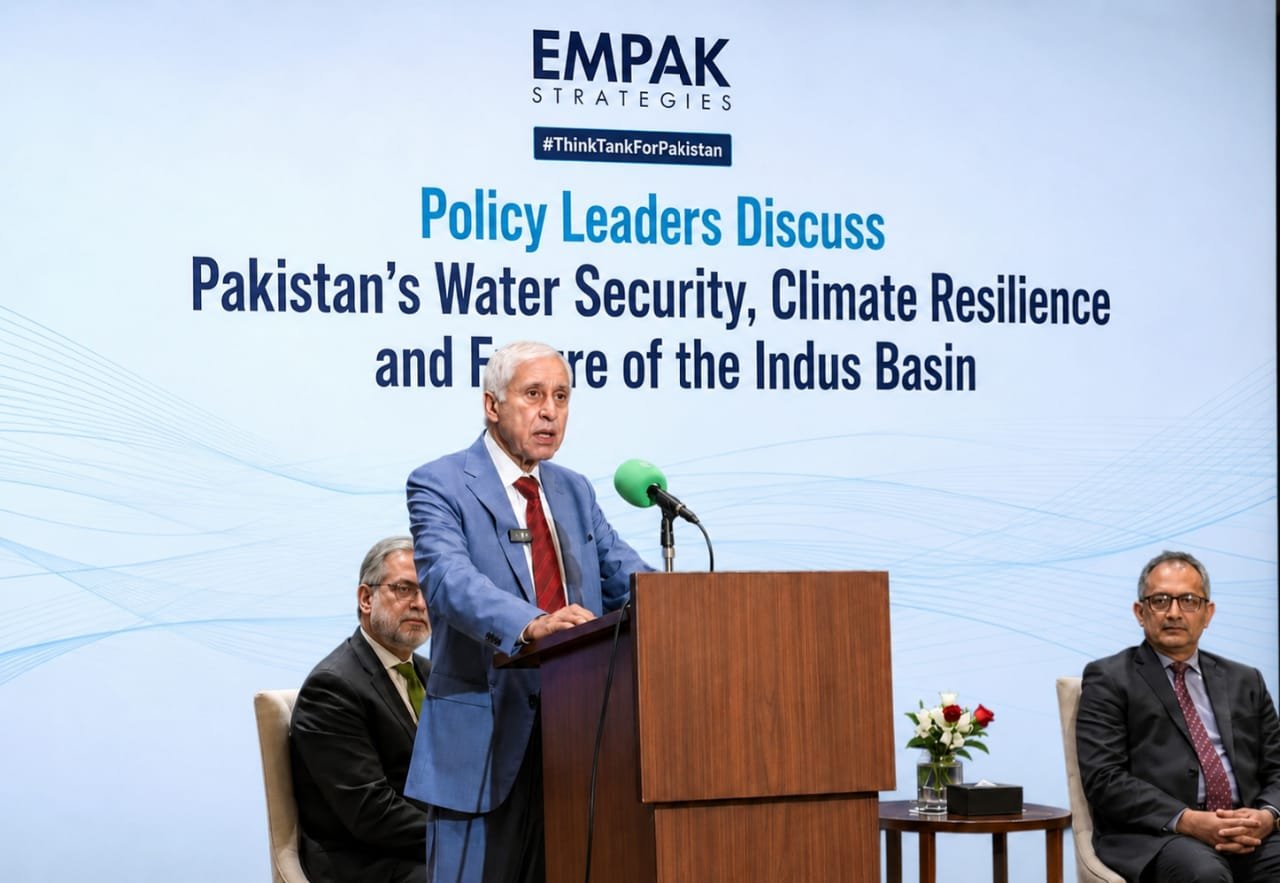
ISLAMABAD — Federal Minister for Investment Qaiser Sheikh stated on Sunday that India cannot unilaterally suspend or terminate the Indus Waters Treaty (IWT), asserting that such an action would be illegal and violate international law. Sheikh’s comments come amid ongoing tensions between the two countries over water-sharing agreements.
What Happened
Minister Qaiser Sheikh addressed the issue of the Indus Waters Treaty during a press conference, emphasizing that India lacks the legal authority to unilaterally suspend the treaty. “The Indus Waters Treaty is a binding agreement under international law, and any unilateral action by India to suspend it would be illegal,” Sheikh declared. The minister’s remarks underscore Pakistan’s firm stance on the matter, as both countries have frequently clashed over water rights.
The Indus Waters Treaty, brokered by the World Bank and signed in 1960, allocates the use of six rivers between India and Pakistan. It is considered one of the most successful water-sharing agreements globally, having survived multiple conflicts between the two nations. However, recent developments have strained the treaty’s implementation, with India expressing dissatisfaction over certain provisions.
Minister Sheikh’s statements were made in response to reports suggesting that India might consider suspending the treaty as a strategic move. The minister reiterated that such a step would not only breach international obligations but also exacerbate regional tensions. “We urge India to adhere to the treaty’s terms and engage in dialogue to resolve any disputes,” he added.
Background
The Indus Waters Treaty was signed in 1960 after nine years of negotiations facilitated by the World Bank. It was designed to manage the distribution of water from the Indus River system, which flows through both India and Pakistan. Under the treaty, Pakistan received control over the waters of the Indus, Jhelum, and Chenab rivers, while India was allocated the waters of the Ravi, Beas, and Sutlej rivers.
Despite its success, the treaty has faced challenges, particularly with the construction of hydroelectric projects by India on rivers allocated to Pakistan. These projects have often led to disputes, with Pakistan alleging that they violate the treaty’s provisions. The treaty includes mechanisms for dispute resolution, but political tensions have sometimes hindered their effectiveness.
Why It Matters
The Indus Waters Treaty is a cornerstone of the bilateral relationship between India and Pakistan, both of which rely heavily on the rivers for agriculture, drinking water, and energy production. Any disruption to the treaty could have significant implications for the region’s water security and economic stability.
For Pakistan, the Indus River system is vital for its agriculture, which is a major component of the country’s economy. Any reduction in water flow could adversely affect crop yields, leading to food insecurity and economic distress. Additionally, the treaty’s suspension could escalate political tensions, potentially impacting regional peace and stability.
On a broader scale, the treaty is often cited as a model for transboundary water cooperation. Its suspension or termination could set a concerning precedent for other international water-sharing agreements, potentially leading to increased conflicts over water resources globally.
Key Takeaways
- Minister Qaiser Sheikh asserts that India cannot legally suspend the Indus Waters Treaty unilaterally.
- The treaty, signed in 1960, is a critical water-sharing agreement between India and Pakistan.
- Suspension of the treaty could lead to significant economic and political consequences for both nations.
- The treaty’s stability is vital for regional water security and international water cooperation.
- Pakistan calls for dialogue to address any disputes related to the treaty.
Source Attribution
This article is based on official government statements, press releases, and public communications from relevant authorities.














