
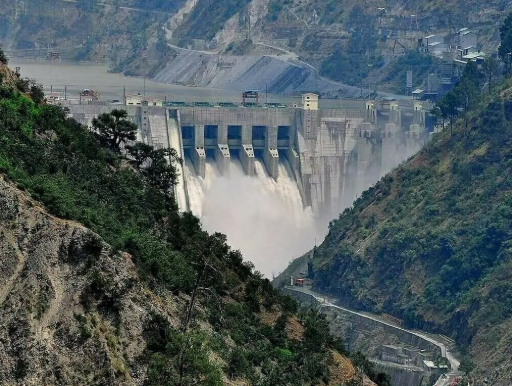
ISLAMABAD — Indian authorities have opened the gates of the Baglihar Hydroelectric Project in Indian illegally occupied Jammu and Kashmir without prior notification to Pakistan, contravening the Indus Waters Treaty (IWT). This action comes amid heavy monsoon rains that have already caused rivers in the region to swell, raising concerns about potential flooding downstream.
What Happened
The decision by Indian authorities to open the Baglihar dam gates without informing Pakistan has sparked controversy, as it directly breaches the Indus Waters Treaty, a water-distribution agreement brokered by the World Bank in 1960. The treaty mandates that both countries must share information regarding water flow and dam operations to prevent disputes and manage water resources effectively.
The Baglihar Hydroelectric Project, located on the Chenab River in Jammu and Kashmir, is a significant source of hydroelectric power for India. However, its operations have been a point of contention between India and Pakistan. The recent opening of the dam gates has exacerbated tensions, particularly as the region is experiencing heavy monsoon rains, which have already increased water levels in the Chenab River.
Pakistan’s Indus Water Commissioner has expressed concern over the unilateral decision by India, emphasizing the potential risk of flooding in downstream areas. “This action by India is not only a violation of the treaty but also poses a significant threat to the safety and livelihood of people living in the river basin,” the commissioner stated.
Background
The Indus Waters Treaty, signed in 1960, is a pivotal agreement between India and Pakistan that governs the use of water from the Indus River and its tributaries. The treaty allocates the waters of the three eastern rivers — the Beas, Ravi, and Sutlej — to India, while Pakistan receives the waters of the three western rivers — the Indus, Jhelum, and Chenab. The treaty includes provisions for information sharing and dispute resolution to ensure cooperative water management.
Historically, the Baglihar dam has been a source of disagreement between the two nations. In 2005, Pakistan raised concerns about the dam’s design, leading to a World Bank-appointed neutral expert’s intervention. Although the expert allowed the dam’s construction to proceed, certain design modifications were mandated to address Pakistan’s objections.
Why It Matters
The opening of the Baglihar dam gates without prior notification to Pakistan is significant for several reasons. Firstly, it underscores the fragile nature of the water-sharing arrangements between the two countries. The Indus Waters Treaty has been a cornerstone of peace and cooperation, and any breach could potentially escalate tensions.
Secondly, the timing of this action during the monsoon season heightens the risk of flooding, which could have devastating consequences for communities living along the Chenab River in Pakistan. Flooding can lead to loss of life, displacement, and damage to infrastructure, exacerbating the humanitarian challenges faced by affected regions.
Moreover, this development could impact bilateral relations, as water security is a critical issue for both nations. Pakistan relies heavily on the waters of the Indus River system for agriculture, drinking water, and hydroelectric power. Any disruption in water flow can have severe economic and social implications, affecting food security and livelihoods.
Key Takeaways
- India opened the Baglihar dam gates without informing Pakistan, violating the Indus Waters Treaty.
- The action raises concerns about potential flooding in Pakistan amid heavy monsoon rains.
- The Indus Waters Treaty is crucial for water management and peace between India and Pakistan.
- Unilateral actions regarding water resources can exacerbate tensions and impact bilateral relations.
- Flooding poses significant risks to communities and infrastructure in downstream areas.
Source Attribution
This article is based on official government statements, press releases, and public communications from relevant authorities.














