
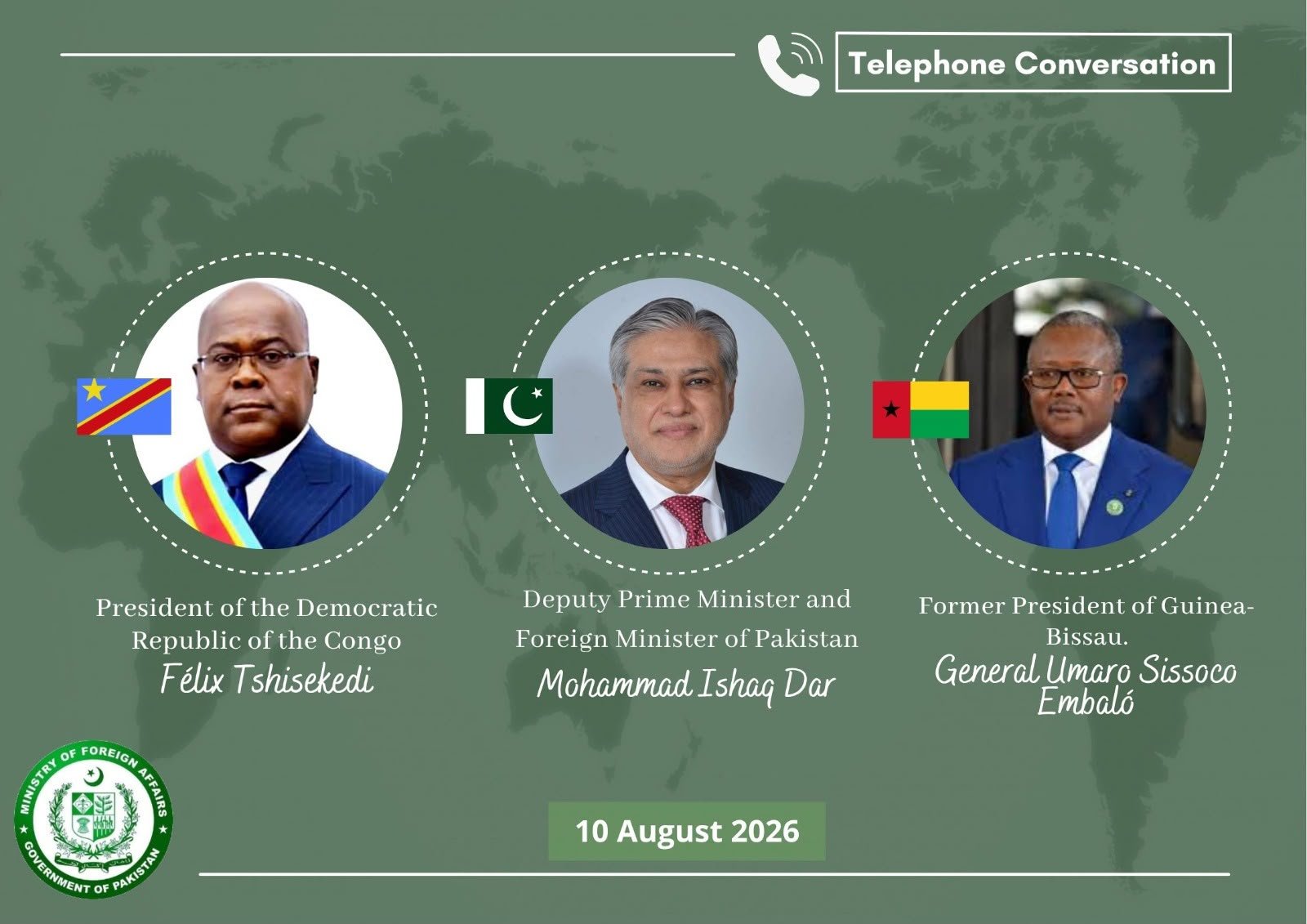
ISLAMABAD — Deputy Prime Minister and Foreign Minister Senator Mohammad Ishaq Dar engaged in discussions with President Félix-Antoine Tshisekedi Tshilombo of the Democratic Republic of the Congo and General Umaro Sissoco Embaló, former President of Guinea-Bissau, on the Makkah Joint Defence Agreement. The meeting took place late Sunday night, focusing on the strategic implications of the recently signed accord.
What Happened
Deputy Prime Minister Ishaq Dar held a joint meeting with the leaders of the Democratic Republic of the Congo and Guinea-Bissau to discuss the Makkah Joint Defence Agreement. The discussions aimed to outline the key components and strategic objectives of the agreement, which is designed to bolster defence cooperation among the signatory nations. Dar emphasized the importance of collaborative defence strategies in ensuring regional stability and security.
During the meeting, Dar highlighted the potential benefits of the agreement, including enhanced military coordination and intelligence sharing. He stated, “The Makkah Joint Defence Agreement represents a significant step forward in our collective efforts to maintain peace and security in the region.” The leaders agreed on the necessity of such agreements to address emerging security challenges and foster mutual trust among participating countries.
President Tshisekedi and General Embaló expressed their support for the agreement, acknowledging its role in strengthening regional defence capabilities. They discussed the potential for increased military training exercises and joint operations as part of the agreement’s implementation. The dialogue underscored a shared commitment to addressing threats such as terrorism and transnational crime.
Background
The Makkah Joint Defence Agreement is a multilateral pact aimed at enhancing defence cooperation among its signatories. It was signed in Makkah earlier this year, involving several countries from Africa and the Middle East. The agreement seeks to establish a framework for joint military exercises, intelligence sharing, and coordinated responses to security threats.
This agreement comes in the context of increasing geopolitical tensions and security challenges in the region. Historically, defence pacts such as this have been instrumental in fostering regional stability and deterring external aggression. The Makkah Joint Defence Agreement builds on previous efforts to create a cohesive security architecture in the region.
Why It Matters
The Makkah Joint Defence Agreement holds significant implications for regional security dynamics. By facilitating closer military cooperation among its members, the agreement aims to create a unified front against common security threats. This is particularly important in a region that has faced persistent challenges such as terrorism, piracy, and political instability.
For Pakistan, participation in such agreements enhances its strategic partnerships and reinforces its role as a key player in regional security. The agreement also provides an opportunity for Pakistan to expand its defence diplomacy and engage in capacity-building initiatives with other nations. This could lead to increased military exports and the sharing of technological advancements in defence.
On a broader scale, the agreement reflects a growing trend of regional alliances aimed at countering non-traditional security threats. As global power dynamics shift, countries are increasingly seeking to form coalitions that can address complex security issues more effectively. The Makkah Joint Defence Agreement is a testament to this evolving approach to international security cooperation.
Key Takeaways
- Deputy Prime Minister Ishaq Dar discussed the Makkah Joint Defence Agreement with leaders from the Democratic Republic of the Congo and Guinea-Bissau.
- The agreement aims to enhance military cooperation and intelligence sharing among signatory nations.
- It reflects a strategic effort to address regional security challenges through collaborative defence strategies.
- The pact is part of a broader trend of forming regional alliances to counter non-traditional security threats.
- Pakistan’s involvement underscores its commitment to regional stability and its role in international defence diplomacy.
Source Attribution
This article is based on official government statements, press releases, and public communications from relevant authorities.














