
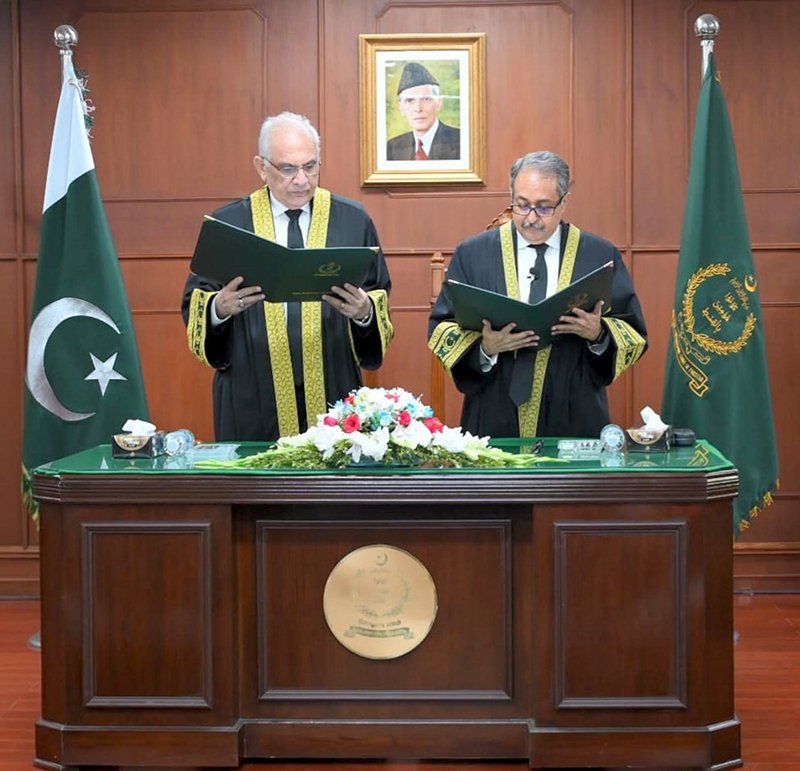
ISLAMABAD — Justice Syed Hasan Azhar Rizvi was sworn in as the Acting Chief Justice of the Federal Constitutional Court of Pakistan, ensuring the continuity of the court’s judicial and administrative functions. The ceremony took place on Monday, marking a significant moment for the judiciary as it continues to dispense constitutional justice without interruption.
What Happened
Justice Syed Hasan Azhar Rizvi assumed the role of Acting Chief Justice following an official oath-taking ceremony held in Islamabad. The event was attended by senior judges, legal luminaries, and government officials, underscoring the importance of maintaining stability within the judiciary. Justice Rizvi, known for his extensive legal acumen and experience, steps into this role at a critical time, ensuring that the Federal Constitutional Court continues its operations smoothly.
The transition in leadership comes as the previous Chief Justice is temporarily unavailable, necessitating the appointment of an acting chief to oversee the court’s functions. Justice Rizvi’s appointment is expected to uphold the court’s mandate to interpret constitutional matters and deliver justice efficiently. In his remarks, Justice Rizvi emphasized his commitment to maintaining the integrity and independence of the judiciary. “I am honored to serve in this capacity and will strive to uphold the principles of justice and fairness,” he stated.
Background
The Federal Constitutional Court of Pakistan plays a pivotal role in the country’s legal system, primarily dealing with constitutional matters and ensuring that laws and government actions comply with the constitution. The court’s leadership is crucial in maintaining the rule of law and addressing complex legal issues that affect the nation. Historically, the court has been instrumental in interpreting constitutional provisions and resolving disputes that have far-reaching implications for governance and civil liberties.
Justice Rizvi, prior to his appointment as Acting Chief Justice, has served in various capacities within the judiciary, earning a reputation for his judiciousness and dedication to the law. His extensive background in constitutional law positions him well to lead the court during this interim period.
Why It Matters
The appointment of Justice Rizvi as Acting Chief Justice is significant for several reasons. Firstly, it ensures the uninterrupted functioning of the Federal Constitutional Court, which is vital for maintaining the rule of law and constitutional governance in Pakistan. The court’s decisions often have profound implications for the country’s political landscape, affecting everything from electoral processes to civil rights.
Economically, a stable judiciary is essential for investor confidence and the overall business climate. Legal certainty and the assurance that constitutional disputes will be handled promptly and fairly are crucial for both domestic and international investors. Socially, the court’s role in safeguarding fundamental rights and freedoms is indispensable, particularly in a country where legal challenges often intersect with issues of human rights and civil liberties.
Politically, the judiciary’s independence is a cornerstone of democracy in Pakistan. The seamless transition to an acting chief justice reflects the judiciary’s resilience and its ability to function autonomously, free from political influence. This is particularly important in times of political uncertainty, where the judiciary often serves as a stabilizing force.
Key Takeaways
- Justice Syed Hasan Azhar Rizvi has been appointed as the Acting Chief Justice of the Federal Constitutional Court of Pakistan.
- The appointment ensures the continuity of the court’s judicial and administrative functions.
- Justice Rizvi’s leadership is crucial for maintaining the rule of law and constitutional governance in Pakistan.
- The Federal Constitutional Court plays a key role in interpreting constitutional matters and safeguarding civil liberties.
- The judiciary’s stability is vital for economic confidence and political independence in Pakistan.
Source Attribution
This article is based on official government statements, press releases, and public communications from relevant authorities.














